4 hr
Great Barrier Reef Half-Day Snorkelling Adventure
- Entry ticket
- Mobile voucher
- Valid same day
- Free cancellation
Snorkeling Cairns Half Day — Quick-Access Reef Departures
Morning sailings to coral gardens, return by early afternoon
Compare fares, pick the fit — all bookings are mobile-voucher and eligible for free cancellation where shown.
4 hr
5 hr
5 hr
Choosing your snorkeling cairns half day tour involves balancing time efficiency with your preferred method of reef immersion. Whether you prioritize speed to reach outer coral sites or a hybrid experience with aerial views, these snorkeling cairns half day tours cater to diverse schedules.
|
Top pick Express Snorkel Boat Fast transit to outer reef |
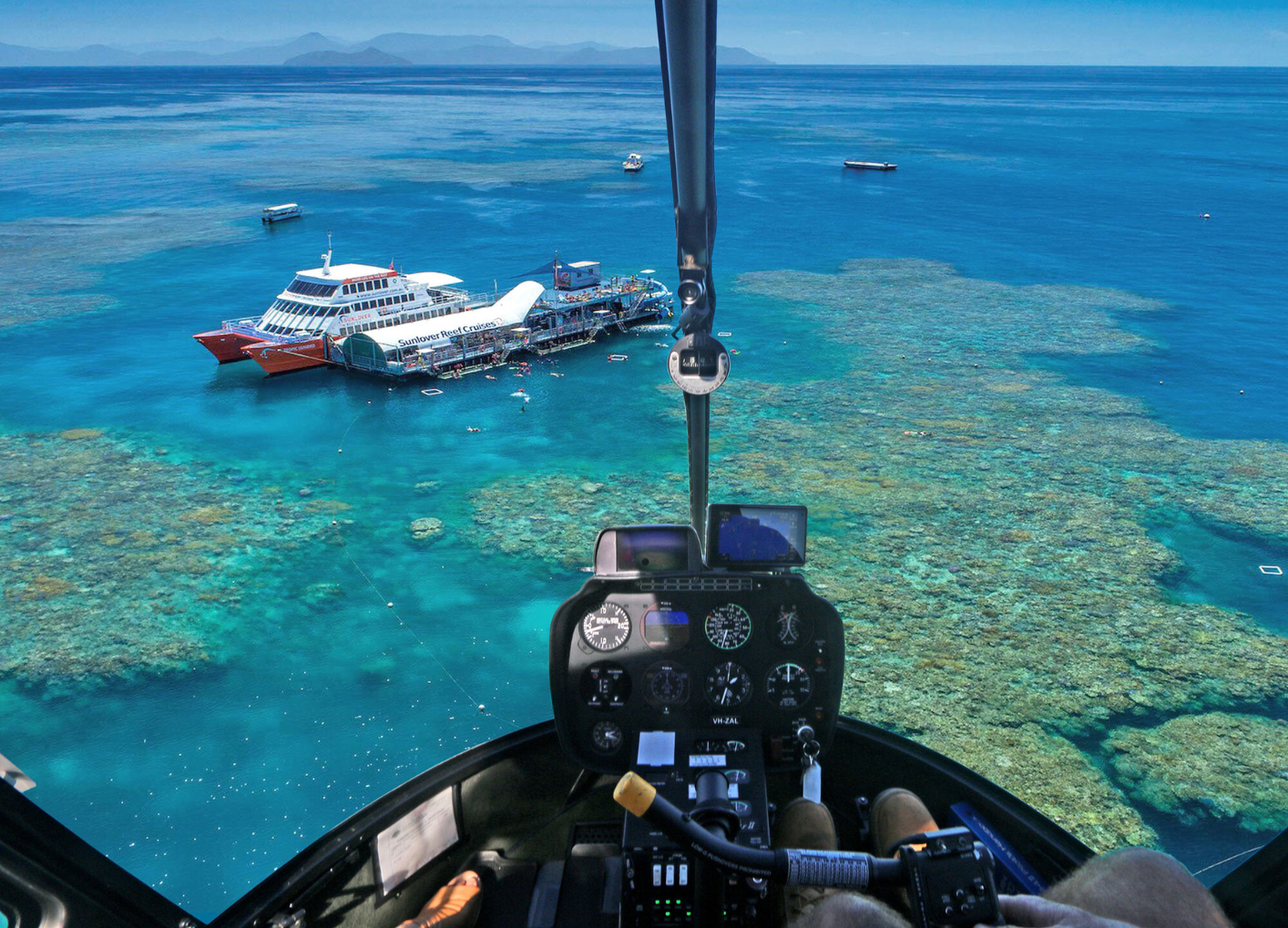
Reef & Helicopter Combo Cruise out with scenic flight | |
|---|---|---|
| Trip type | Speed-focused boat tour | Hybrid cruise and flight |
| Duration | 4–5 hours | 4 hours |
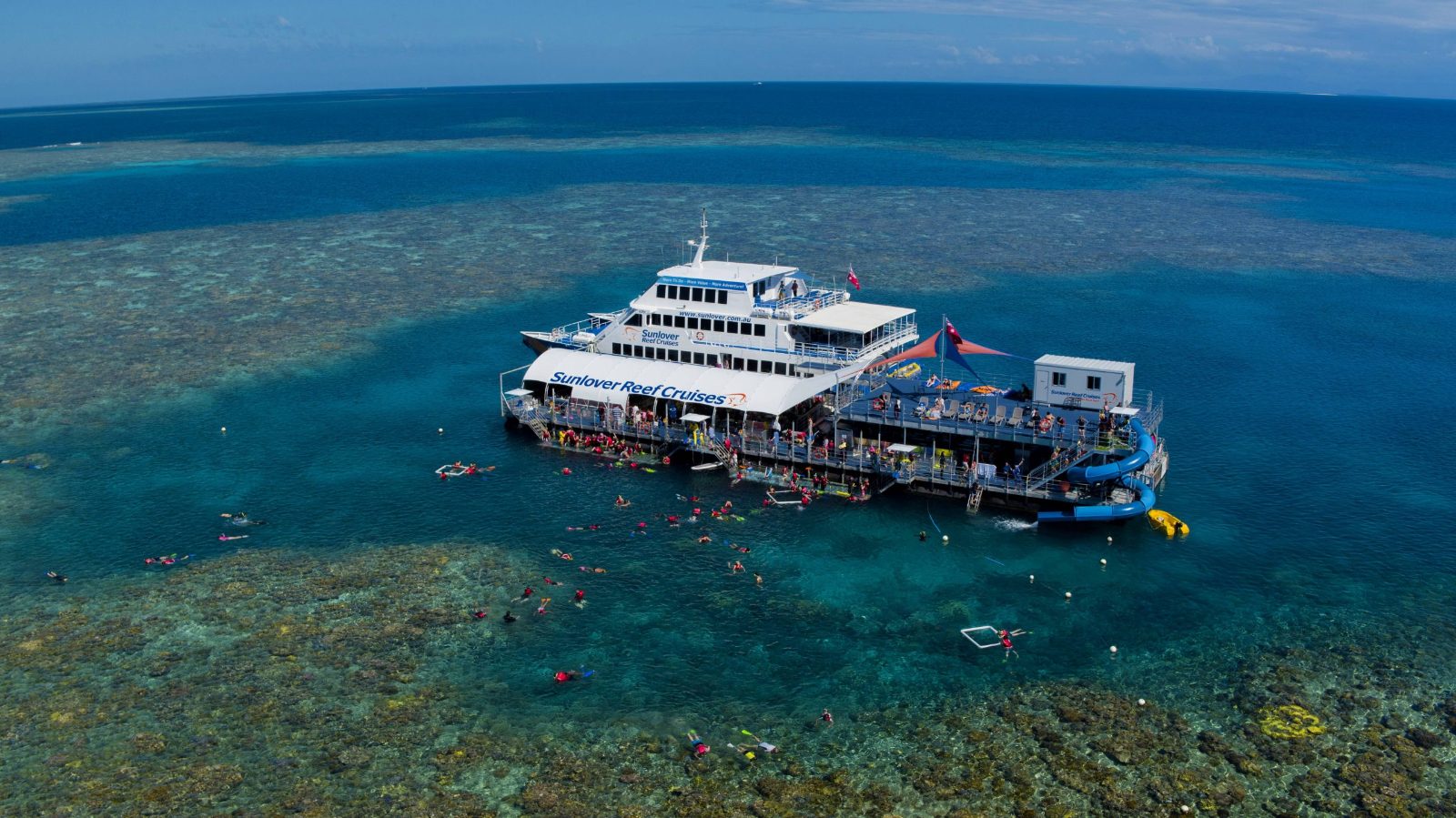
| Reef access method | Direct entry from vessel | Pontoon platform access |
| Price tier | Moderate | Premium |
| Best suited for | Active time-constrained visitors | Luxury-seeking reef explorers |
| See tickets & prices |
Verdict: For the most direct in-water experience, select the Express Snorkel Boat, while those seeking a unique perspective should consider the Reef & Helicopter Combo for their snorkeling cairns half day tickets.
Worth it for time-pressed visitors seeking reef access
Snorkeling cairns half day tours typically run 4-5 hours and cost between AUD 110-180, delivering direct access to the Great Barrier Reef without consuming your entire day. The shorter format suits cruise passengers, families with young children, or travelers combining multiple Cairns activities. You'll visit one or two reef sites with 2-3 hours of actual water time, which is enough to see healthy coral gardens, reef fish, and occasional turtles. The trade-off: full-day trips reach the pristine outer reef with superior visibility and biodiversity, while half-day snorkeling cairns tours stick closer to shore where conditions can be choppier and marine life less abundant. The environmental management charge applies regardless of trip length, so you're paying the same reef access fee for half the experience. Morning departures between 08:00-10:00 offer calmer seas and better visibility before afternoon winds pick up. For first-time snorkelers or those genuinely short on time, a half-day snorkeling adventure delivers legitimate reef encounters without overwhelming beginners.
Bottom line: Half-day snorkeling cairns half day tickets make sense when time is tight, but full-day trips offer substantially better value per dollar spent on the environmental charge.
They complement each other; most visitors who do both find the outer reef provides higher biodiversity while Green Island offers calmer, more accessible shallow waters for a snorkeling cairns half day tour.
|
Top pick Outer Reef Pontoon |
Green Island Trip | |
|---|---|---|
| Reef quality and coral condition | High biodiversity and outer shelf coral | Accessible seagrass and fringing reef |
| Travel time from Cairns | 90–120 minutes | 45–50 minutes |
| Seasickness risk (open water vs sheltered) | Higher due to open ocean crossing | Lower as trip remains closer to shore |
| Onboard facilities | Large platforms with underwater observatories | Island resort amenities and beach access |
| Price range | 180–250 AUD | 120–180 AUD |
| Best for | Dedicated snorkelers seeking marine variety | Families and those preferring calmer seas |
| See tickets & prices |
Verdict: Choose the outer reef for marine life variety when booking your snorkeling cairns half day, or opt for Green Island for shorter transit times and snorkeling cairns half day tickets that prioritize convenience.
Hand-picked experiences loved by thousands of travelers
4 hours
Free Cancellation
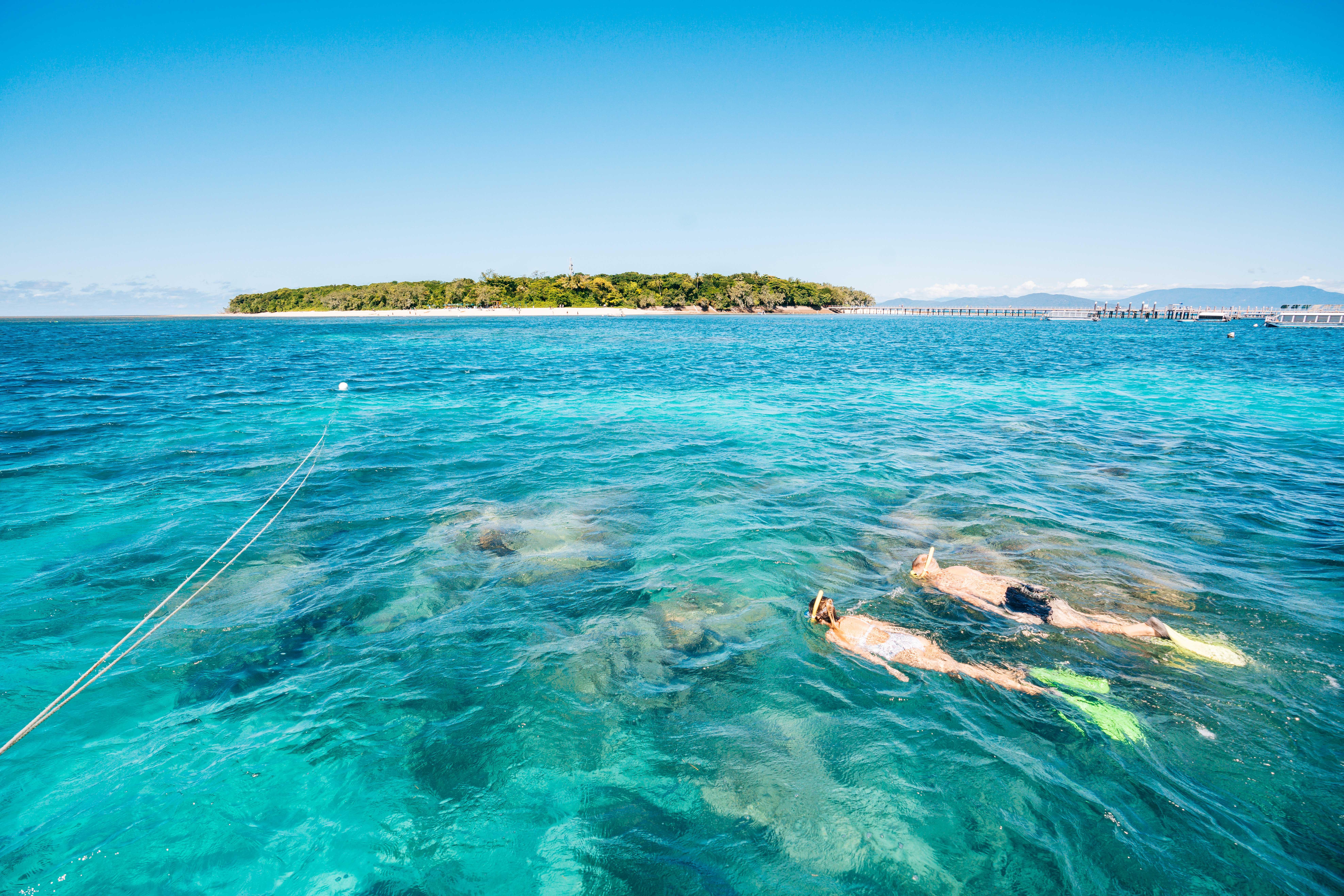
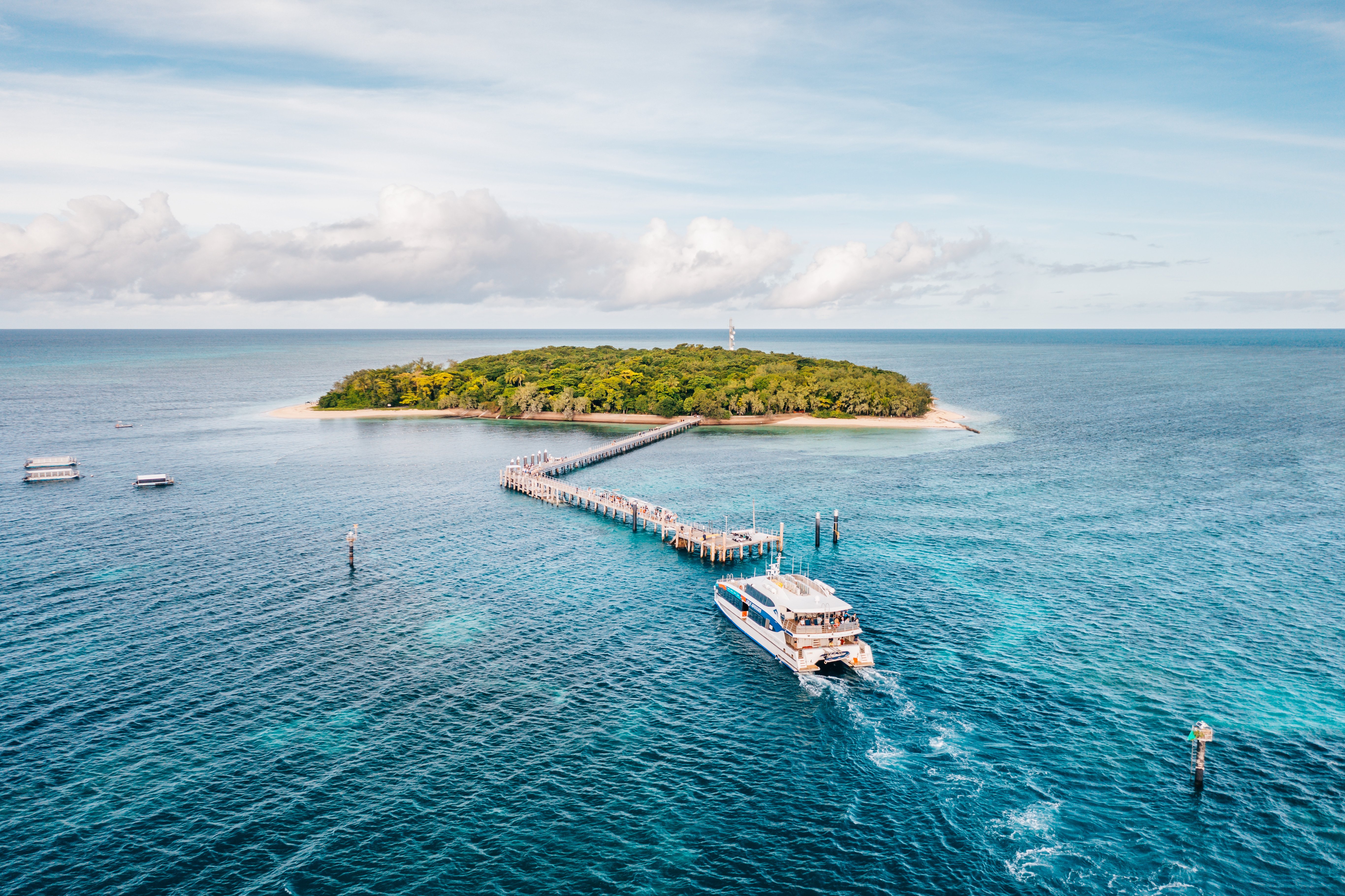
Escape to a tropical reef island aboard a modern catamaran for snorkeling, beach time, and coral viewing
5 hours
Free Cancellation
Sail to a pristine coral cay surrounded by thriving reef, rainforest trails, and turquoise lagoons
4 hours
Free Cancellation
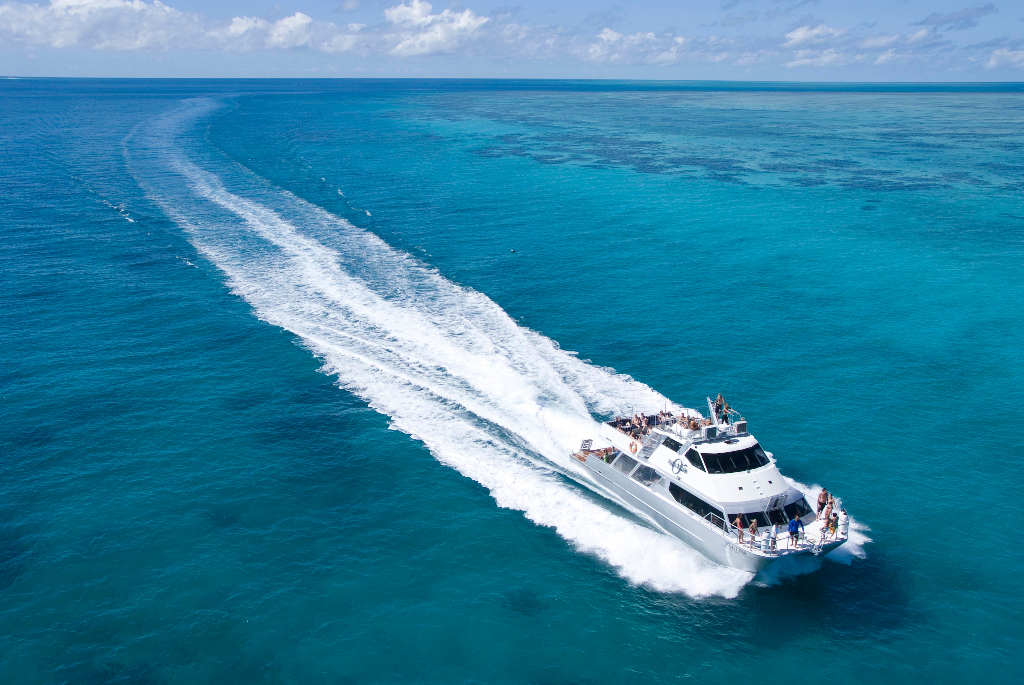
Fast catamaran to tropical island paradise with rainforest trails, reef snorkeling, and beaches
4 hours
Free Cancellation
Fly by helicopter to Moore Reef's pontoon for snorkeling, marine encounters, and scenic reef exploration
2 hours 30 minutes
Free Cancellation
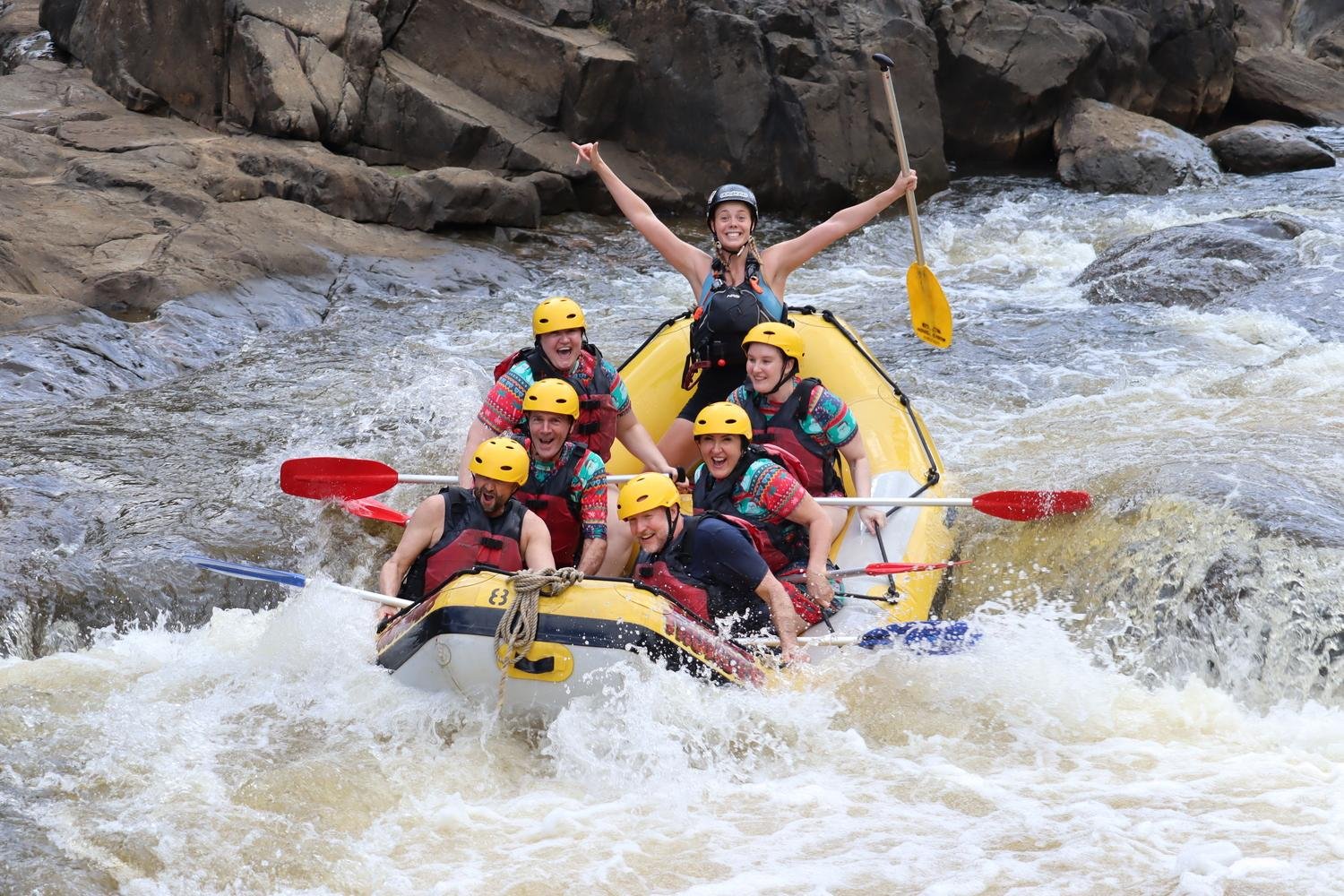
Navigate thrilling rapids through ancient rainforest gorges on this beginner-friendly rafting expedition
5 - 9 hours
Free Cancellation
Escape to a pristine coral cay for beach relaxation, underwater exploration, and rainforest walks
6 hours
Free Cancellation
Discover Australia's iconic reef from above and below on this dual adventure combining aerial views with underwater exploration.
4 hours 30 minutes
Free Cancellation
Journey through rainforest to an exclusive Great Barrier Reef island with snorkeling, kayaking & coral viewing
Arrive at the Cairns marina, present booking confirmation, and complete a safety briefing before boarding.
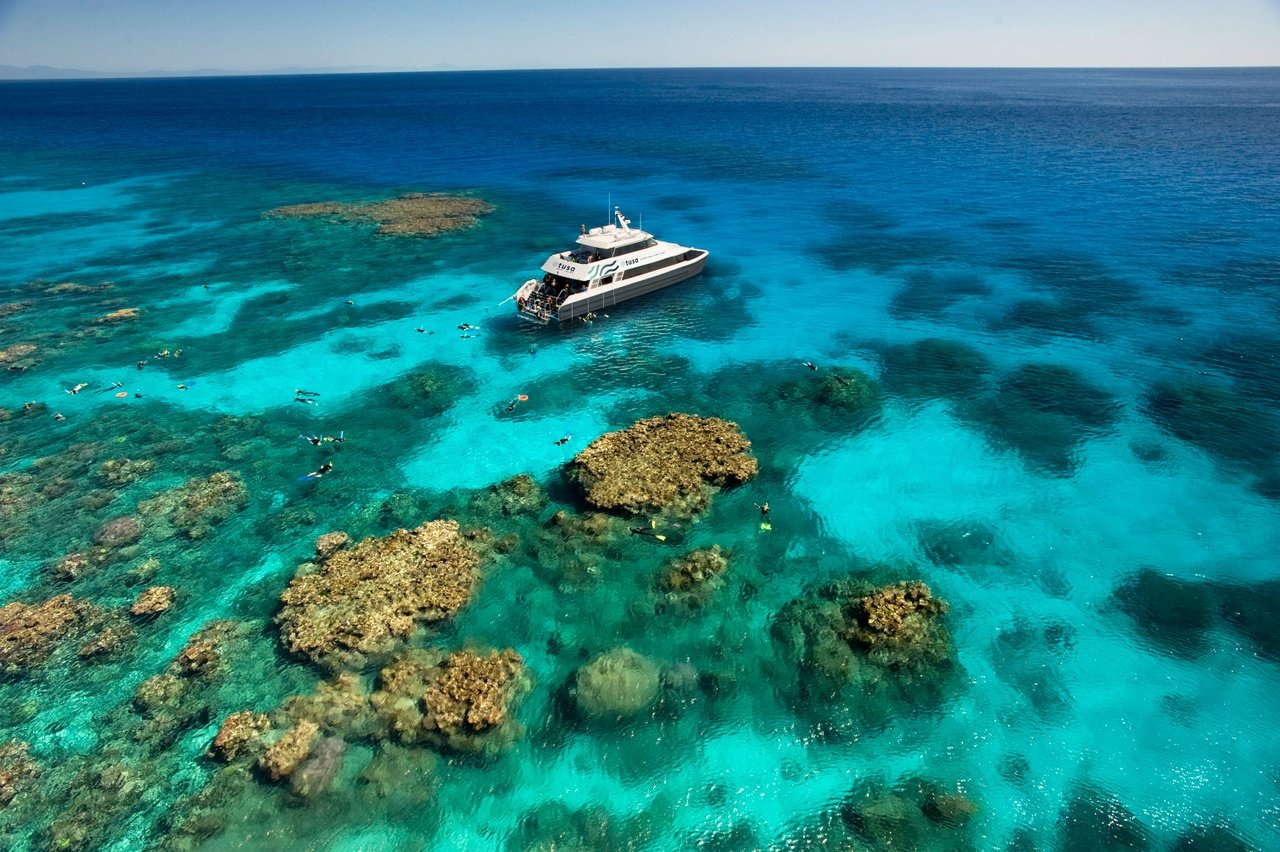
Vessel cruises out to the outer or inner reef pontoon or mooring site depending on the operator.
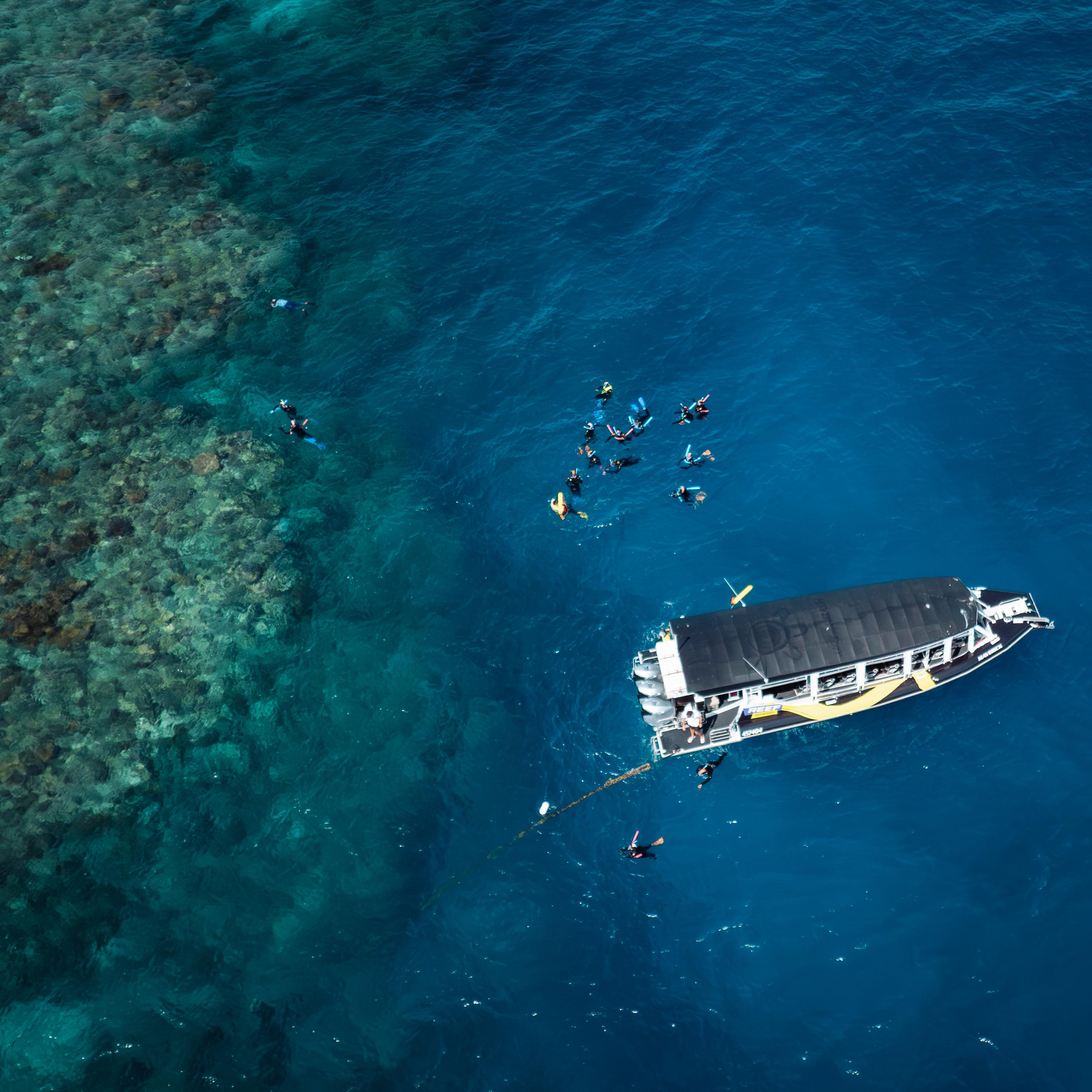
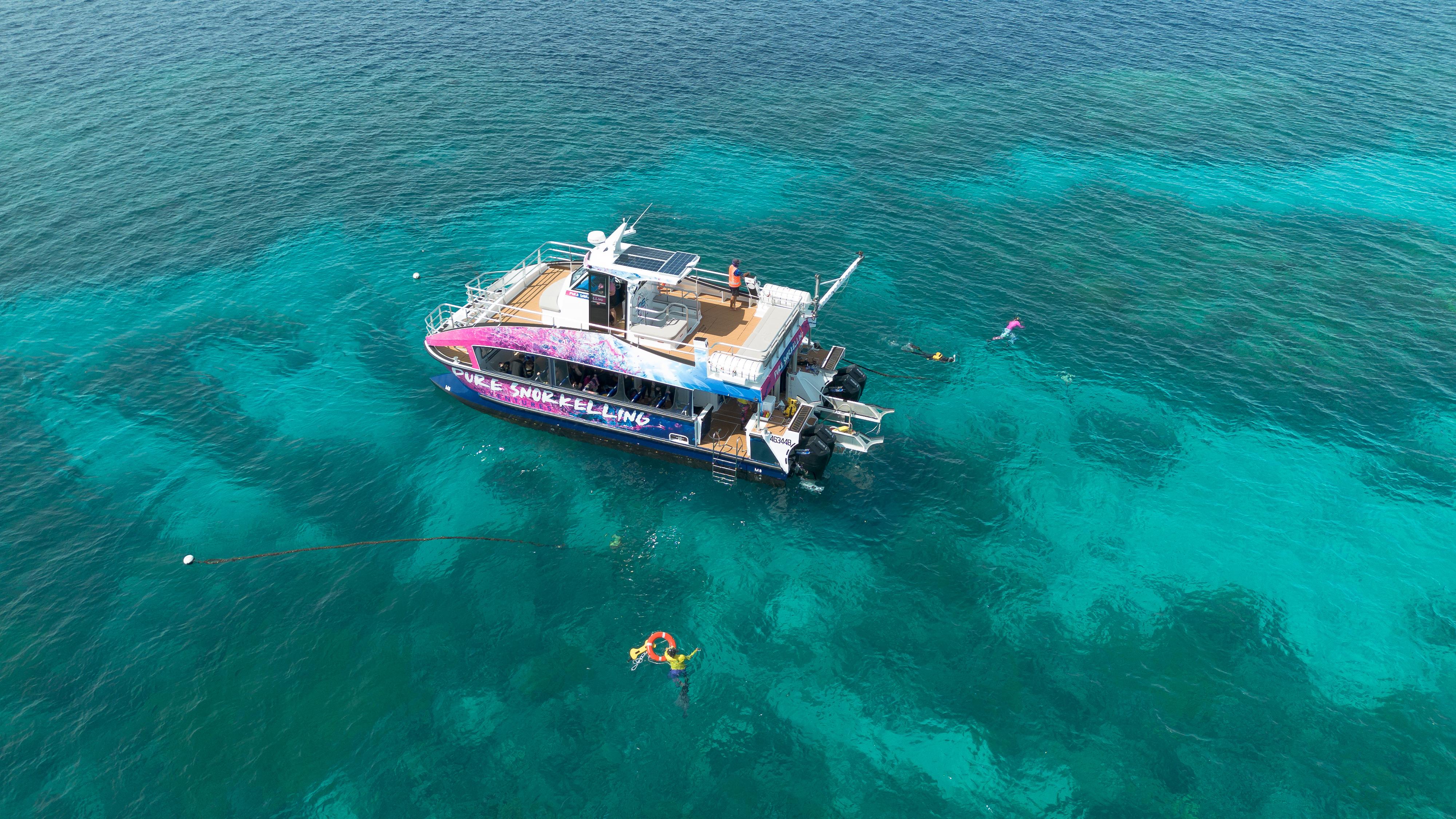
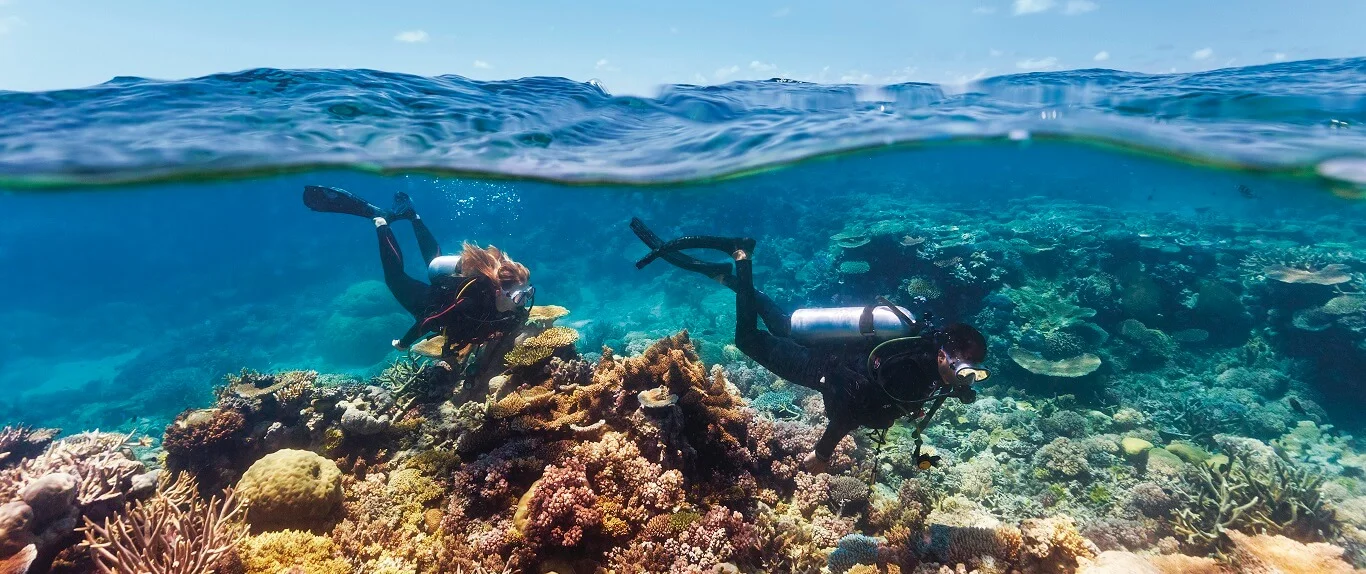
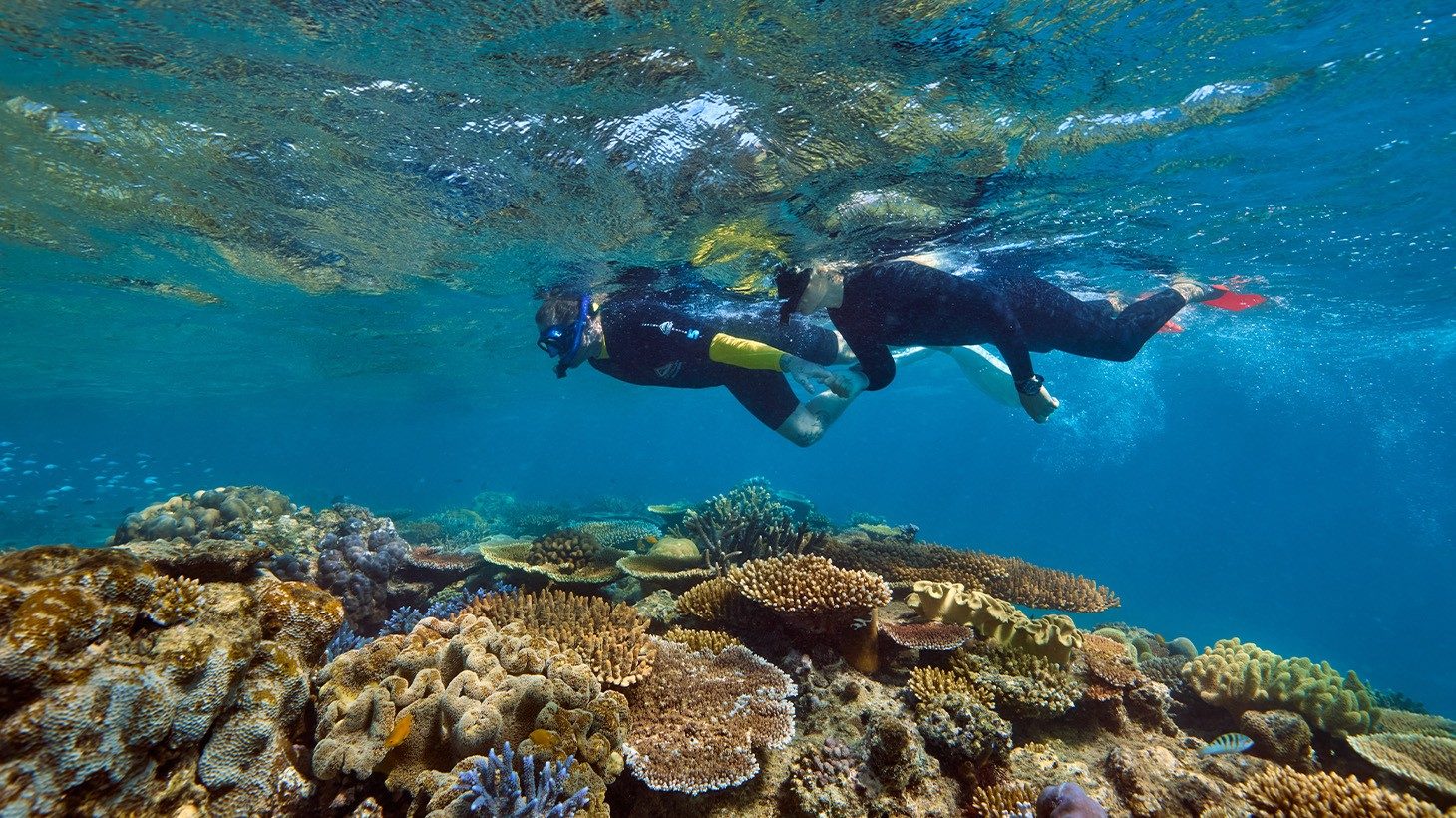
Guided or self-guided snorkeling cairns half day session over coral bommies with flotation vests available.
Buffet lunch served on board or at a pontoon while the boat repositions.
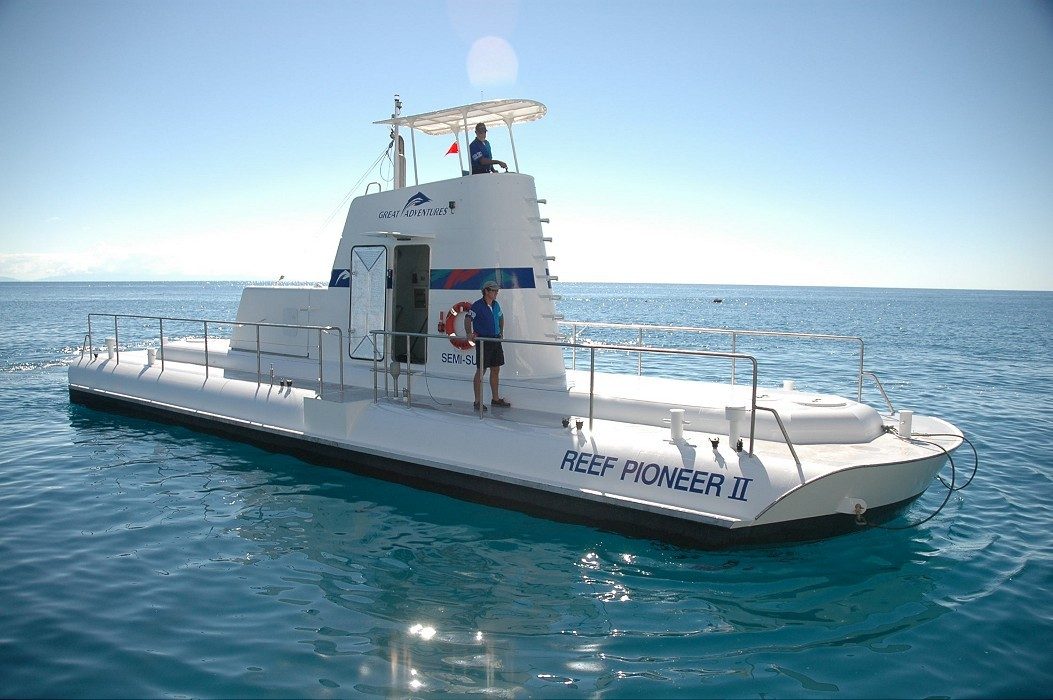
Optional second snorkel spot, semi-submersible viewing, or glass-bottom boat tour.
Cruise back to Cairns marina with rinse-off facilities and towel service on board.
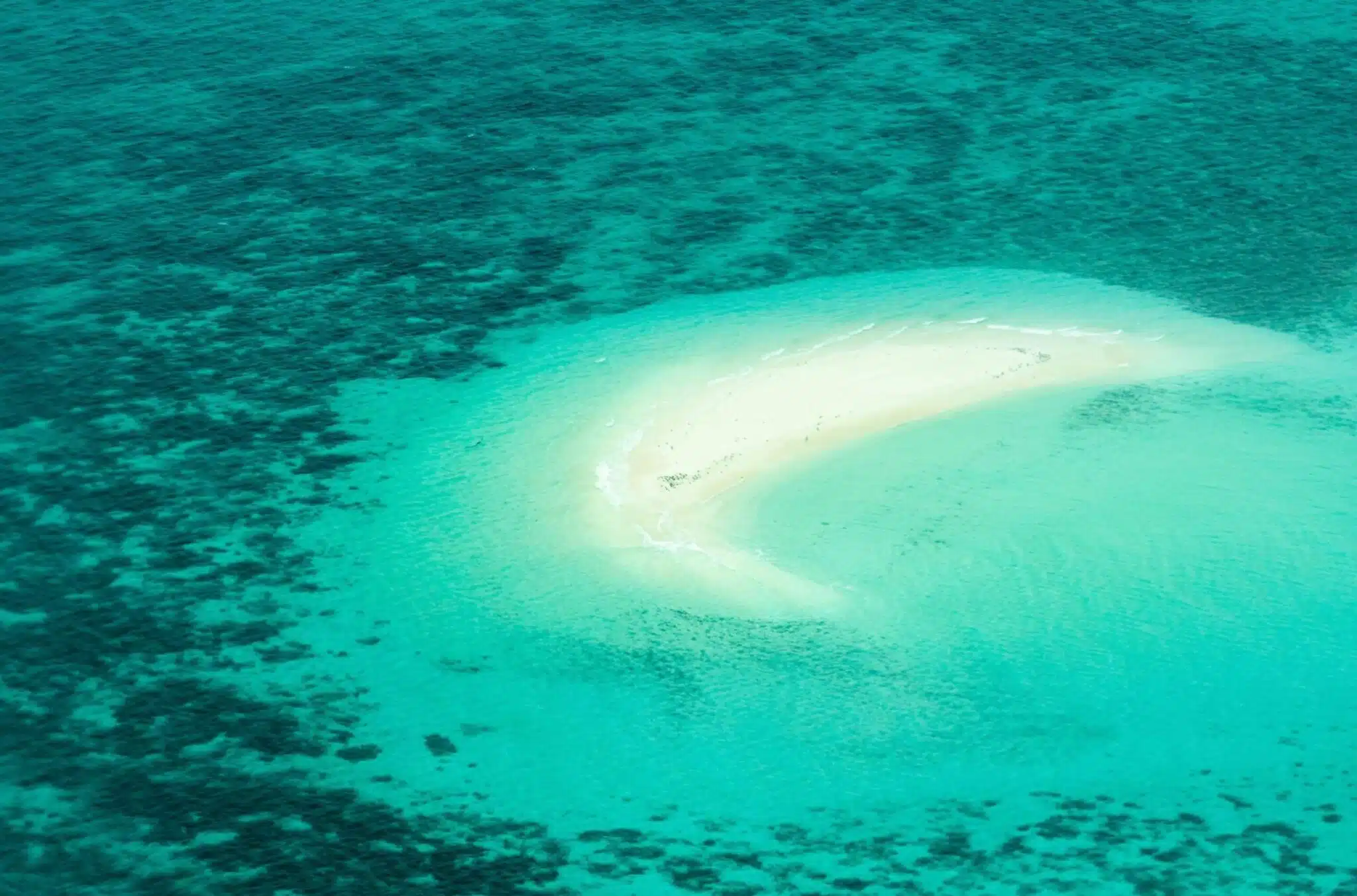
A protected sand cay and bird sanctuary roughly 40 km northeast of Cairns, home to nesting seabirds including sooty terns and home to some of the clearest shallow snorkeling water in the outer reef zone. Access is restricted to a small visitor area to protect nesting sites.
A cluster of coral bommies near the outer reef known for shallow depths of around 2-5 meters, making it a common first stop for beginner snorkeling cairns half day sessions. Clownfish and giant clams are frequently spotted around the bommie clusters.
A popular outer reef site roughly 50 km from Cairns featuring coral canyons and swim-throughs favored by half day tour operators for its consistent visibility. Green sea turtles are commonly sighted resting on the sandy channels between coral heads.
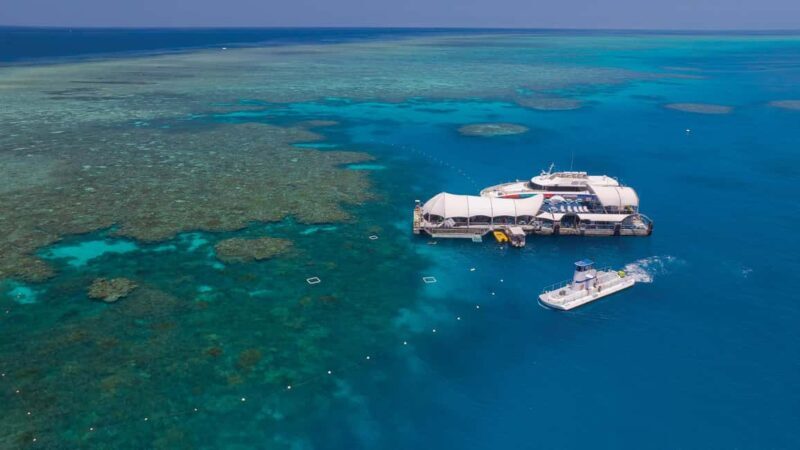
A fixed floating platform used by several operators as a base for snorkeling, semi-submersible tours, and lunch service, moored roughly 45 minutes offshore from Cairns. The pontoon includes an underwater observatory viewing window built into its structure.
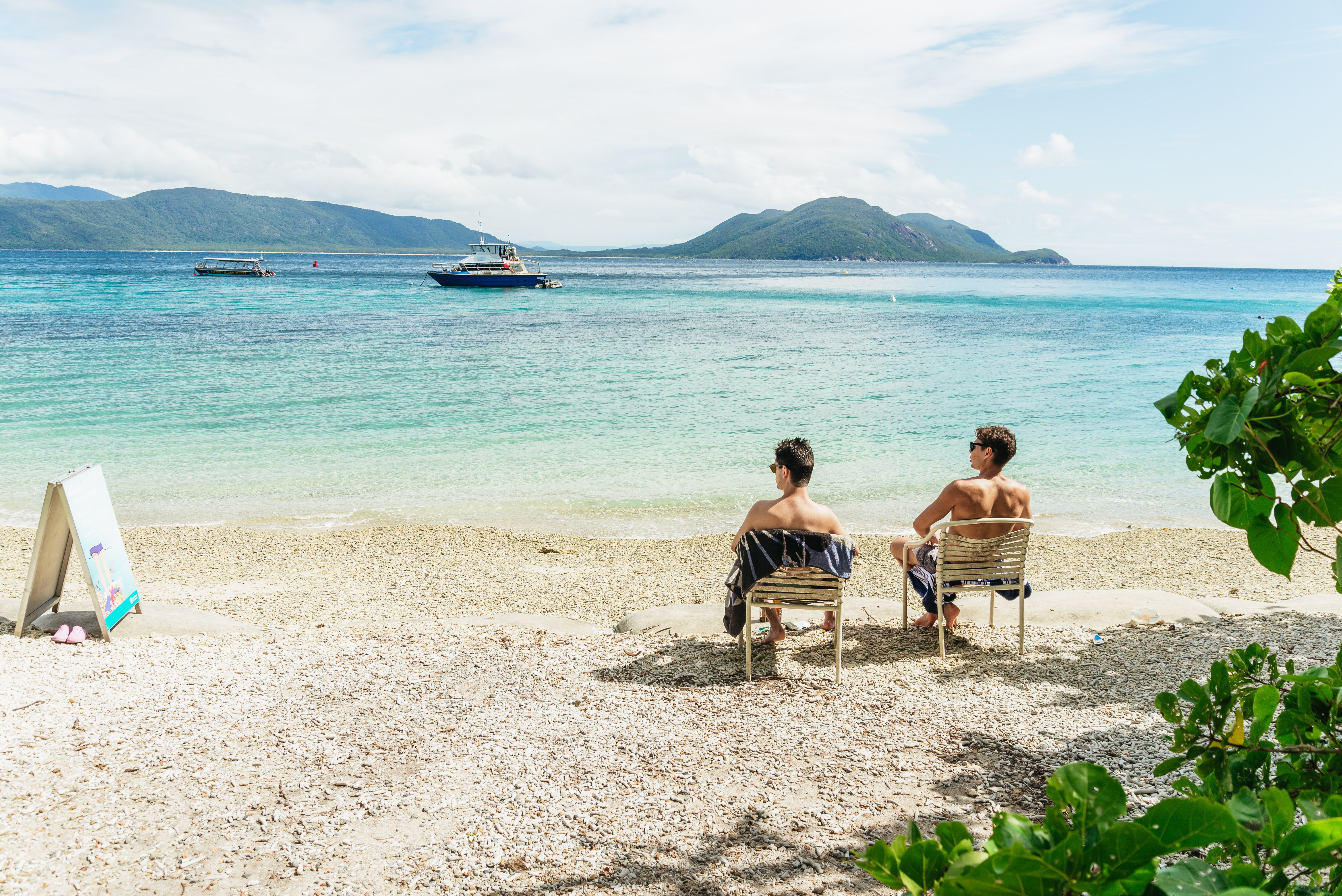
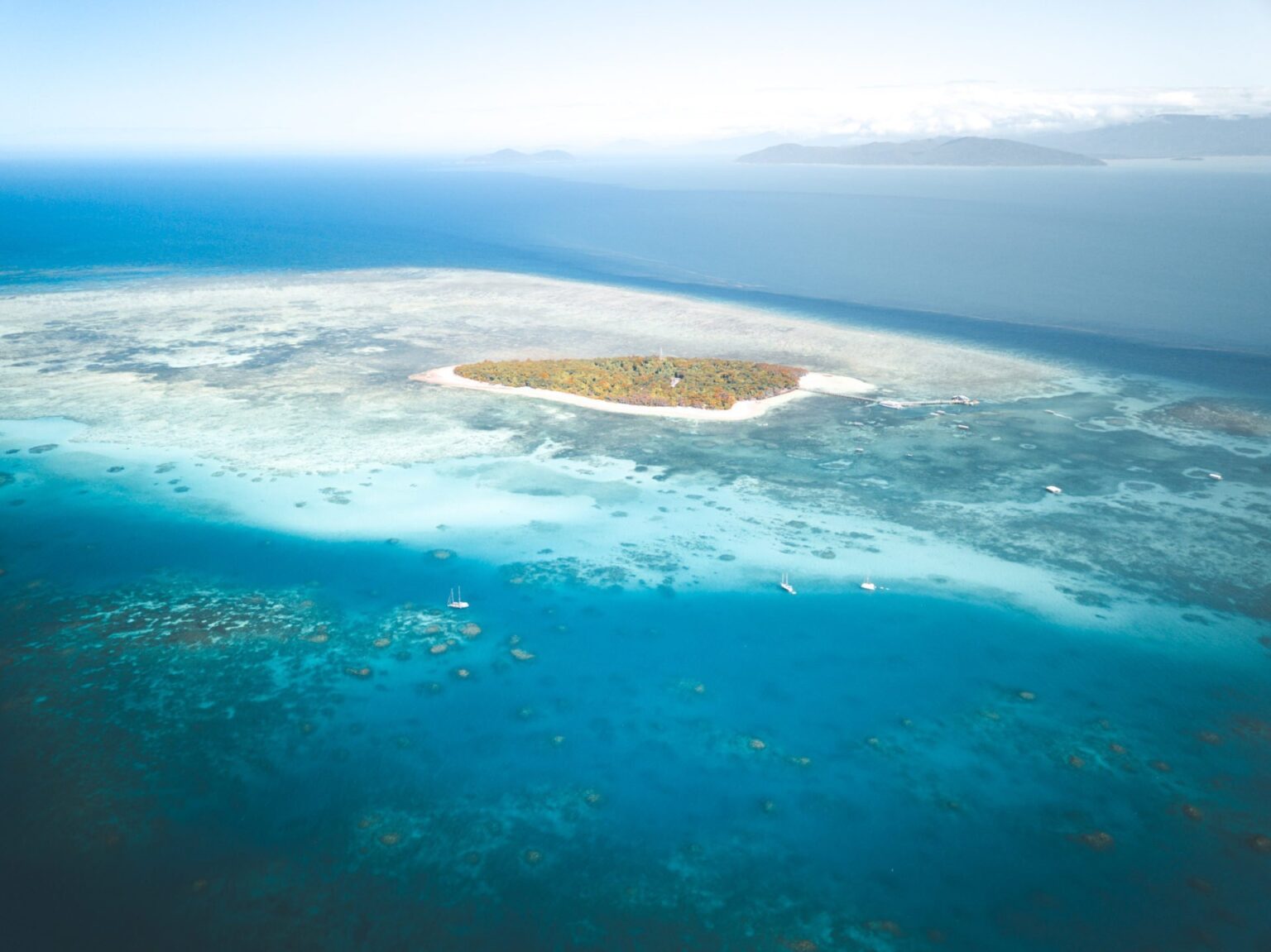
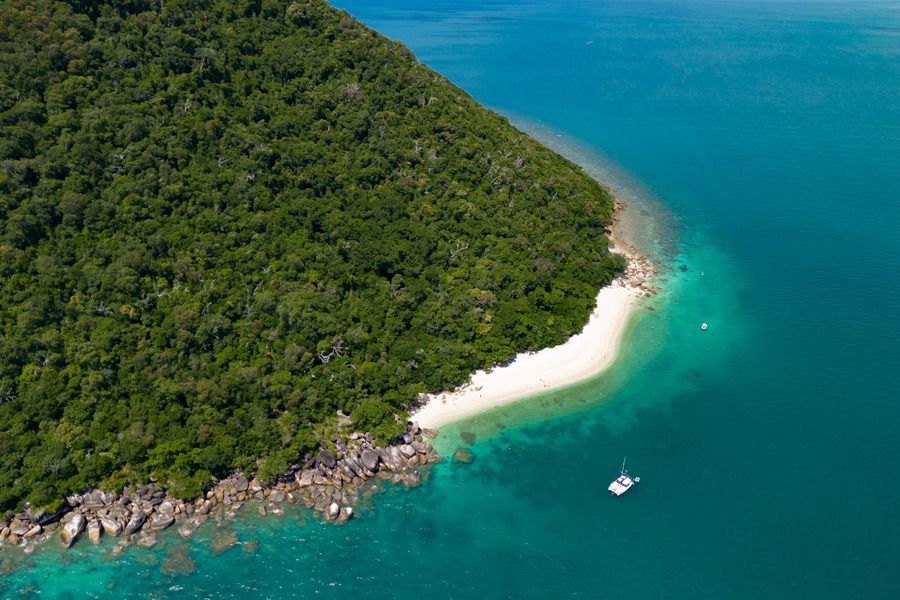
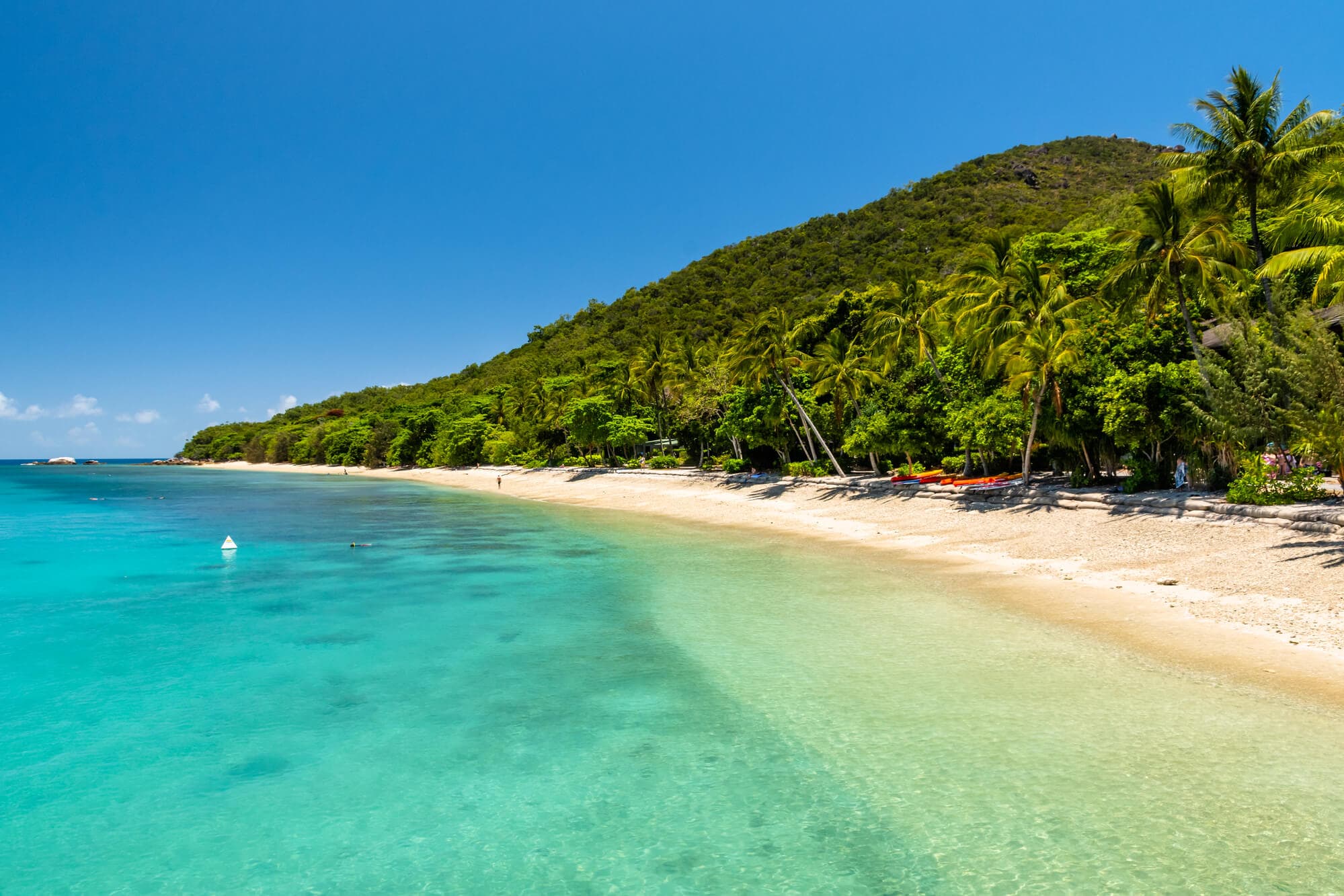
A shallow fringing reef surrounding Fitzroy Island about 6 km off Cairns, reachable in roughly 45 minutes by ferry and known for calmer, more sheltered snorkeling conditions than the outer reef. Granite boulders and rainforest meet the shoreline directly above the reef flat.
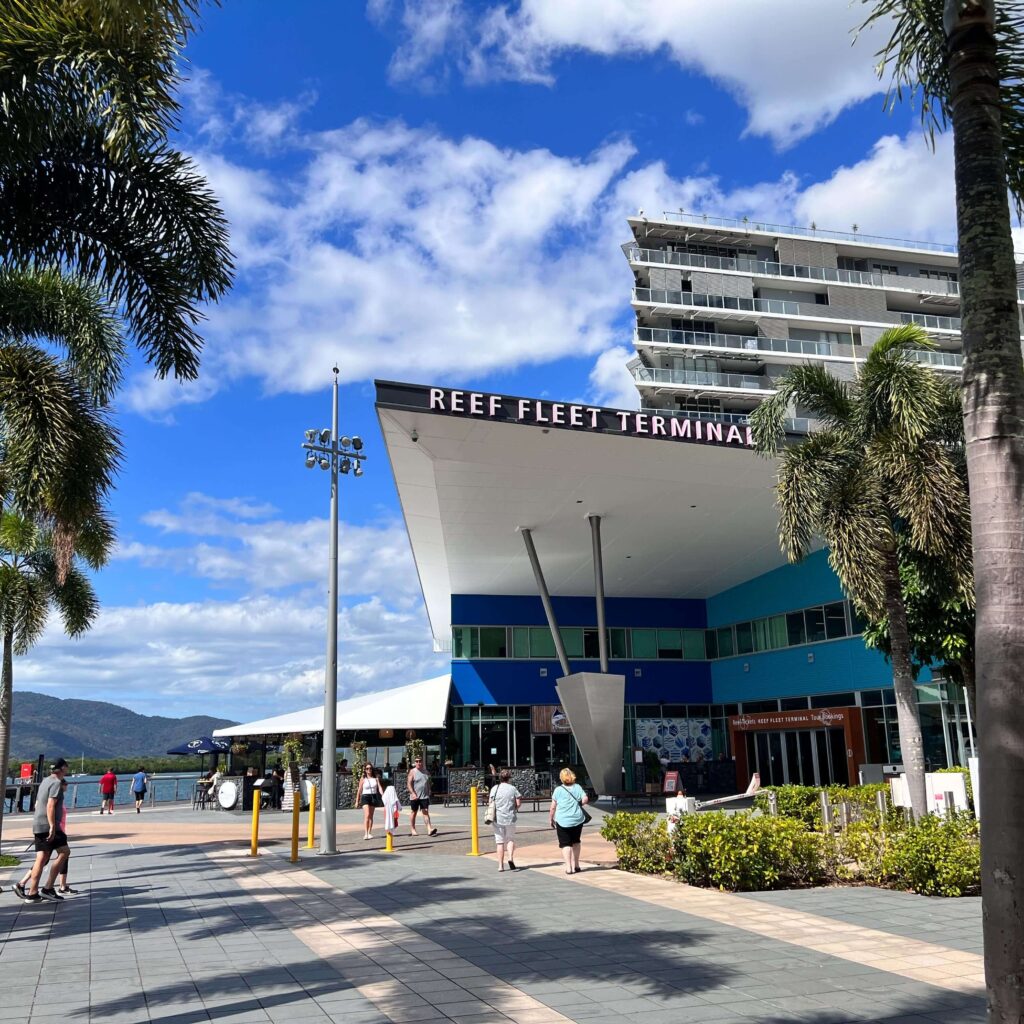
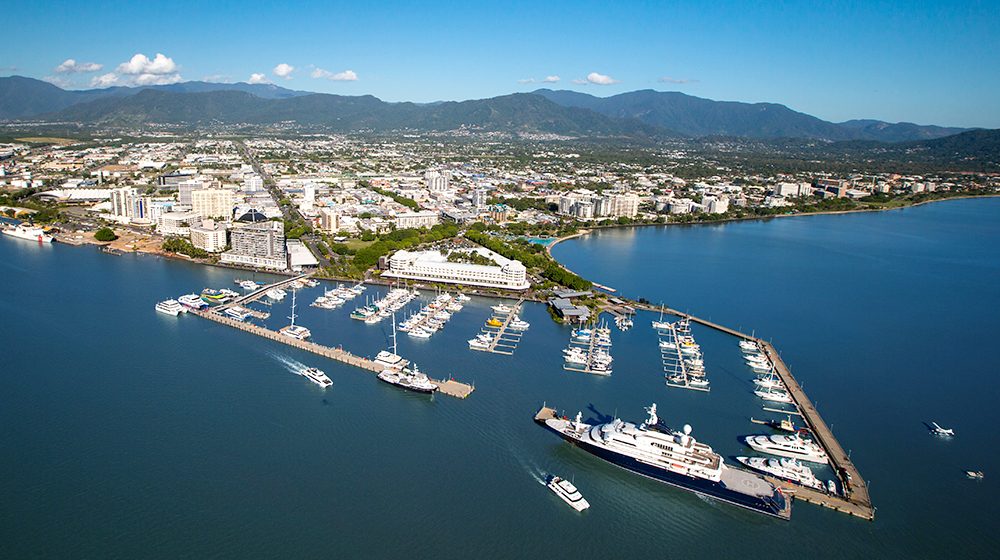
You board at Reef Fleet Terminal by 08:30, crossing Trinity Inlet past mangrove channels and anchored fishing trawlers. The catamaran clears False Cape within twenty minutes, trading the brown coastal water for the reef's signature turquoise.
Crew distribute stinger suits and masks while the captain narrows speed as the first coral bommies appear below the hull.
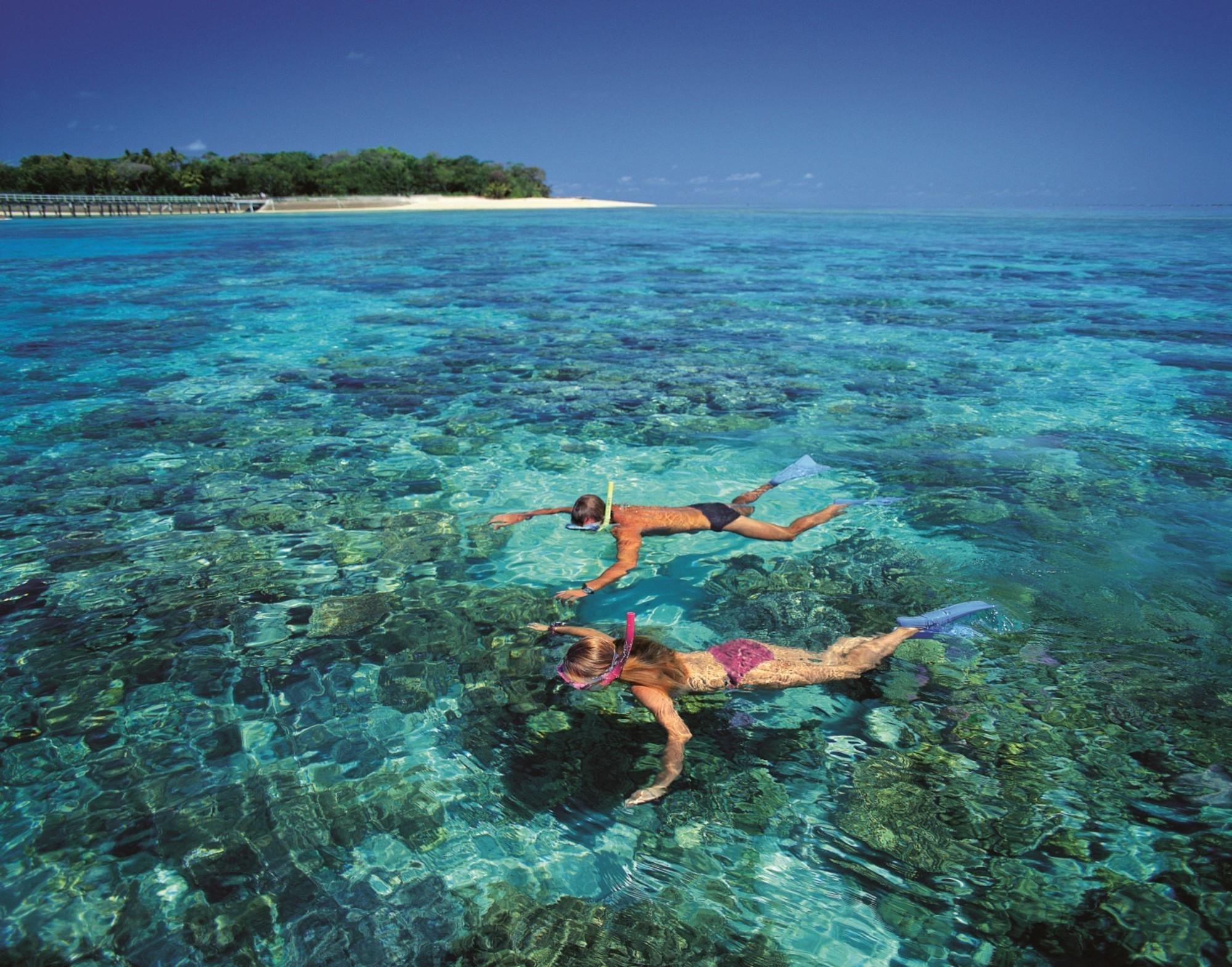
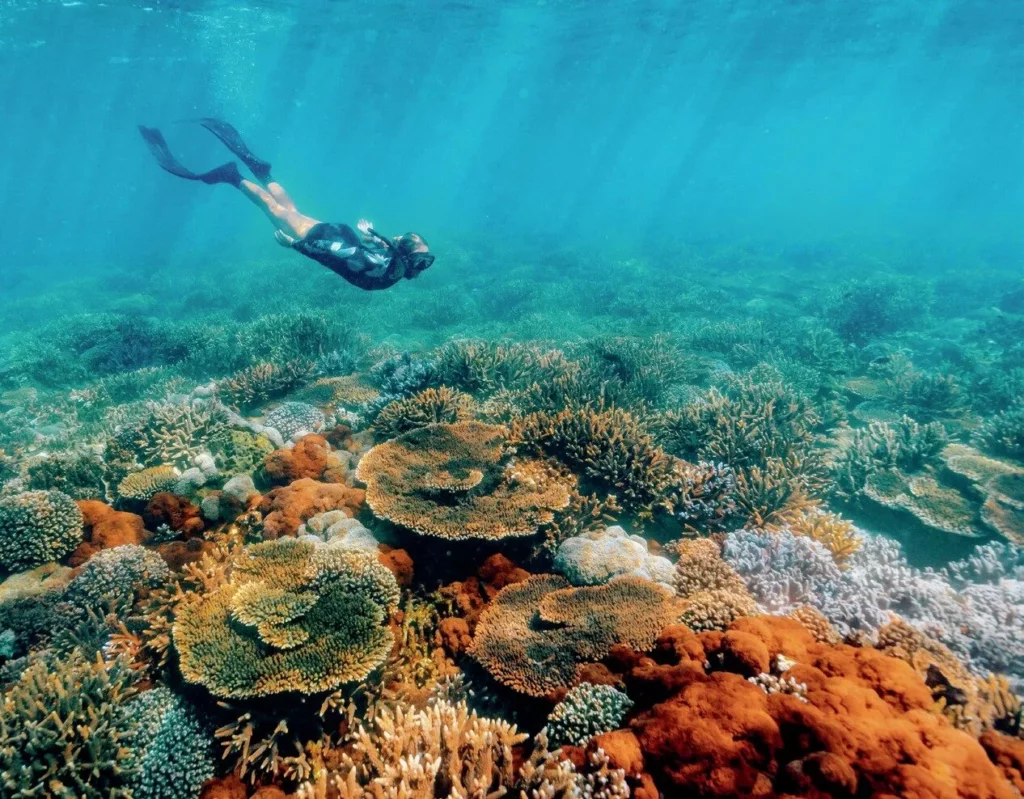
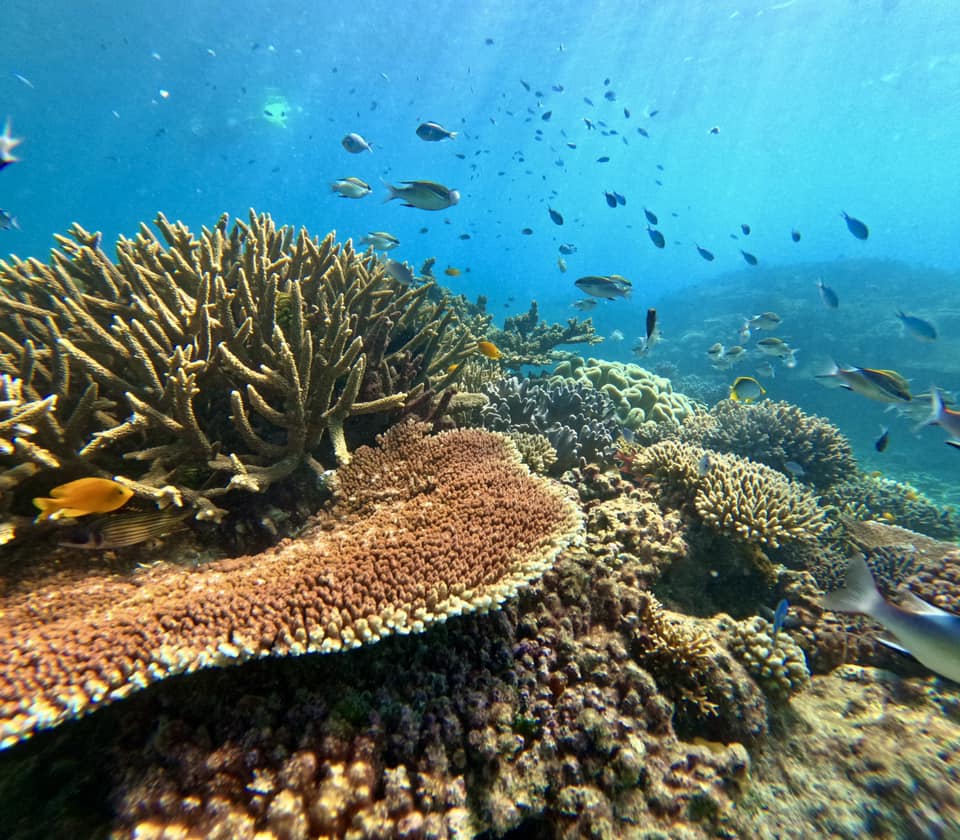
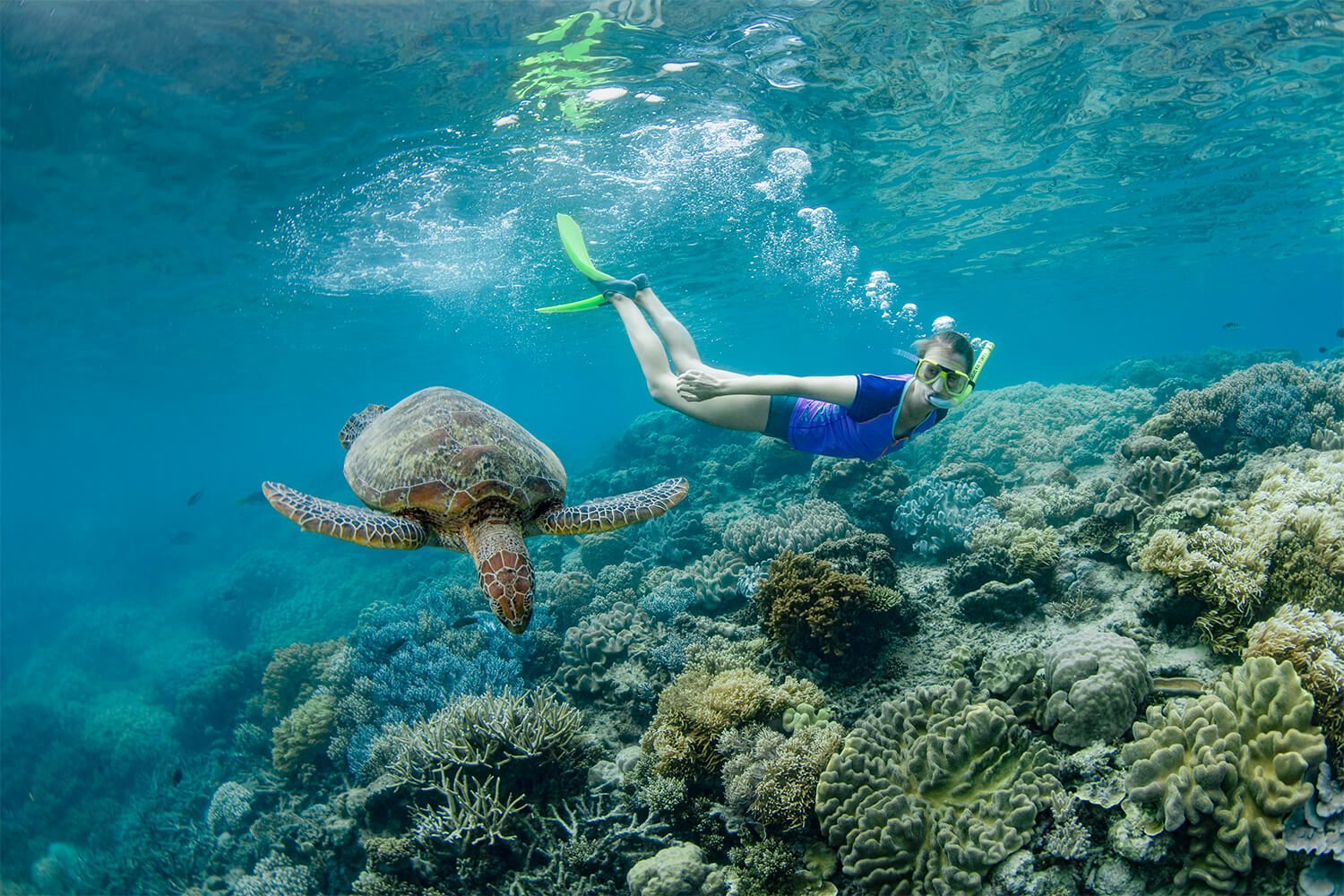
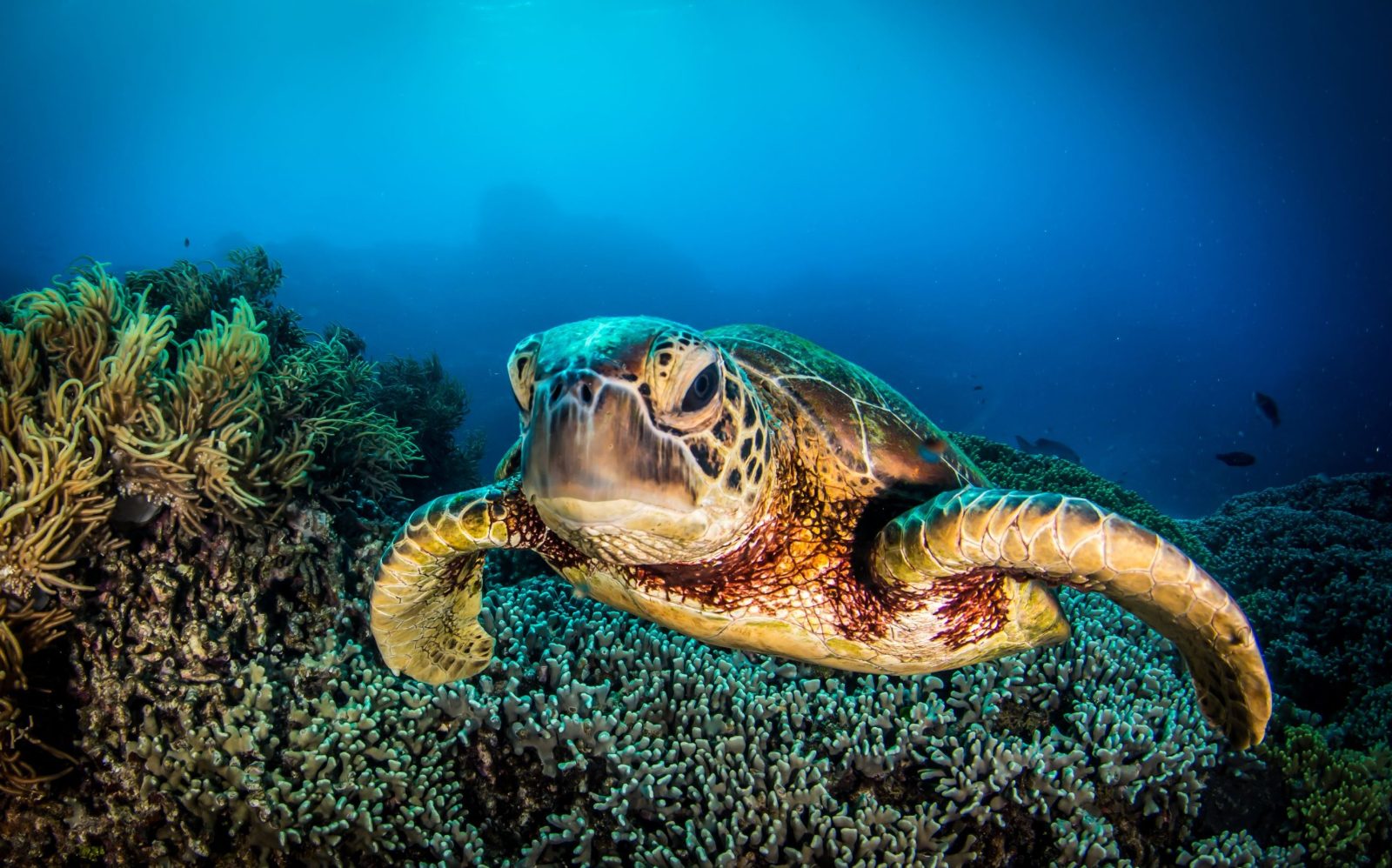
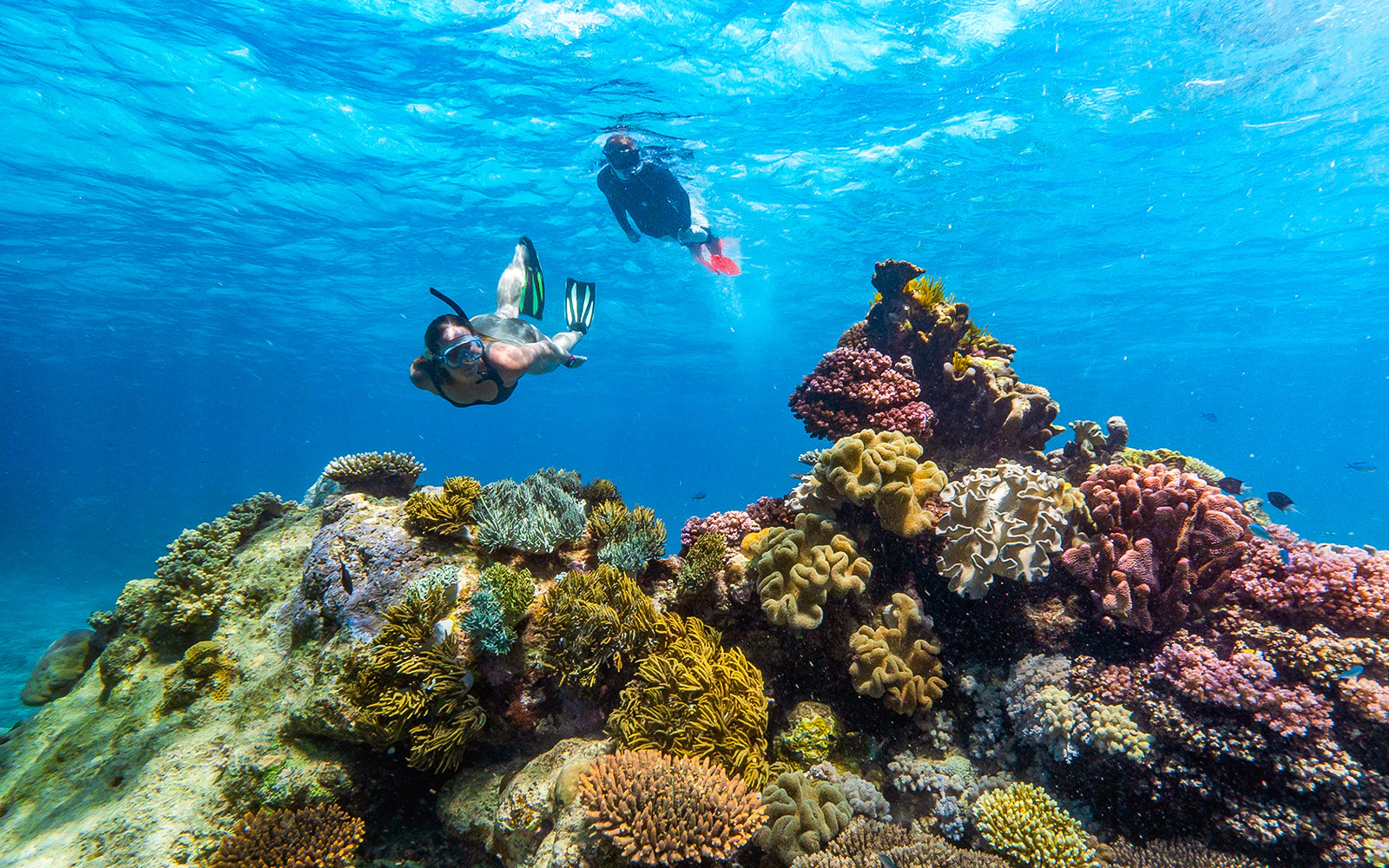
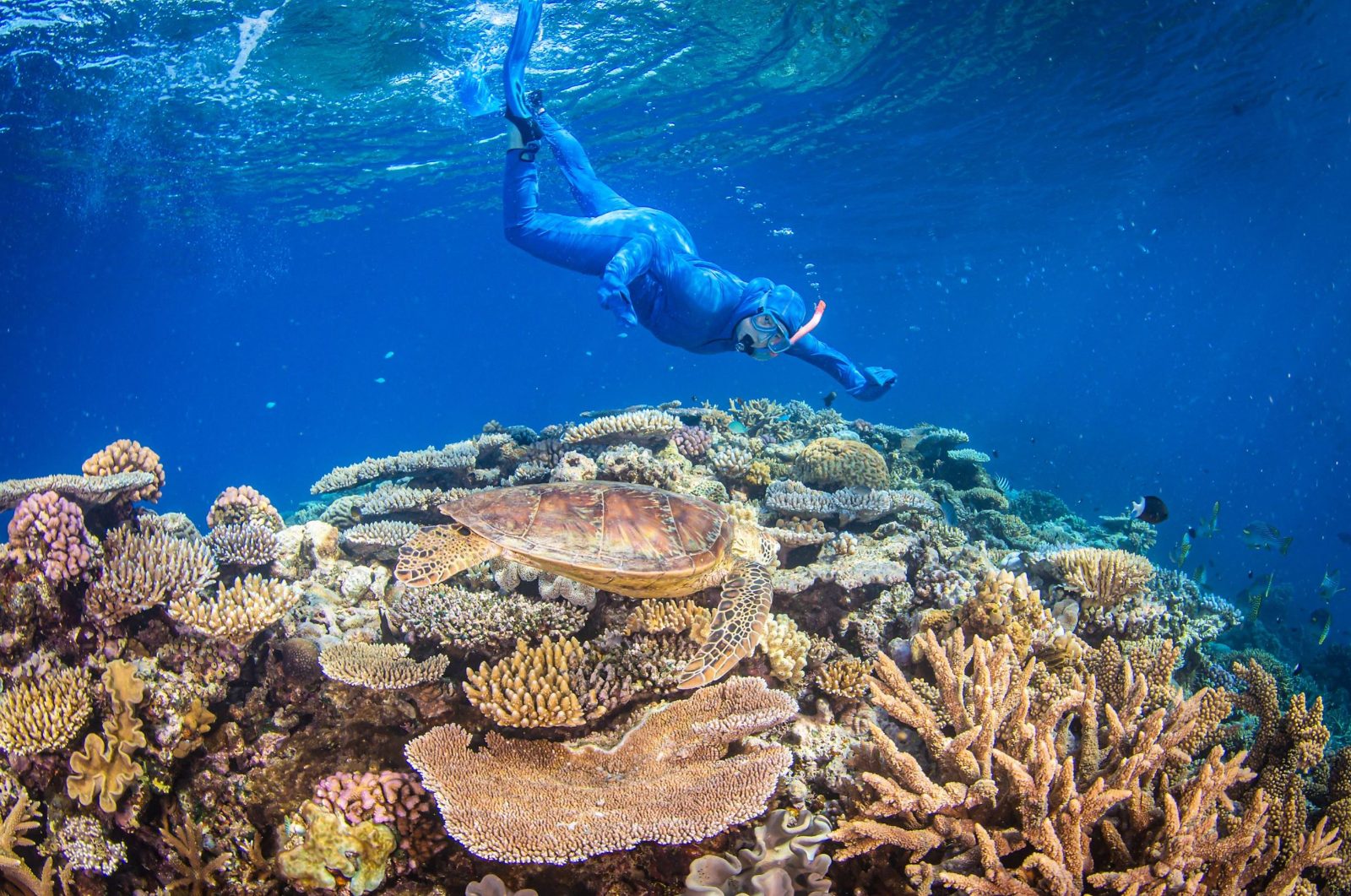
You step off the swim platform into water hovering at 25°C, the surface tension breaking around your mask. Fifteen metres down, staghorn coral fans in ochre and violet patterns. Parrotfish graze on algae, their beaks scraping audible clicks. A green sea turtle glides past, flippers rowing slow arcs, then drops toward a cleaning station where wrasse pick parasites from its shell. You drift above the bommie's edge where the sand channel begins, watching a school of fusiliers shift direction in unison.
Back aboard, the crew serves morning tea—fruit platters, biscuits, coffee from thermal urns. The boat repositions to a second mooring where the coral wall drops into deeper blue. You descend again, this time following a guide who points out a moray eel tucked into a crevice and a giant clam with iridescent mantle tissue. Thirty minutes later, the engines restart. By 13:00 you're walking back along the Cairns Esplanade, saltwater still drying on your skin.
All the details about your upcoming adventure in one place
The Great Barrier Reef Marine Park stretches 2,300 kilometres along Queensland's coast, yet most visitors reach its coral systems within forty minutes of Cairns. Morning departures between 08:00 and 10:00 capitalise on calm water and clear visibility before southeast trades pick up after midday.
The marine park operates under a zoning system established in 1975, designating specific moorings for commercial vessels to prevent anchor damage to living coral.
Snorkeling cairns half day itineraries cluster around two geographic zones. Inner reef platforms sit twelve to eighteen nautical miles offshore, where pontoons and catamarans moor above bommies rising from sandy channels. Outer reef sites lie thirty to forty nautical miles northeast, where the continental shelf drops away and pelagic species patrol vertical walls. Green Island, a vegetated coral cay seven kilometres offshore, offers the shortest crossing time but higher tourist density. Operators collect environmental management charges ranging from six to twenty dollars per passenger, funding reef research and mooring maintenance separate from the park's free-entry policy.
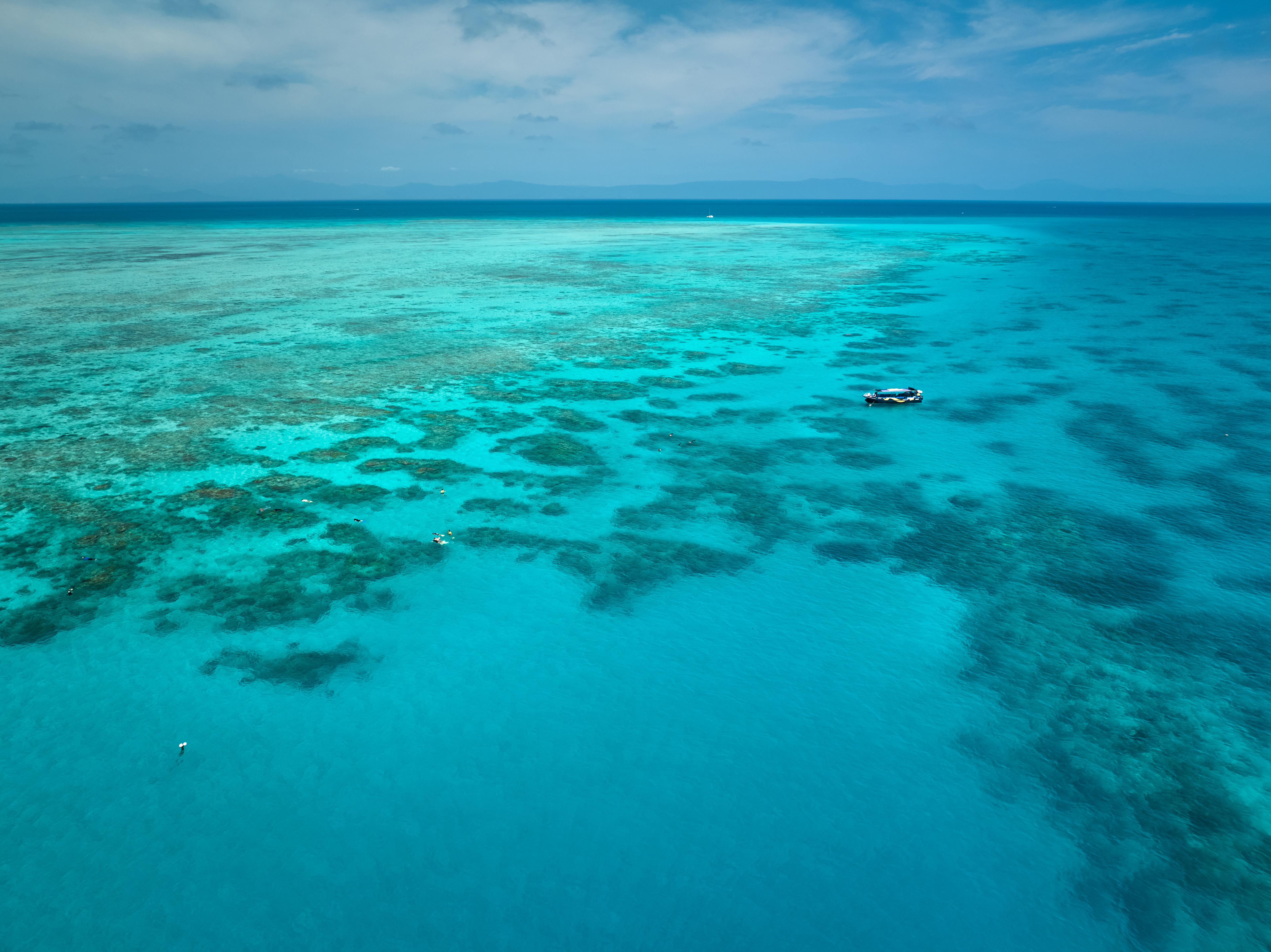
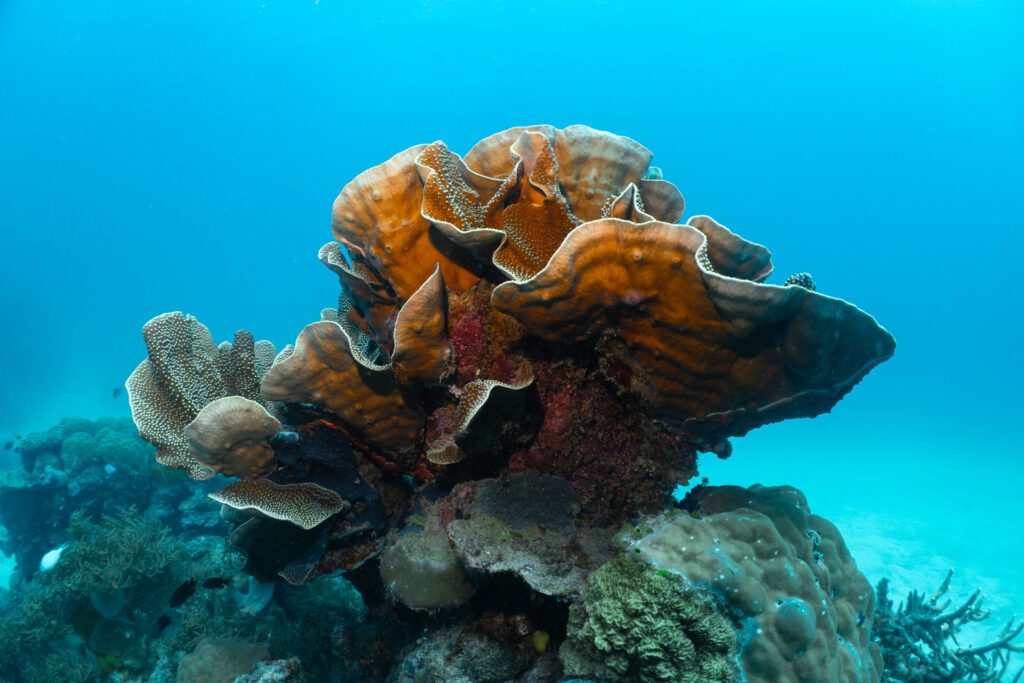
Coral composition shifts with distance from shore. Staghorn and plate corals dominate shallow lagoons, their calcium carbonate skeletons formed by polyp colonies over centuries. Brain corals and sea fans appear in deeper channels where current delivers plankton. Water temperature holds between 23°C and 28°C year-round, eliminating the need for thermal wetsuits. Visibility averages fifteen to twenty-five metres during dry months from May through October, dropping to ten metres during summer rain. The reef's biodiversity peaks in areas where multiple habitat zones converge—seagrass beds meet coral rubble fields, which grade into living reef walls.
Snorkeling cairns half day tours return passengers to the city by 13:00 or 14:00, allowing afternoon flexibility. Vessels range from high-speed catamarans carrying a hundred passengers to sailing yachts limited to twenty guests. Swim platforms, freshwater showers, and underwater viewing windows distinguish premium operators. The marine park operates daily without seasonal closures, though rough weather between December and March occasionally forces itinerary changes. Crew conduct pre-departure briefings covering buoyancy control, marine stinger protocols during box jellyfish season, and no-touch policies for coral and wildlife.

The reef's biodiversity peaks in areas where multiple habitat zones converge — seagrass beds meet coral rubble fields, which grade into living reef walls.
Wear a swimsuit under light, quick-dry clothing since changing rooms on board are compact. A rash vest or wetsuit, usually provided by the operator, is recommended for sun and stinger protection during snorkeling cairns half day trips.
Bring a small daypack rather than large luggage, since storage on reef vessels is limited to lockers or under-seat space. Operators conduct a basic safety briefing and bag check before boarding for any snorkeling cairns half day tour.
GoPros and underwater cameras are welcome, and most boats sell disposable underwater cameras or offer photo packages shot by crew photographers. Drone use is restricted within the Great Barrier Reef Marine Park without prior permits.
Children usually need to be a minimum height or age (often around 3 years and up) to use snorkel gear safely, and flotation vests are provided for young or nervous swimmers.
Larger reef vessels typically have flat-deck access and swim platforms suited to wheelchair users transferring into the water with crew assistance, though smaller boats may have step-only entry. It is worth confirming mobility accommodations directly with the operator when booking a snorkeling cairns half day tour.
A light breakfast or morning tea and a buffet lunch are commonly included on half day reef cruises, along with tea, coffee, and water throughout the trip. Bringing your own snacks is generally fine, but glass bottles and alcohol from outside are usually restricted on board.
Marine park always accessible; tours run set departures
Same tour schedule as other weekdays
Midweek departures often quieter
Standard half day schedule
Bookings fill faster before weekend
Busiest departure day
Best arrival window
08:00–10:00 (calmer seas, clearer visibility)
Departure region
Great Barrier Reef Marine Park, Cairns, Queensland, Australia
Mobility access
Most vessels have step access; ask operator about ramps for limited mobility
Sun exposure
High UV year-round; reef-safe sunscreen and rash vest recommended
Storage
Small locker or dry bag storage on most boats; leave valuables ashore
Park authority
Great Barrier Reef Marine Park Authority (GBRMPA), gbrmpa.gov.au
Car · 10–20 min from Cairns suburbs · Parking approx. 10-25 AUD/day
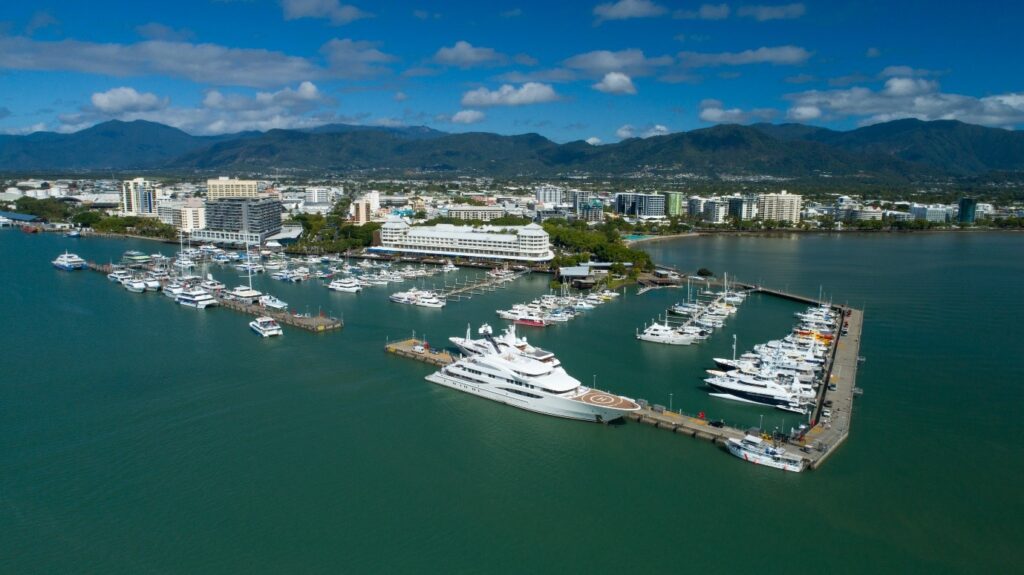
Drive to the Cairns Reef Fleet Terminal or Marlin Marina; multiple paid parking stations sit within a 5-minute walk.
Walk · 10–15 min · Free
Most Cairns CBD hotels are within a 10-15 minute walk of the marina precinct along the Esplanade.
Taxi · 5–15 min depending on origin · Approx. 10-25 AUD
Taxis and rideshare services run directly to the Reef Fleet Terminal from anywhere in Cairns.
Public transport · 10–20 min · Approx. 2-5 AUD fare
Sunbus services stop within a few blocks of the marina along Wharf Street and the Esplanade.
Most half day reef operators allow free rescheduling or a full refund up to 24 hours before departure; cancellations inside that window are often non-refundable due to weather-dependent boat capacity. The Great Barrier Reef entrance itself carries no admission cost (0 AUD), though the environmental management charge collected by tour operators is separate and non-refundable once the trip departs.
Recommended time
4-5 hours
Planning a snorkeling cairns half day experience requires balancing travel time to the Great Barrier Reef with active water time. Choosing between 4-hour and 5-hour snorkeling cairns half day tour options allows for flexibility, though early departures remain essential for optimal sea conditions and visibility. Most snorkeling cairns half day tickets provide transport to inner reef sites, where boat crowds typically peak mid-morning before thinning out as the afternoon winds increase.
Crowd levels through the day
Weather · crowds · average price — dots go green to amber to red as each metric rises.
Dry season conditions continue with warm air temperatures around 24–29°C and good underwater visibility. This is a popular window for snorkeling cairns half day tours before summer humidity sets in.
Wet season brings higher humidity, occasional rain, and marine stinger presence, so stinger suits are standard issue. Water temperatures are warmest, often above 28°C, but visibility can drop after heavy rain.
Seas gradually calm as the wet season ends, though March can still see occasional storms. By May, conditions are close to ideal with clearer water and fewer crowds than winter peak season.
This is peak tourist season with cooler, drier air (around 18–26°C) and the calmest seas of the year, making it the most reliable period for reef visibility. Bookings fill quickly during Australian and international school holidays.
Morning boats between 08:00 and 10:00 typically reach the reef before afternoon winds pick up, giving calmer water and better clarity.
Between November and May, ask whether a full-body stinger suit is included, as jellyfish presence is common in Queensland waters.
Many operators ban standard sunscreens because oxybenzone and octinoxate harm coral; reef-safe formulas are sold on board if you forget.
Storage is limited, so a small dry bag with essentials works better than a large suitcase or backpack.
Some snorkeling cairns half day tours include hotel pickup from Cairns and northern beaches suburbs; confirm this at booking.
Crew run through life jacket use and snorkel fitting before departure; arriving on time avoids missing this briefing.
If swimming before your tour, only swim within the netted lagoon or enclosure areas along the foreshore.
1 Spence St, Cairns City QLD 4870
Main departure point for most half day reef vessels; check-in desks open early morning
Get directions
Pier Point Rd, Cairns City QLD 4870
Alternate berth for some smaller operators; signage directs to specific pontoons
Get directionsThe Great Barrier Reef began forming approximately 25 million years ago when Queensland's continental shelf shifted, creating conditions for coral polyps to colonize. The reef visible today dates from the last 8,000 years, when rising sea levels following the last ice age submerged coastal plains and allowed corals to flourish in shallow tropical waters. Indigenous Australians, particularly the Gimuy Walubarra Yidinji and Yirrganydji peoples, maintained deep spiritual and practical connections to these marine ecosystems for millennia before European contact. Captain James Cook's 1770 encounter with the reef nearly ended in disaster when HMS Endeavour struck coral near present-day Cooktown, forcing lengthy repairs and introducing the formation to European consciousness. Commercial interest accelerated through the twentieth century as Cairns developed into a tourism gateway. By the 1960s, unregulated fishing, mining proposals, and oil drilling threatened reef integrity. The 1975 Great Barrier Reef Marine Park Act established the world's largest protected marine area, creating zoning systems that balanced conservation with controlled access. UNESCO recognized the reef as a World Heritage Site in 1981, citing its outstanding universal value for biodiversity and natural beauty. The legislation enabled snorkeling cairns half day tours to operate under strict environmental management, requiring operators to collect marine park levies and adhere to vessel limits. The modern half-day snorkeling framework emerged in the 1980s as Cairns operators refined quick-access reef experiences for time-constrained visitors. Pontoon installations at sites like Norman Reef and Saxon Reef provided stable platforms for beginners, while faster catamarans reduced transit time from the mainland. Climate events, particularly coral bleaching episodes in 1998, 2002, 2016, and 2020, intensified conservation protocols. Today's snorkeling cairns half day tickets include mandatory environmental management charges, funding reef monitoring and restoration. Operators now navigate 40 designated reef sites within the Cairns management area, balancing visitor access with ecosystem protection under continuous scientific oversight.
Continental shelf movement creates geological foundations for coral colonization
Post-ice age sea level rise allows modern reef formation to begin
Captain Cook's HMS Endeavour strikes reef, introducing formation to European knowledge
Great Barrier Reef Marine Park Act establishes world's largest protected marine area
UNESCO designates reef as World Heritage Site for biodiversity value
Cairns operators develop half-day snorkeling tours with pontoon platforms and fast catamarans
First major coral bleaching event triggers enhanced environmental monitoring protocols
Fourth bleaching episode intensifies conservation efforts and operator compliance standards
Position yourself near the permanent pontoon platform to capture wide-angle shots of vibrant coral gardens and schooling fish as part of your snorkeling cairns half day adventure.
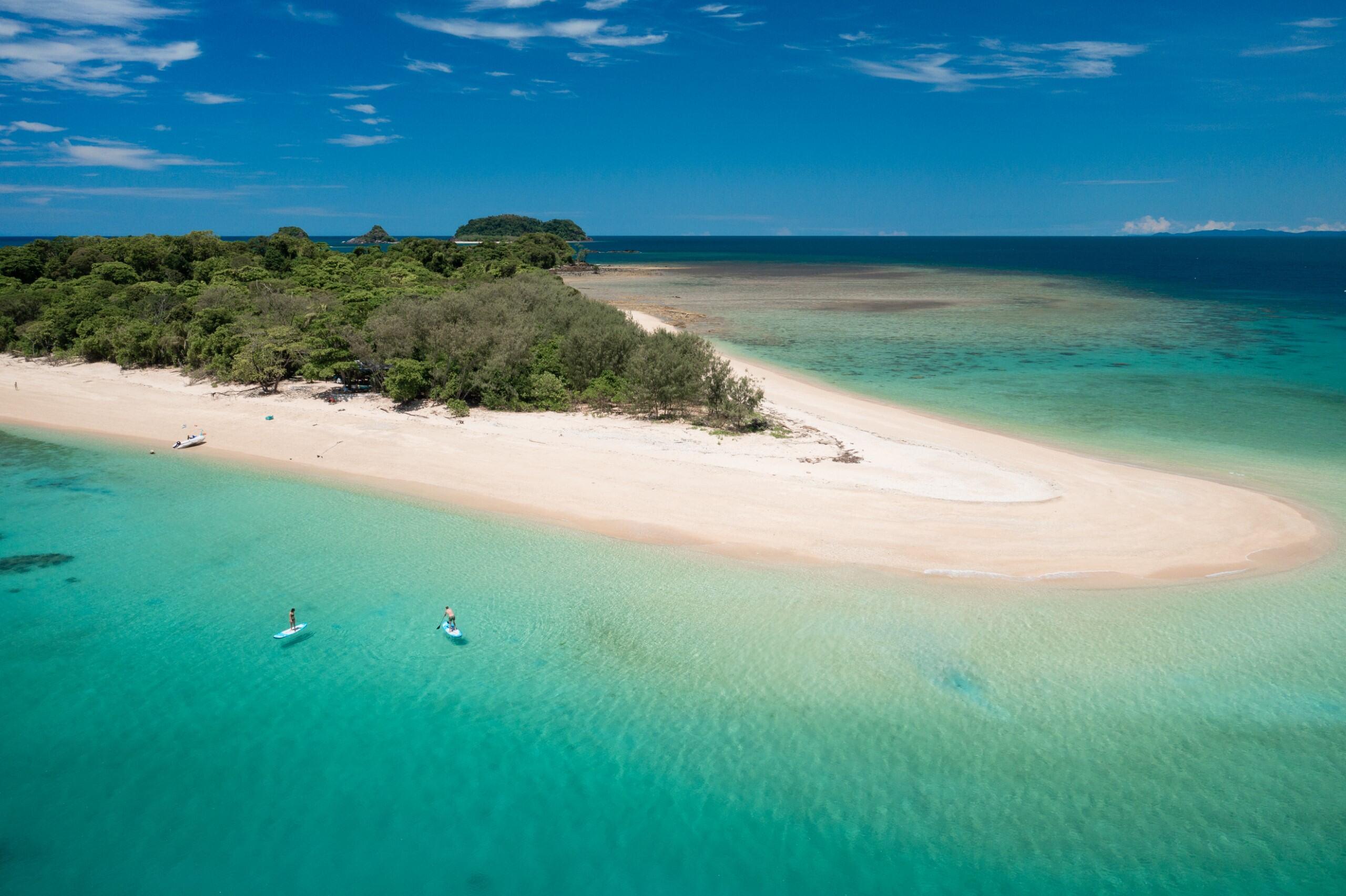
Capture the contrast of turquoise shallow waters against the lush rainforest backdrop while standing on the sandy beach shoreline.
Focus your camera on the shallow coral pinnacles that rise close to the surface, ideal for capturing marine biodiversity in clear water.
Look for sea turtles near the reef shelf where light penetration is optimal for underwater photography during your snorkeling cairns half day tour.
Stand near the protected inner reef sections to photograph the calm, clear water visibility favored by visitors using snorkeling cairns half day tickets.
A snorkeling cairns half day trip works well with kids once you pick a calm, island-based option instead of an open-water pontoon, since shallow lagoons let younger swimmers wade in gradually rather than jumping straight into deep water. Expect a slower rhythm than the adult-paced tours, with more time spent on gearing up and reassuring nervous first-timers.
Children around 6 and up generally cope best with mask and snorkel use, since younger kids often panic with a mouthpiece; Green Island and Fitzroy Island trips suit families better than outer reef pontoons because the water is shallower and calmer close to shore.
A 4-5 hour half-day trip only gives kids realistic energy for one, maybe two, snorkel sessions once transit time and briefings are subtracted. Build in a rest break on the beach or boat deck between sessions rather than pushing straight into a second swim.
Boats and island jetties are not stroller-friendly, and sandy or coral-edged entry points make wheeling difficult. A soft carrier works better for toddlers not yet snorkeling than trying to push a stroller across the boarding ramp.
Green Island has toilets, showers and shaded picnic areas near the jetty, useful for rinsing off younger kids between water sessions. Fitzroy Island offers a similar shoreside setup, though facilities are more basic than a full resort.
Kids' mask and fin sizes run out faster than adult sizes on smaller boats, so ask the operator about children's gear availability when booking rather than assuming it. A leaky mask is the most common reason young kids refuse to get back in the water.
Light rain rarely cancels these trips since visibility underwater is unaffected, but choppy conditions can make young kids seasick on the transfer boat. Ask staff about seasickness bands or ginger tablets in advance if your child has a sensitive stomach.
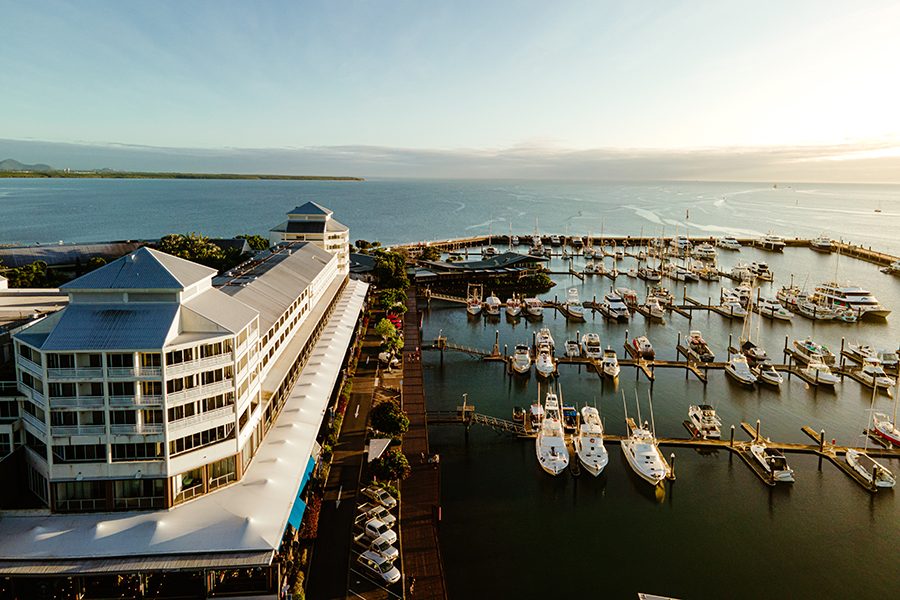
Visitors planning a snorkeling cairns half day excursion often find that most dining options are concentrated at the Cairns Reef Fleet Terminal rather than on the reef itself. While snorkeling cairns half day tours typically include light refreshments on board, the surrounding Marlin Marina precinct offers convenient dining for those refueling after their trip.
Located at the terminal, this venue specializes in fresh local seafood and crocodile. It is a popular spot for a post-snorkel meal with harbor views.
This spacious venue offers a wood-fired grill and outdoor seating. It provides a relaxed atmosphere perfect for groups returning from snorkeling cairns half day tickets activities.
A casual trawler-based eatery serving fresh prawns and bugs directly on the water. It is ideal for a quick, authentic bite following your snorkeling cairns half day tour.
Everything you need to know for your journey
The Great Barrier Reef Marine Park itself has no fixed hours and is accessible 00:00–23:59 daily, though actual snorkeling Cairns half day tours depart on set morning or afternoon schedules set by individual operators.
Entry to the Great Barrier Reef Marine Park is free (0 AUD); tour operators separately collect an environmental management charge as part of the booking price.
Wear swimwear under light clothing, and expect the operator to provide a rash vest or full stinger suit depending on the season.
Most snorkeling Cairns half day tours allow free changes or refunds up to 24 hours before departure, though late cancellations are generally non-refundable due to weather-dependent capacity.
Glass containers, spearfishing equipment, aerosol sunscreens, and coral collection tools are among the items restricted on reef vessels.
Yes, GoPros and underwater cameras are welcome, and many boats also sell disposable cameras or crew-shot photo packages.
Yes, snorkeling Cairns half day trips are generally family-friendly, with flotation vests provided and a typical minimum age around 3 years for snorkel gear use.
Morning departures between 08:00 and 10:00 offer the calmest seas, and the winter dry season (June–August) tends to bring the clearest visibility overall.
Most departures leave from the Cairns Reef Fleet Terminal or Marlin Marina, both within walking distance of CBD hotels along the Esplanade.
Larger vessels typically offer flat-deck access and swim platforms for easier water entry, though it is best to confirm specific mobility accommodations with the operator beforehand.
Yes, a light breakfast or morning tea plus a buffet lunch are commonly included on half day reef cruises.
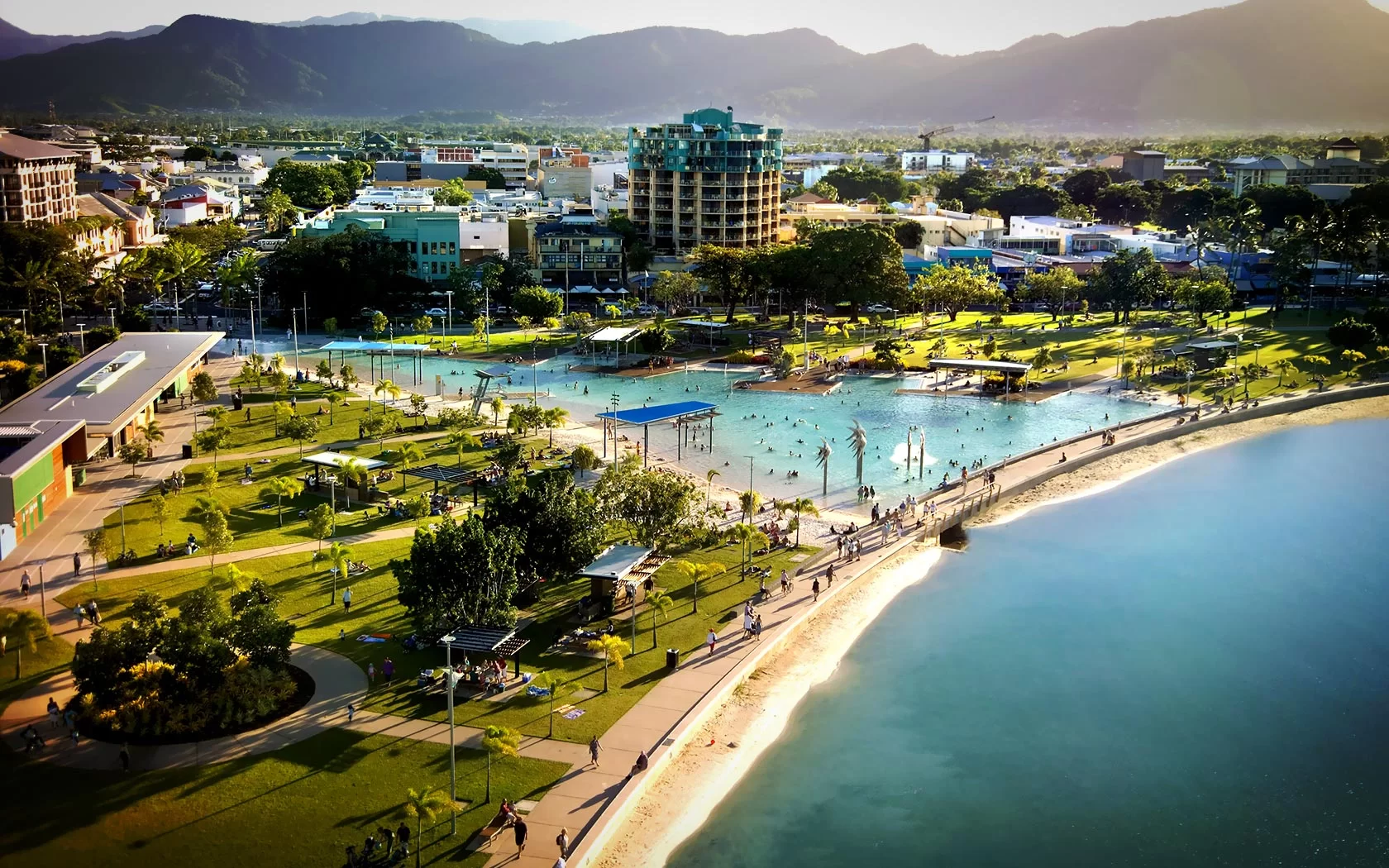
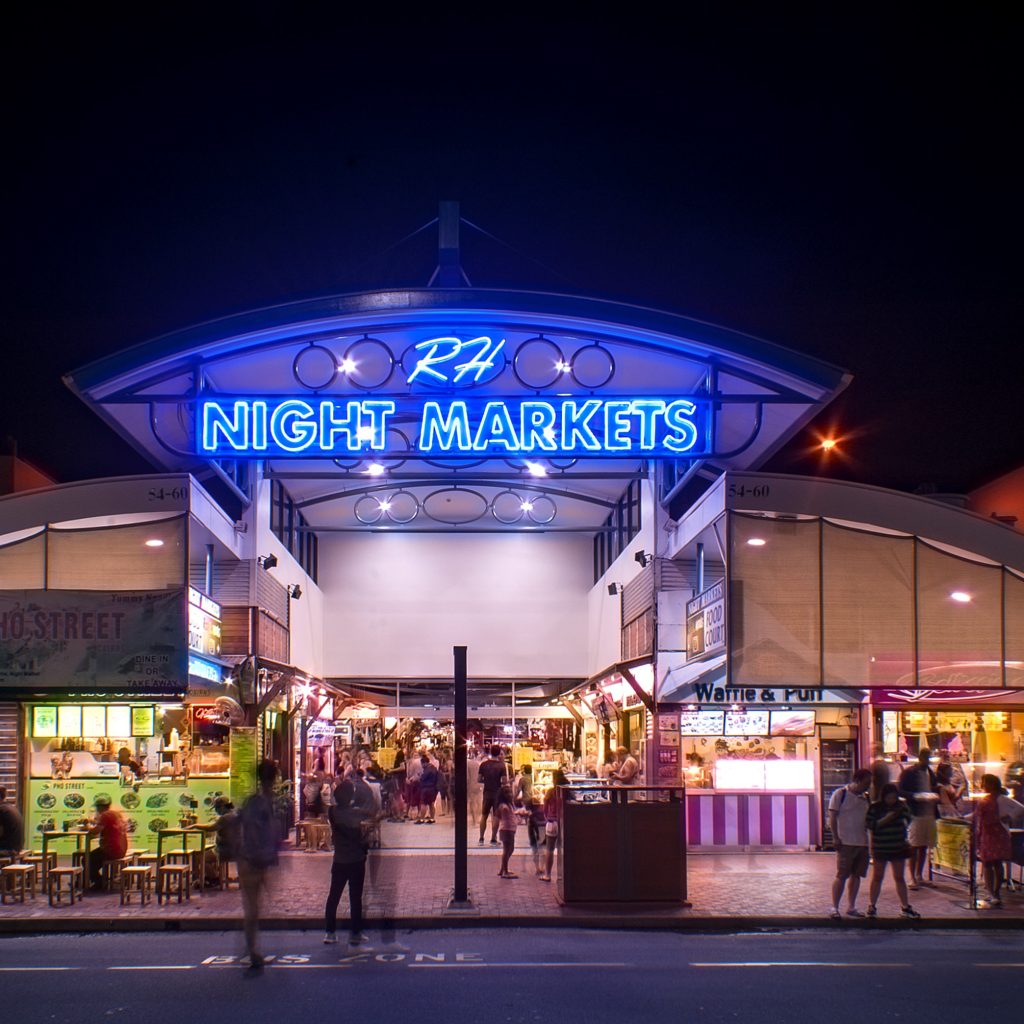
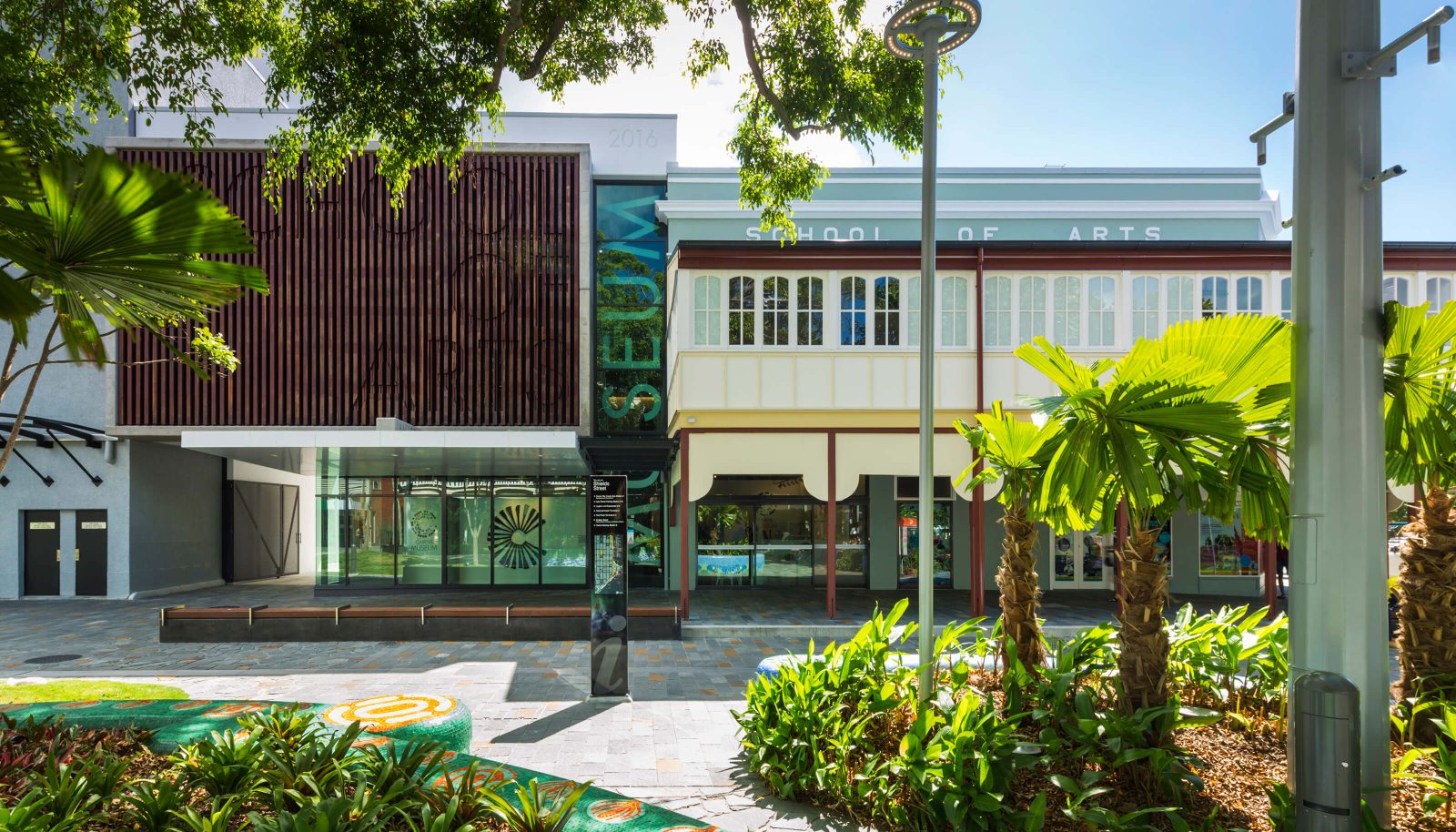
The Cairns Esplanade Lagoon, Cairns Night Markets, and Cairns Museum all sit within a short walk of the marina precinct and pair well with a half day reef trip.
A free saltwater swimming lagoon along the waterfront popular for a pre- or post-tour dip.
A covered market strip with food stalls and souvenirs, open evenings near the CBD.
A small museum in the historic School of Arts building covering local pioneer and Aboriginal history.
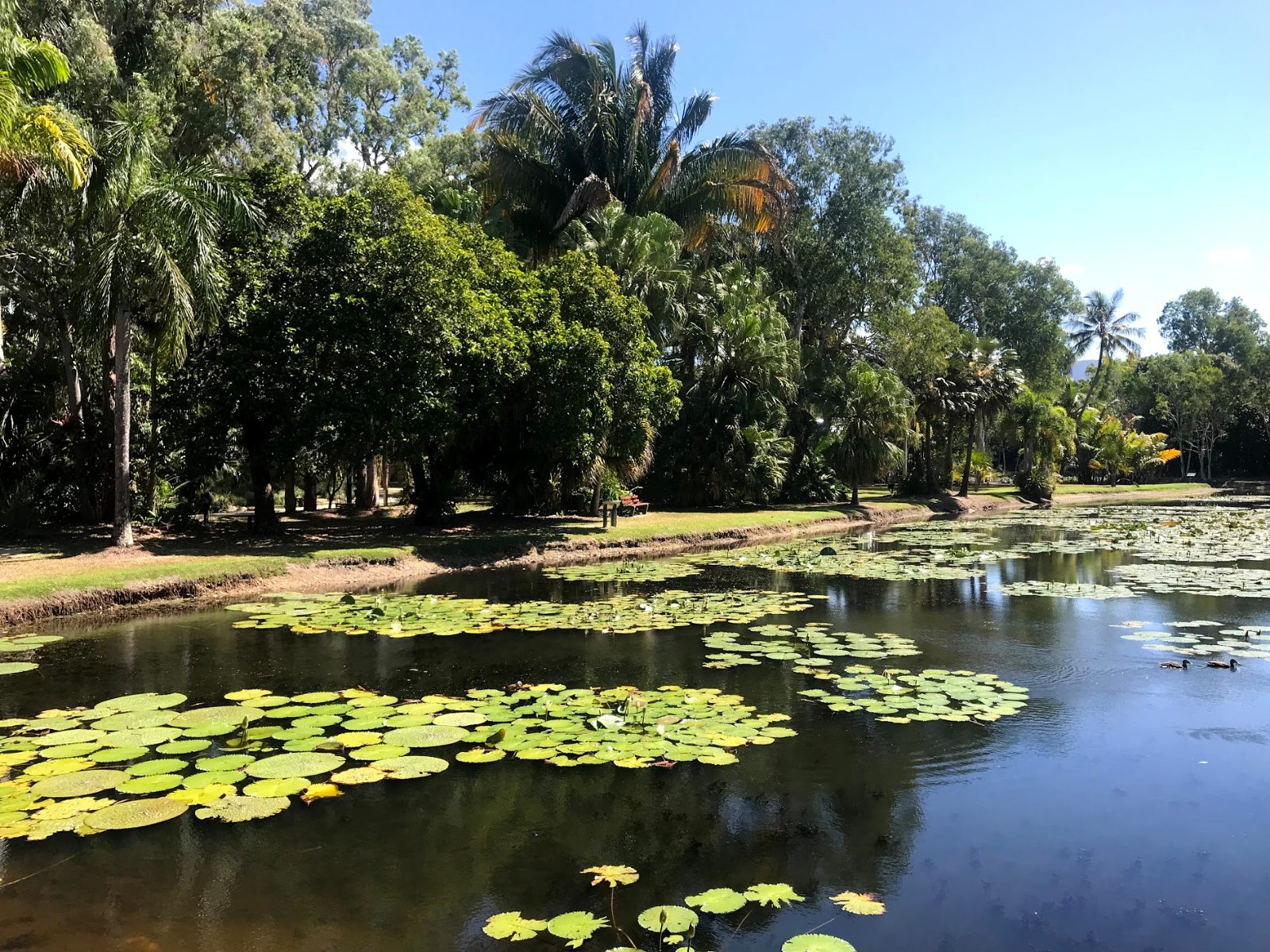
A quiet green space near the foreshore suited to a short walk before or after a marina departure.
Tropical botanic gardens with boardwalks through rainforest and lily ponds.
Concentration of hotels and hostels within walking distance of the reef marinas, ranging from budget to upscale.
Waterfront hotel directly adjacent to the Reef Fleet Terminal with marina views.
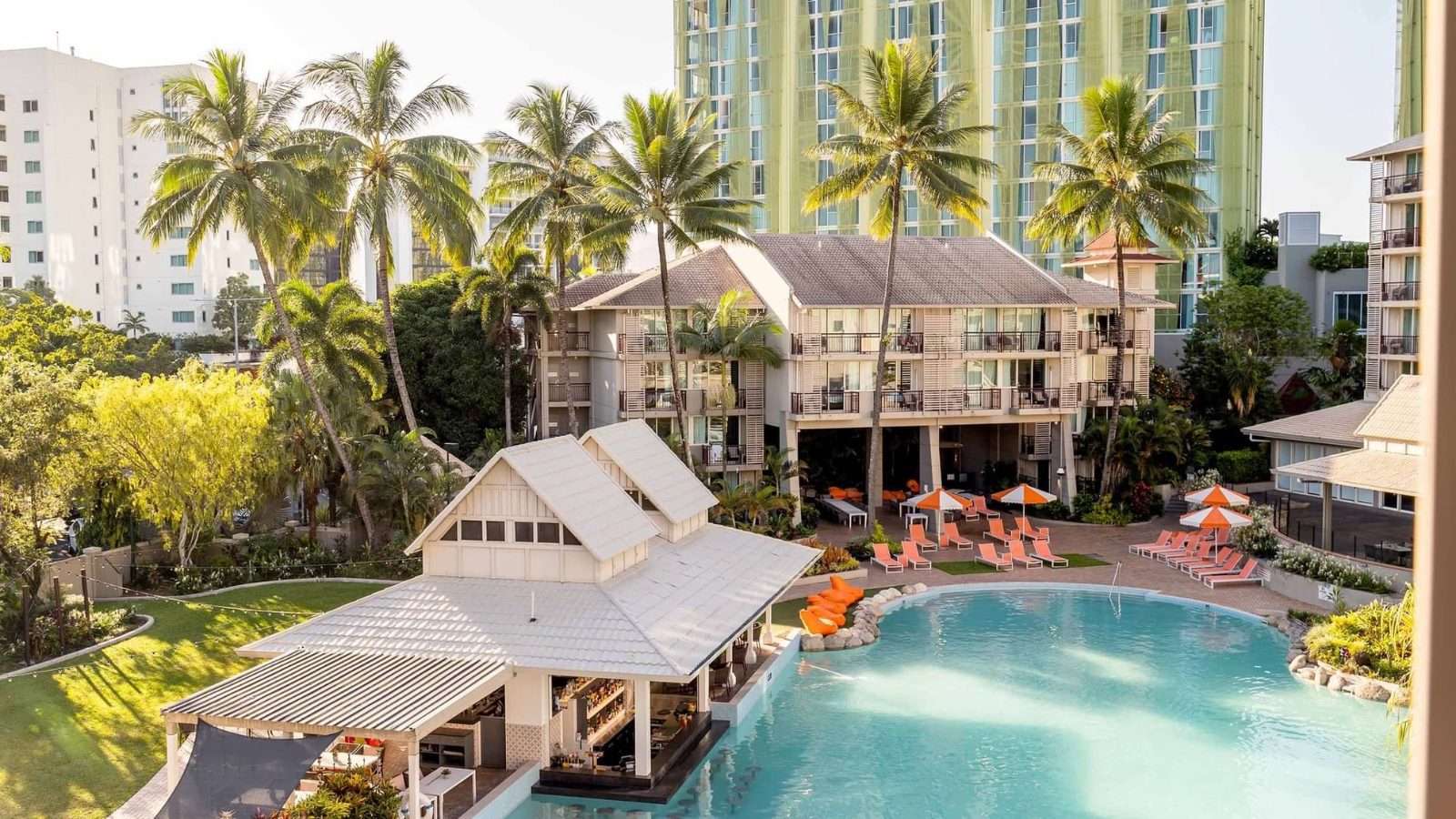
Resort-style property with pools, a short walk from the Esplanade and marina precinct.
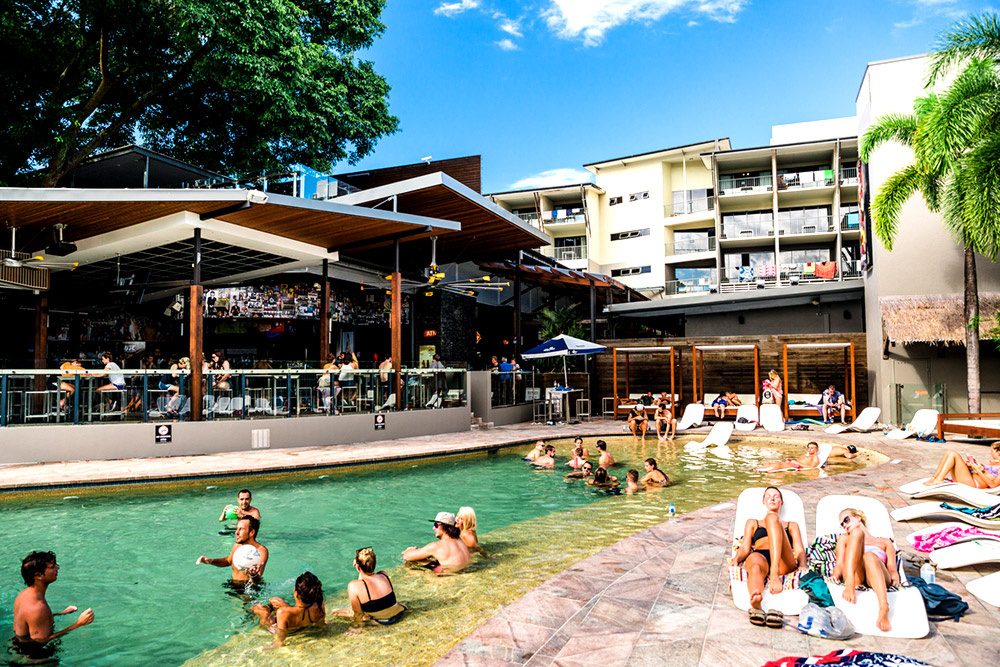
Popular hostel with pool and bar, close to CBD transport links.
Join thousands of happy travelers who have discovered this incredible experience
Book Your Experience Now