
9 hr
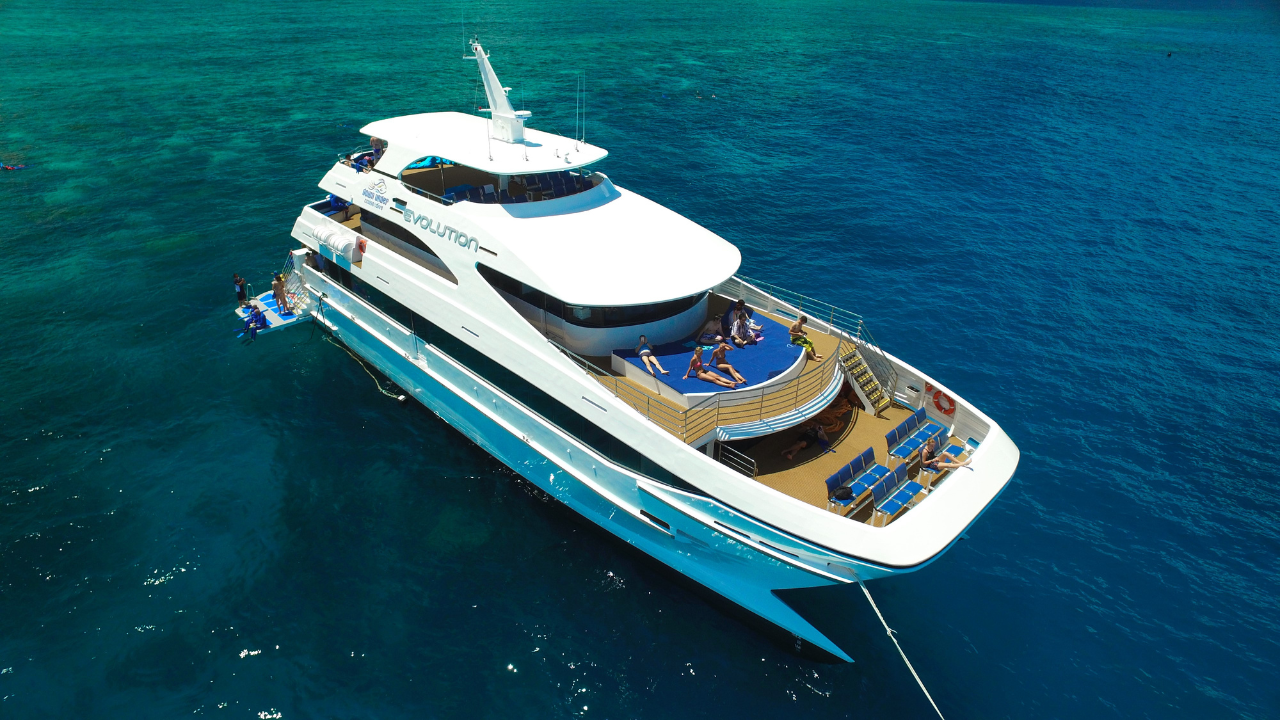
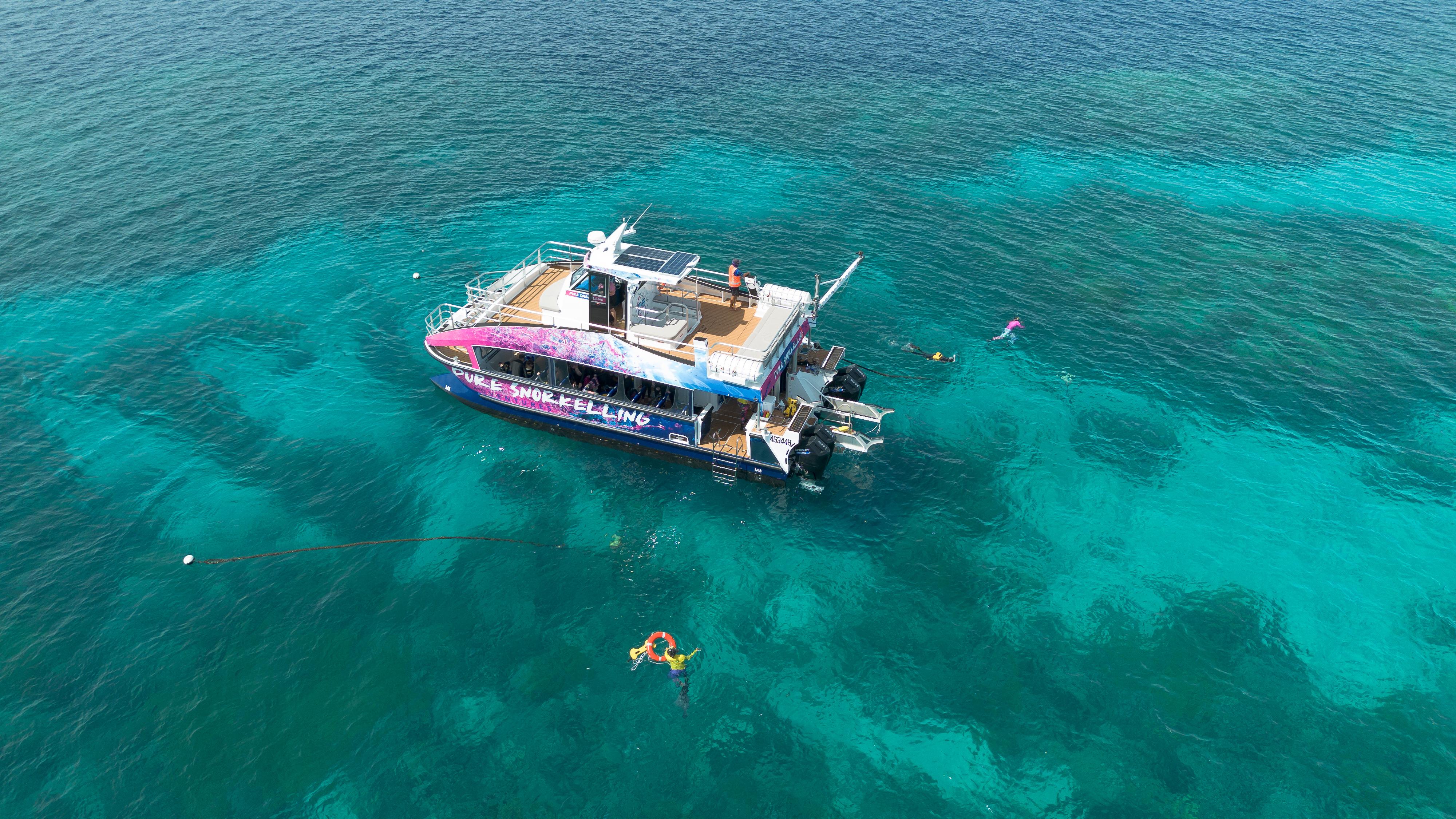
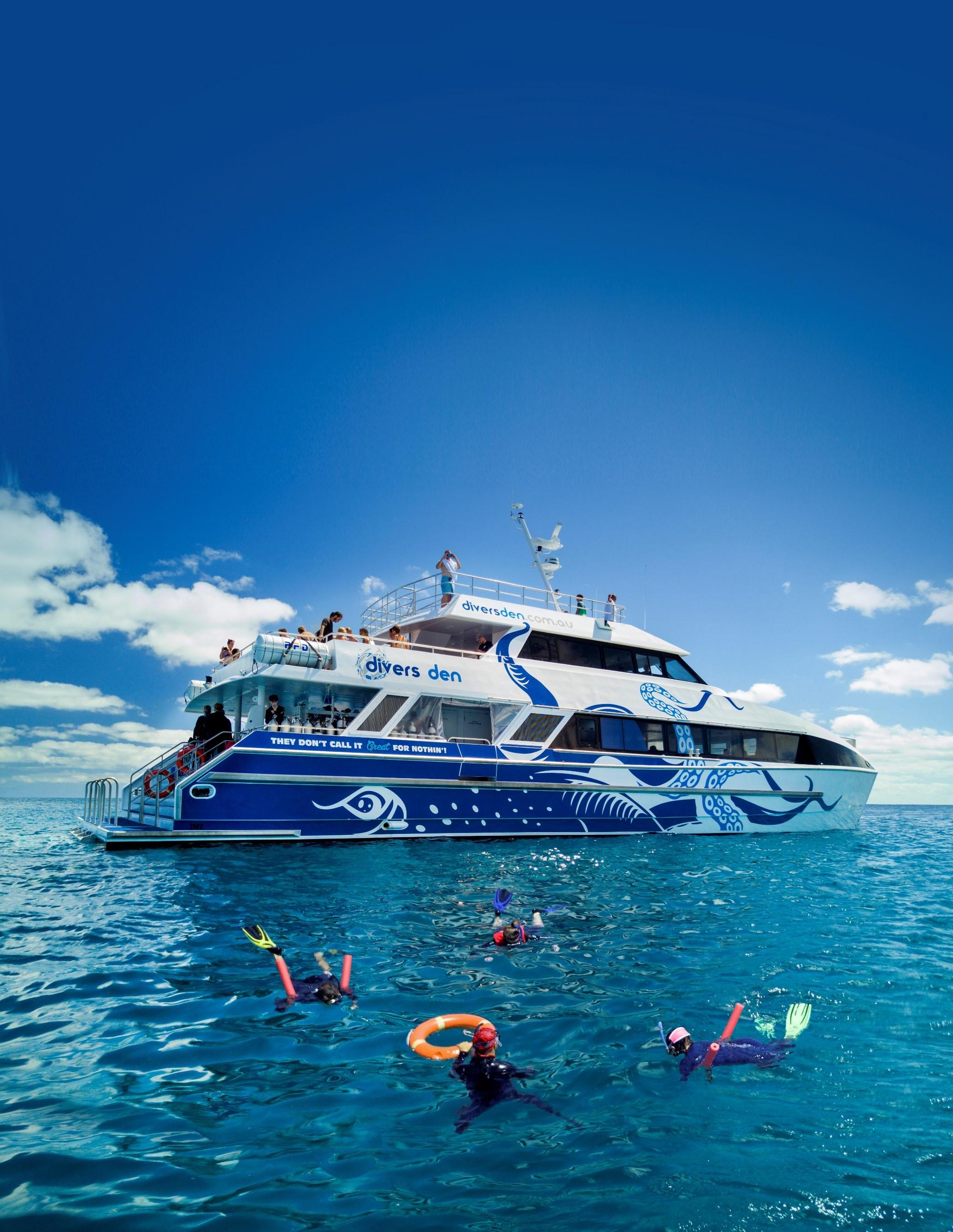
Great Barrier Reef Premium Catamaran Cruise from Cairns
- Expert local guide
- Small group
- Skip-the-line access
- Free cancellation
Snorkeling Cairns Small Groups — Outer Reef & Premium Catamarans
Intimate expeditions to coral gardens, limited-capacity vessels only
Compare fares, pick the fit — all bookings are mobile-voucher and eligible for free cancellation where shown.
9 hr
4 hr
8 hr 30 min
| Experience | Duration | Rating | Lunch | Guide | Small group | Free cancel. | Price | |
|---|---|---|---|---|---|---|---|---|
|
Guided Experience
Most popular
Great Barrier Reef Premium Catamaran Cruise from Cairns
|
9 hr | ★ 4.8 | ✓ | ✓ | ✓ | ✓ | €170 | Book → |
|
Standard Entry
Great Barrier Reef Half-Day Snorkelling Adventure
|
4 hr | ★ 4.7 | — | ✓ | ✓ | ✓ | €111 | Book → |
|
Luxury / Private
Full-Day Outer Reef Adventure by Superyacht
|
8 hr 30 min | ★ 4.7 | ✓ | — | — | ✓ | €170 | Book → |
Worth it for quality-focused snorkelers
Snorkeling cairns small groups deliver measurably better reef experiences than mass-market alternatives, though you'll pay 30–40% more for the privilege. The Premium Catamaran Cruise and Outer Reef Half-Day Adventure cap numbers at 25–30 passengers versus 150+ on budget boats, which translates to shorter waits for gear, less competition for prime coral viewing spots, and guides who can tailor marine life spotting to your skill level. You're also hitting healthier outer reef sites—Flynn, Milln, or Thetford—rather than overworked inner-shelf patches. The catch: half-day tours compress everything into four hours of actual water time, and the Full-Day Superyacht option pushes AUD 300+ once you add the 8 AUD Environmental Management Charge. For snorkelers who prioritize uncrowded water and personalized guidance over rock-bottom pricing, small group snorkeling cairns tours justify the premium. Casual swimmers satisfied with brief reef glimpses can skip them.
Bottom line: Pay the premium if you want quality reef access without fighting crowds—budget tours save money but compromise the experience.
Small-group charters offer a focused, personalized pace, whereas large-vessel cruises provide a social, amenity-rich environment; most visitors who seek a deeper connection with the marine life prefer snorkeling cairns small groups.
|
Top pick Small-Group Charter |
Large-Vessel Cruise | |
|---|---|---|
| Group size | Under 25 passengers | 100+ passengers |
| Marine site access | Access to shallow reef lagoons | Limited to deeper mooring sites |
| On-board atmosphere | Quiet and intimate | Social and bustling |
| Customization level | High route flexibility | Fixed itinerary |
| Travel speed | Faster to outer reefs | Slower cruise transit |
| Equipment quality | Premium guided gear | Standard rental gear |
| See tickets & prices |
Verdict: Those wanting to secure snorkeling cairns small groups tickets for a bespoke encounter will value the flexibility, while those prioritizing social engagement may prefer large-vessel snorkeling cairns small groups tour options.
Hand-picked experiences loved by thousands of travelers
5 hours
Free Cancellation
Intimate small-group snorkel trip to pristine reef sites with marine biologist guides and eco-certified operator
8 hours
Free Cancellation
Full-day outer reef adventure with guided snorkeling, marine encounters, and tropical buffet aboard AquaQuest
7 hours
Free Cancellation
Cruise to two pristine reef sites aboard a high-speed vessel and snorkel with expert guides in small groups.
9 hours
Free Cancellation
Sail a traditional schooner to an exclusive reef location, snorkel vibrant coral gardens, and unwind on a tropical island beach
8 hours 30 minutes
Free Cancellation
Sail to a protected coral reef sanctuary, snorkel turquoise shallows, and watch seabirds at this pristine cay
9 hours
Free Cancellation
All-inclusive reef cruise visiting two outer sites with scuba dive, meals, and marine expert guidance
9 hours
Free Cancellation
Discover vibrant coral gardens and marine life at Upolu Reef on the Outer Great Barrier Reef
5 hours
Free Cancellation
Explore pristine outer reef sites aboard a luxury catamaran with expert guides and all gear included
This site features a floating pontoon and diverse coral gardens. It is home to thousands of fish species.
Known for its clear water and pinnacles, this location is perfect for observing reef sharks and sea turtles.
This reef offers unique wall structures and swim-through areas for advanced observers. Look for giant clams along the ridges.
A fantastic site for viewing soft corals and anemones. The site is shallow and ideal for snorkeling cairns small groups.
These deeper areas provide the highest biodiversity and vibrant color density. They are accessible via specialized boat charters.
All the details about your upcoming adventure in one place
The Great Barrier Reef spans 2,300 kilometres and hosts 1,625 fish species, yet most visitors never venture beyond the inner fringing reefs within an hour of Cairns.
Small-group operators changed that equation in the early 2000s, deploying fast catamarans and superyachts capable of reaching the outer ribbon reefs where visibility exceeds thirty metres and pelagic species patrol drop-offs that plunge beyond recreational dive limits. These outer sites—Milln Reef, Saxon Reef, Hastings Reef—lie forty to sixty kilometres offshore, beyond the sediment plumes that cloud inshore waters during summer monsoonal flows. The Great Barrier Reef Marine Park Authority enforces strict mooring allocations and vessel capacity limits to prevent site degradation, giving permitted operators exclusive access windows at designated coordinates.
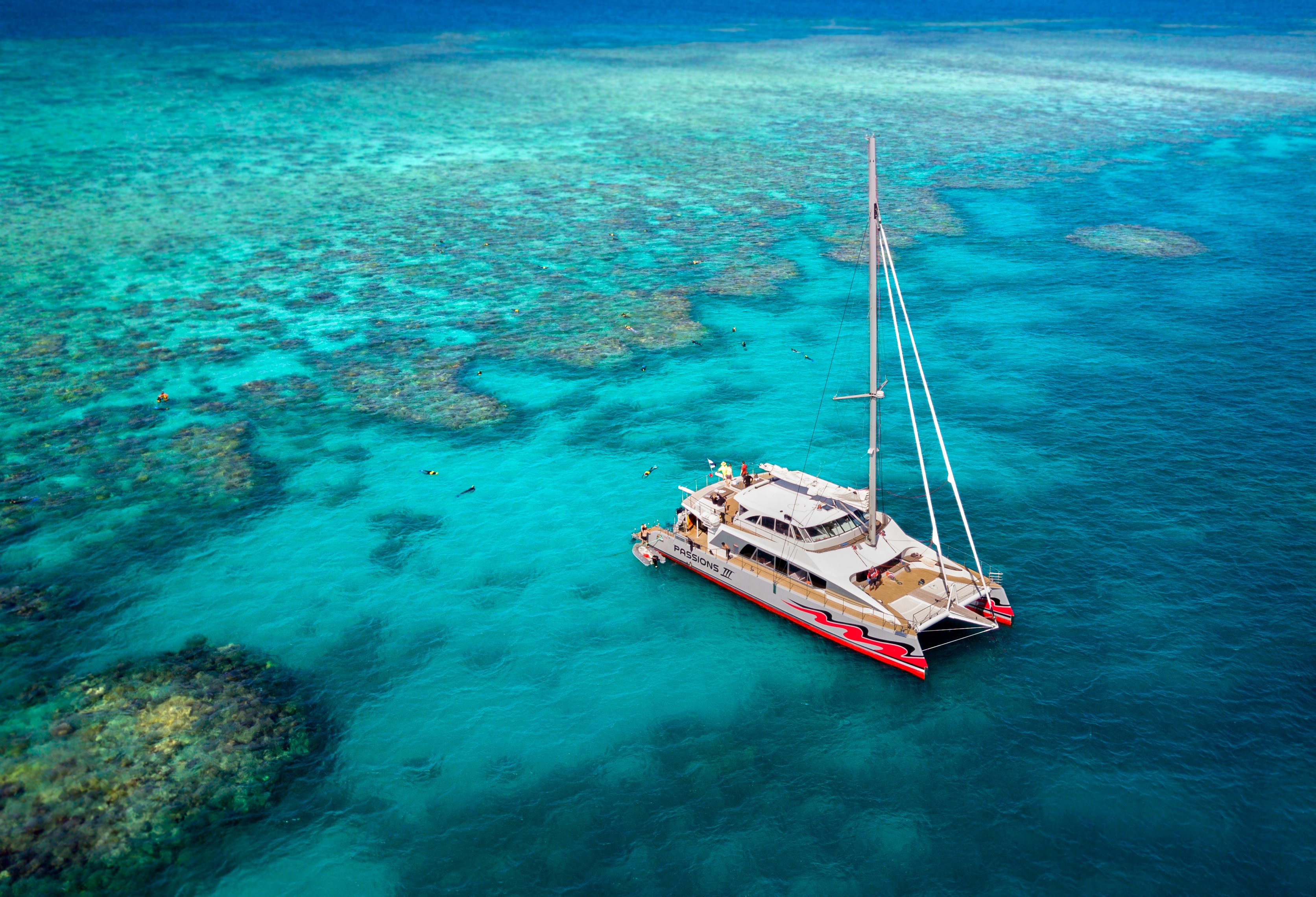
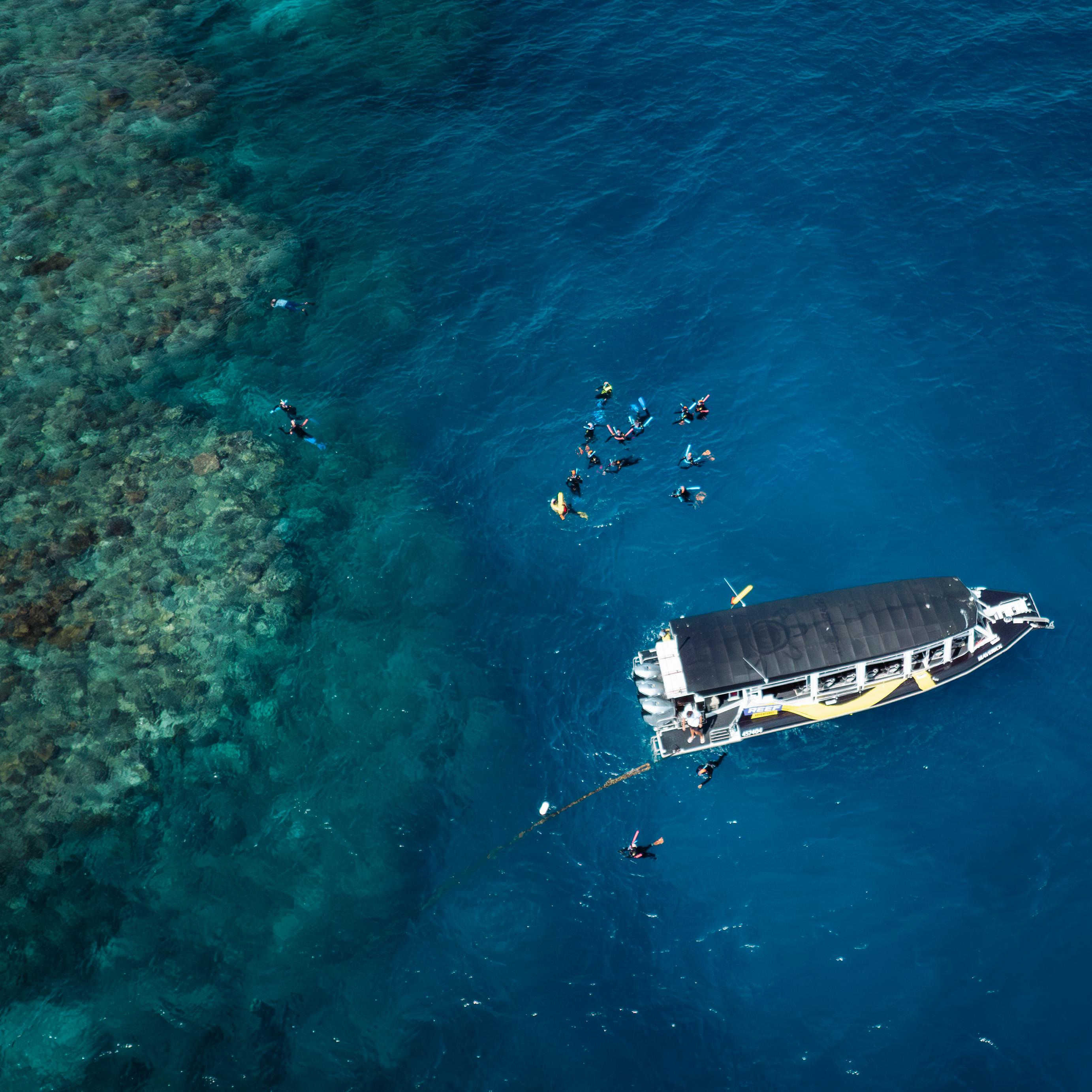
Snorkeling cairns small groups tours typically cap passenger loads at twenty to thirty guests, a fraction of the hundred-plus crowds aboard budget pontoons anchored at Outer Reef platforms. Smaller rosters allow guides to tailor drift-snorkel routes to prevailing currents, positioning swimmers over bommies—isolated coral towers rising from sandy floors—where schooling trevally and barracuda congregate. Marine biologists aboard premium vessels conduct pre-dive briefings that detail seasonal coral spawning cycles, reef zonation patterns, and identification markers for species like the Maori wrasse, whose protruding canine teeth and blue-green flanks make it unmistakable against staghorn thickets.
Catamarans fitted with hydraulic swim platforms and freshwater showers depart between 07:00 and 08:30, targeting slack water windows when tidal exchange pauses and plankton settles. Half-day itineraries concentrate on single mooring sites, allowing three to four hours of bottom time across two snorkel sessions separated by onboard refreshments. Full-day superyacht charters access multiple outer reef zones, repositioning between sites to showcase both sheltered lagoons thick with branching Acropora and exposed walls where gorgonian fans catch nutrient-rich currents. Wetsuits in tropical thicknesses—three millimetre neoprene—provide thermal protection and UV coverage during extended surface intervals, essential during summer months when water temperatures climb past twenty-eight degrees Celsius but solar radiation remains intense.
Outer sites lie forty to sixty kilometres offshore, beyond the sediment plumes that cloud inshore waters during summer monsoonal flows.
Full refunds are available for cancellations made at least 24 hours prior to departure. The 8 AUD Environmental Management Charge is included in your booking and is subject to operator refund terms.
Weather · crowds · average price — dots go green to amber to red as each metric rises.
September offers 22-29°C temperatures and clear visibility. This is an ideal window for snorkeling cairns small groups.
Expect humid days and warmer water temperatures. Stinger suits are mandatory during these months.
Conditions remain stable with fewer crowds. March and April provide pleasant water temperatures for snorkeling cairns small groups.
Water is cooler, but skies are dry and sunny. Excellent for those avoiding summer peak heat.
Take preventative medication 30 minutes before boarding. Staying on the deck helps reduce nausea during transit.
Re-apply waterproof sunscreen every two hours. The tropical sun is intense even on cloudy days.
Do not touch or stand on the reef. Maintain neutral buoyancy while observing marine life.
The Great Barrier Reef's transformation into a commercial tourism destination began in 1946 when Jack and Iris Barnes launched day trips from Cairns aboard the Hayles paddle steamer. The reef remained largely inaccessible to recreational visitors until 1975, when the Great Barrier Reef Marine Park Act established federal protection and zoning systems that would shape snorkeling cairns small groups operations for decades. Early operators like Quicksilver and Great Adventures emerged in the late 1970s, running cattle-boat style excursions that carried over 300 passengers to pontoon platforms at Agincourt Reef and Green Island. The industry faced near-collapse in 1998 when mass coral bleaching devastated inner-reef sites within 40 kilometers of shore. Tour operators abandoned traditional moorings at Michaelmas Cay and Hastings Reef, pushing vessels toward outer-reef locations like Flynn Reef and Milln Reef where hard coral cover exceeded 60 percent. The Great Barrier Reef Marine Park Authority introduced the Environmental Management Charge in 1993 at 1 AUD per visitor, raising it to the current 8 AUD in 2019 to fund conservation research and mooring infrastructure. Small-group reef tours emerged as a distinct category after 2003 regulatory changes capped vessel passenger limits at reef-specific sites, forcing operators to choose between high-volume platforms and intimate snorkeling cairns small groups experiences with 15-passenger maximums. Cyclone Yasi struck in 2011, destroying 40 percent of coral at popular sites between Cairns and Port Douglas. Operators diversified to secondary reefs like Opal Reef and Paradise Reef, which showed resilience during subsequent bleaching events in 2016, 2017, and 2020.
Jack and Iris Barnes launch Cairns' first commercial reef day trips aboard the Hayles paddle steamer.
Great Barrier Reef Marine Park Act creates federal zoning system governing all commercial reef access.
Environmental Management Charge introduced at 1 AUD per visitor to fund mooring infrastructure and research.
Mass coral bleaching forces operators to abandon inner-reef sites and relocate to outer-reef locations.
Regulatory caps on vessel passenger limits at reef sites create small-group tour category with 15-passenger maximums.
Cyclone Yasi destroys 40 percent of coral at sites between Cairns and Port Douglas.
Environmental Management Charge raised to 8 AUD per person per day for all reef visitors.
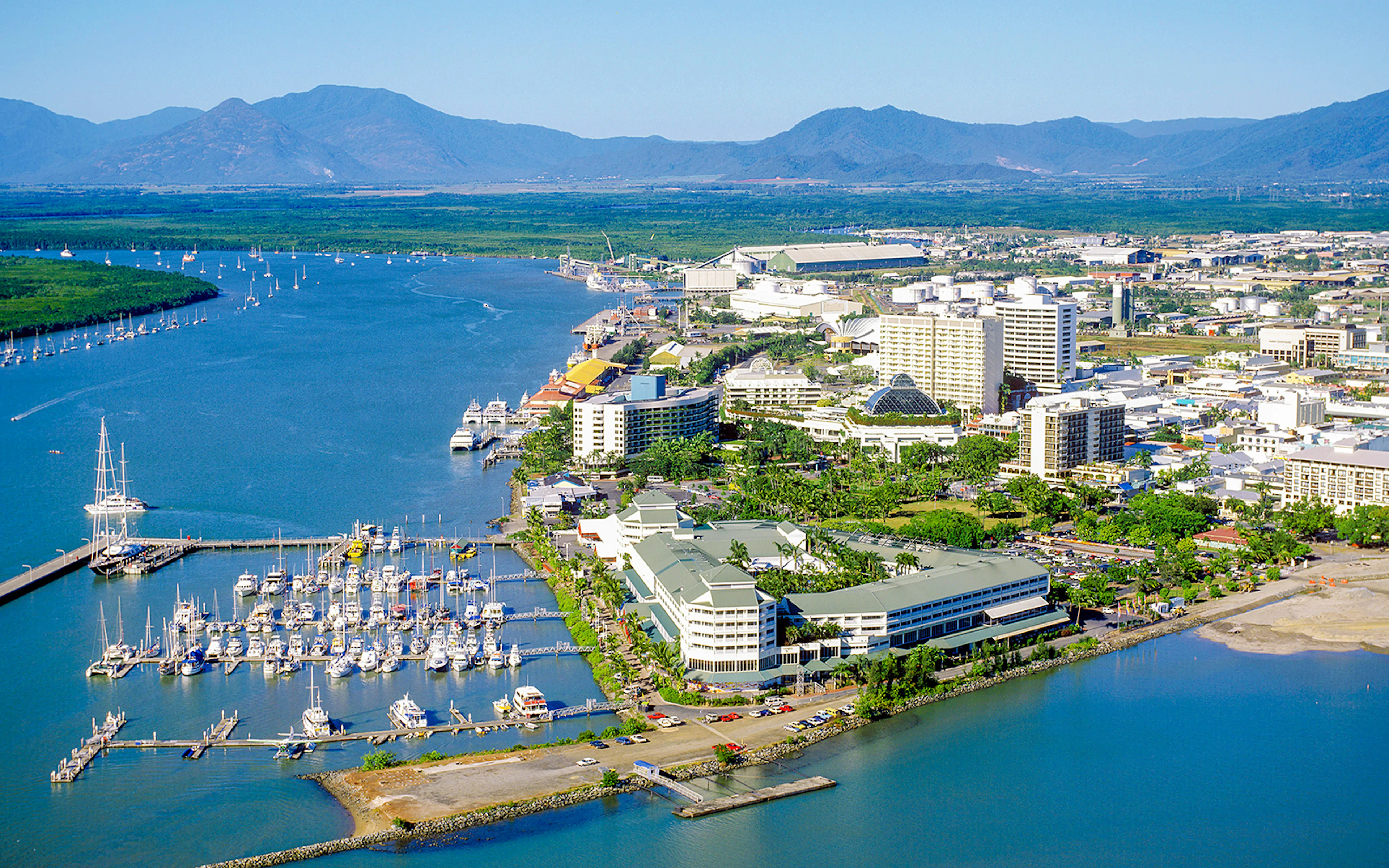
Good spot to frame departure shots before boarding, since access past the gates is restricted to ticketed passengers.
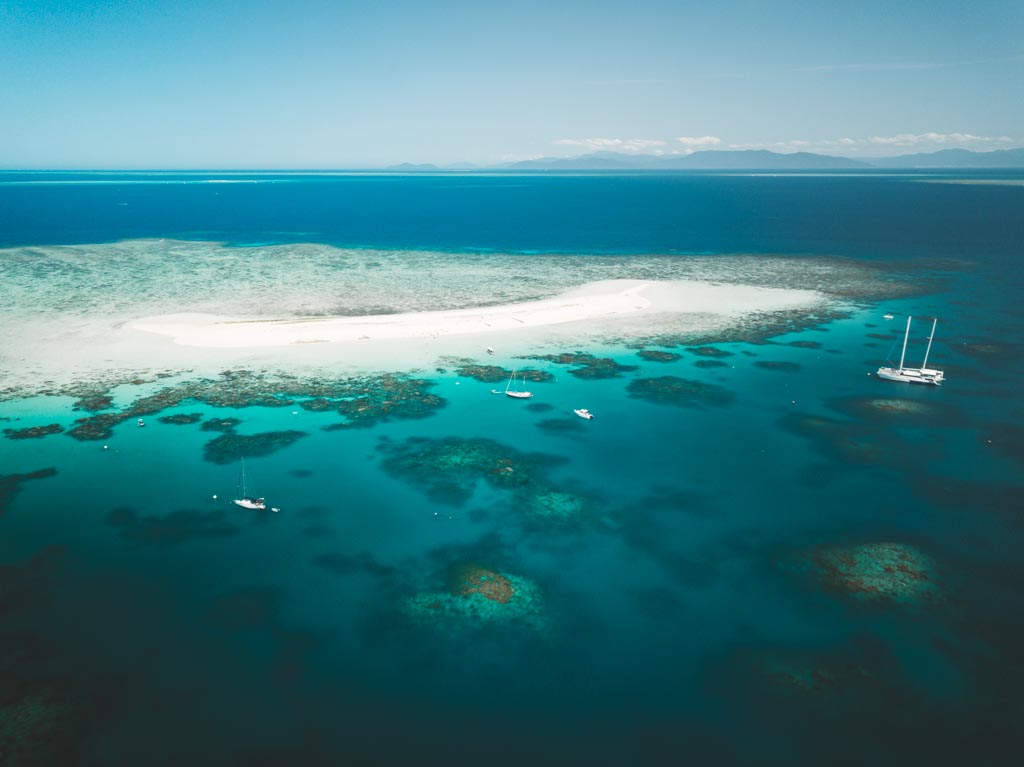
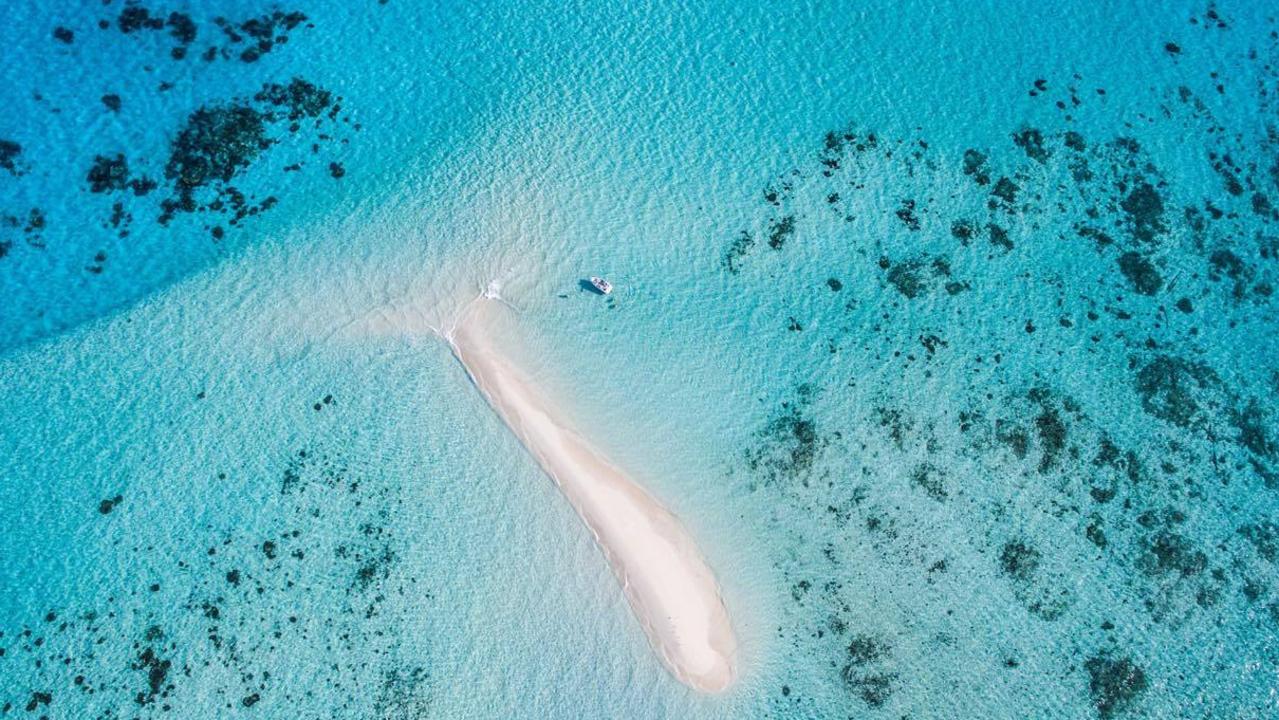
A low, white coral sand cay ringed by turquoise shallows, photographed from the boat railing on approach or from the roped-off visitor area on the cay itself, which is shared with a protected seabird colony. Many snorkeling cairns small groups operators anchor here specifically for this cay-and-reef contrast shot.
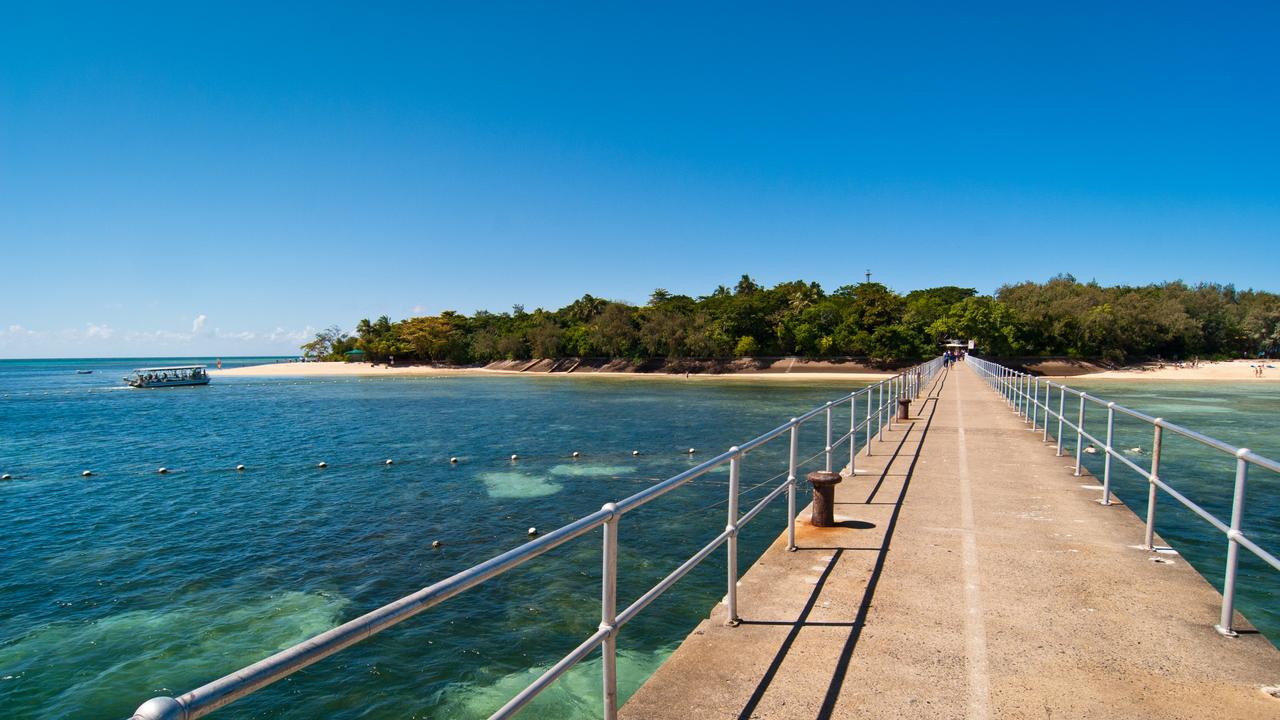
Classic pier shot looking back toward the rainforest-covered island, taken standing at the end of the timber jetty where boats moor. The clear water beside the pylons often shows fish and coral bommies right at the surface.
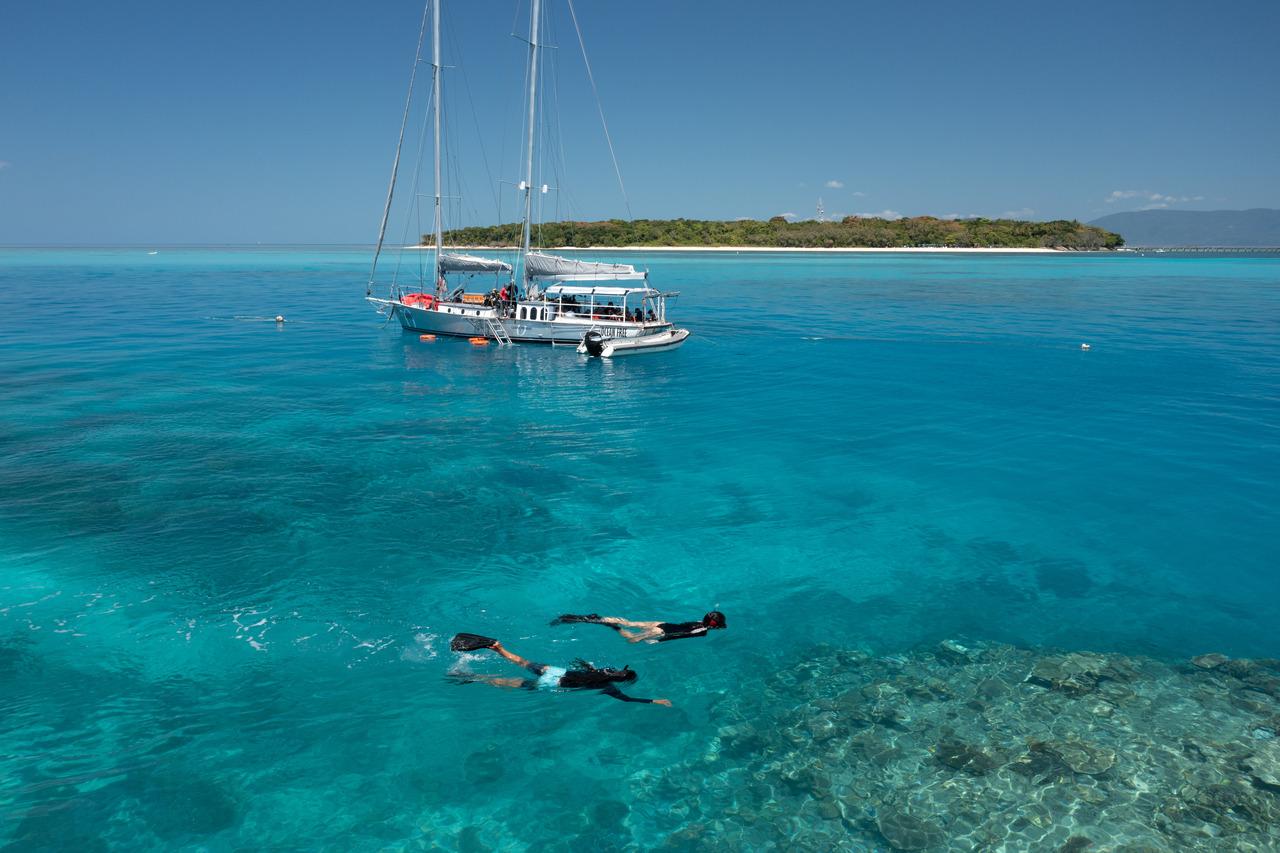
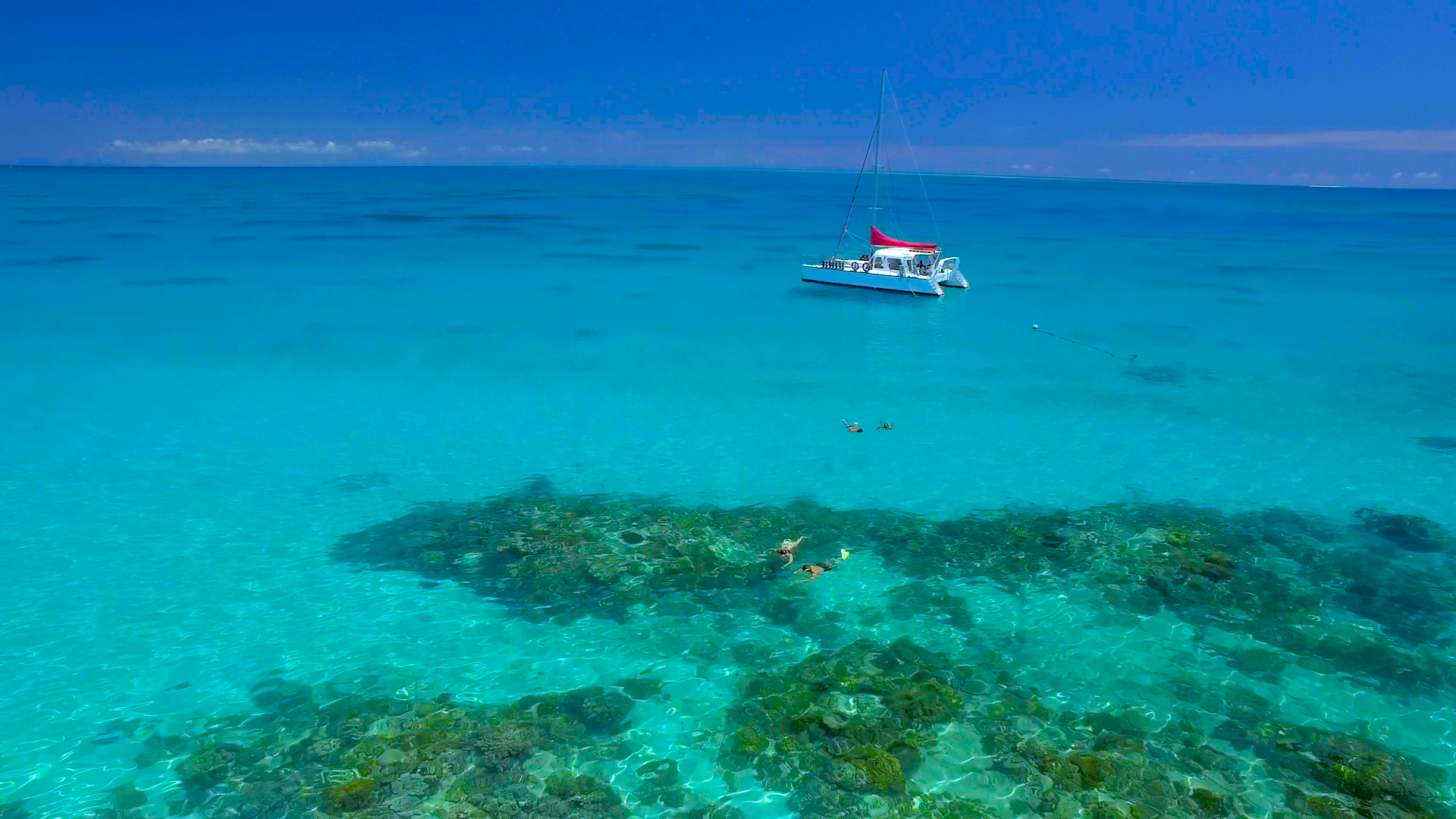
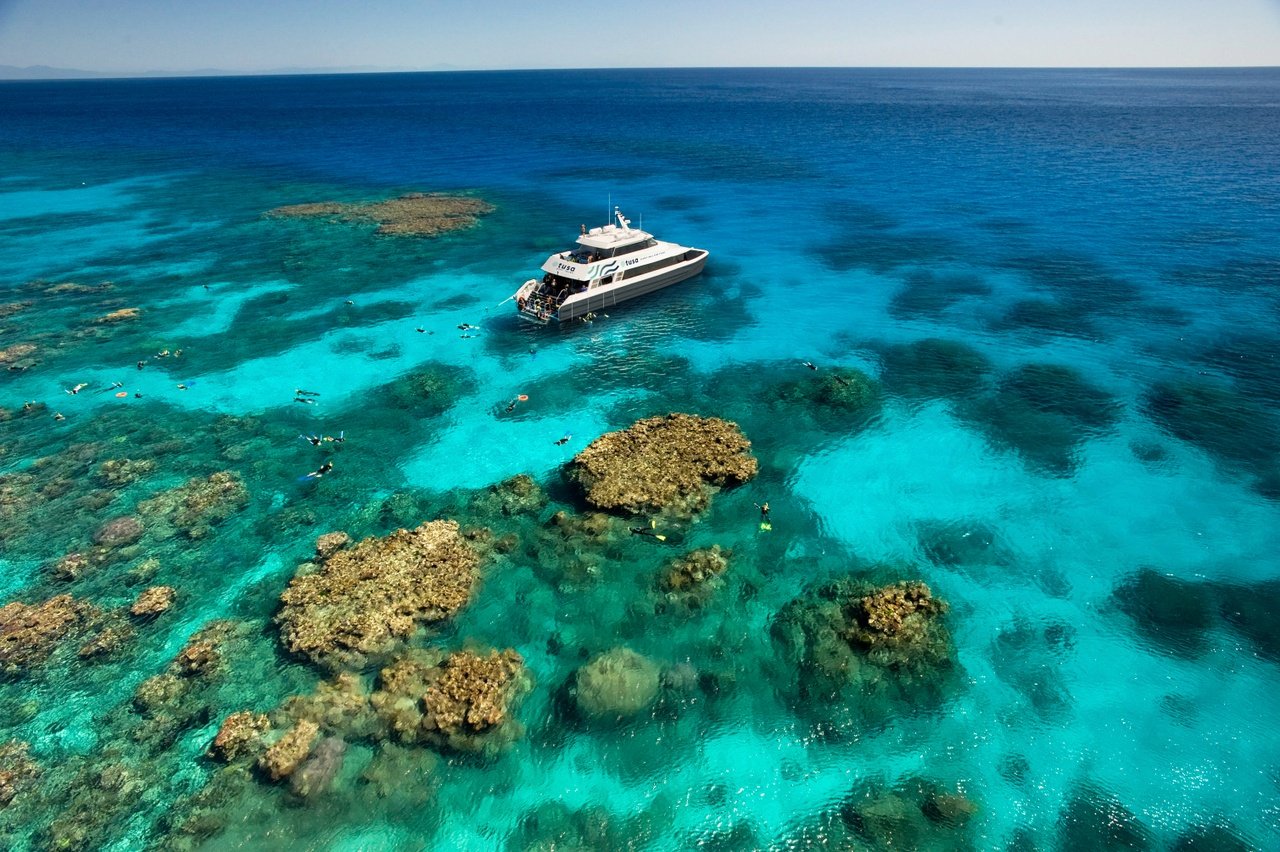
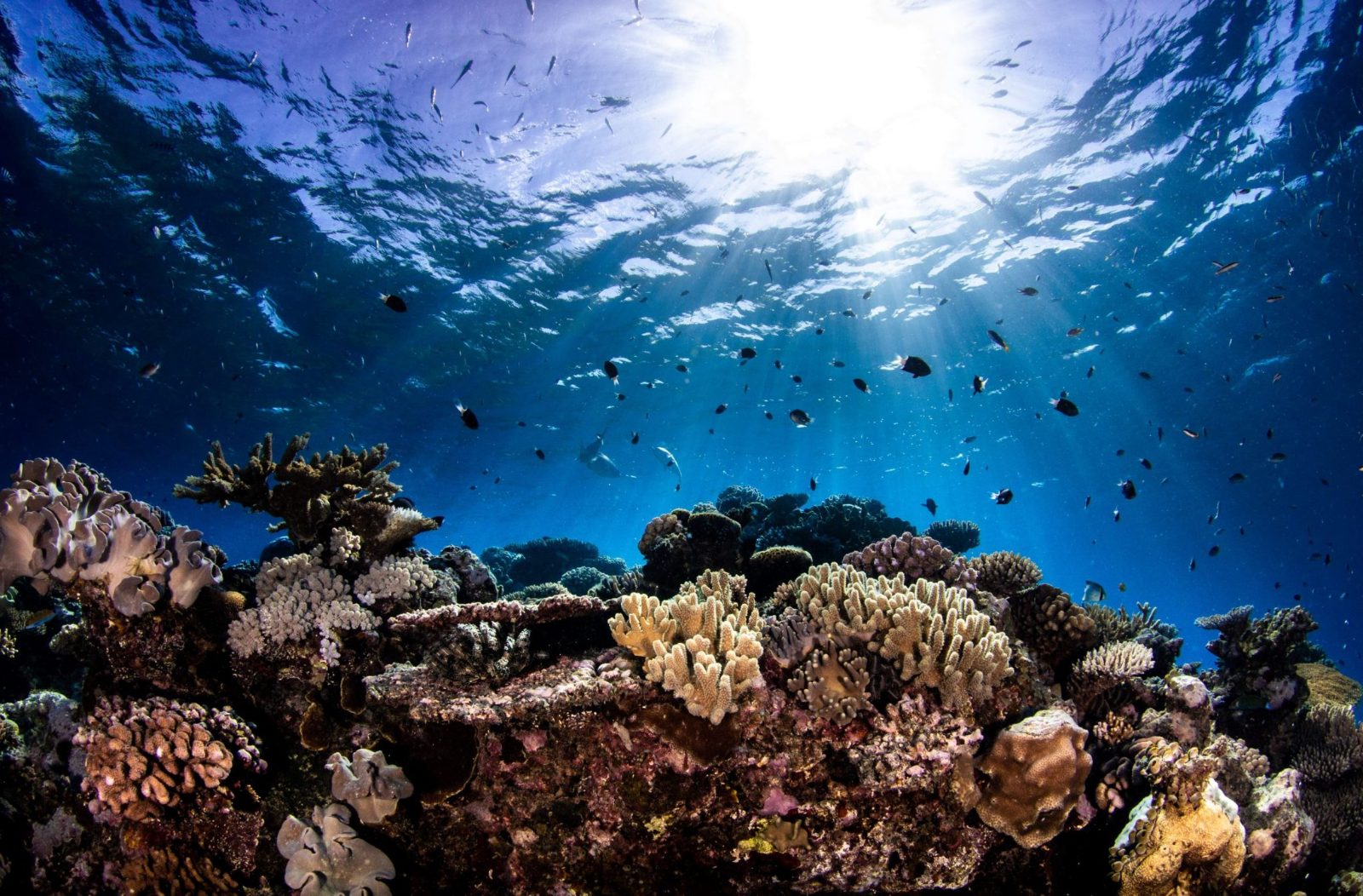
Underwater-style composition of a shallow coral bommie garden, shot snorkeling just off the back platform of an anchored pontoon or vessel. Visibility and coral cover here are what draw repeat outer-reef photography trips.
Turquoise flats and a narrow sand spit photographed from the bow of a small-group vessel as it idles offshore, since landing on the cay itself is seasonally restricted to protect nesting terns. The shallow gradient makes for a strong color-graduation shot from boat level.
Kids get real time in the water rather than standing in line, since small-group boats keep numbers down.
The terminal itself is stroller-friendly with ramps and lift access, but strollers stay on the dock once you board — pack a lightweight carrier or plan for someone to hold younger kids on the boat.
Most small-group reef operators set a minimum age around 3-4 for snorkeling and offer flotation vests or noodles for nervous first-timers; check the specific tour's age policy before booking since it varies by operator.
Bring snacks kids actually recognize for the boat ride out, since motion and saltwater smell can put younger kids off unfamiliar food; most vessels supply water but not kid-specific meals.
Between the EMC check-in, safety briefing and boat transfer, expect a slower start than a typical excursion — build in patience rather than rushing the morning, especially with toddlers.
Tours run rain or shine since the reef experience is underwater regardless of surface weather, so a drizzly morning generally will not cancel your booking.
Most visitors opt for cafes located directly inside or within a short walk of the facility to grab coffee and light bites before boarding their Great Barrier Reef vessel.
Located right at the terminal, this venue offers hearty breakfast options and ocean views. It is ideal for a seated meal if you arrive during the best arrival window of 07:30–08:30 for snorkeling cairns small groups tours.;Perrotta's at the Gallery
Everything you need to know for your journey
Water and snacks are usually provided, but you may bring light items; check with your specific snorkeling cairns small groups operator.
Photography is encouraged, though you must secure devices properly.
Full refunds are provided for cancellations made at least 24 hours in advance of your snorkeling cairns small groups tour.
A scenic waterfront area with walking paths and parks.
Directly adjacent to the reef departure point.
Join thousands of happy travelers who have discovered this incredible experience
Book Your Experience Now