9 hr
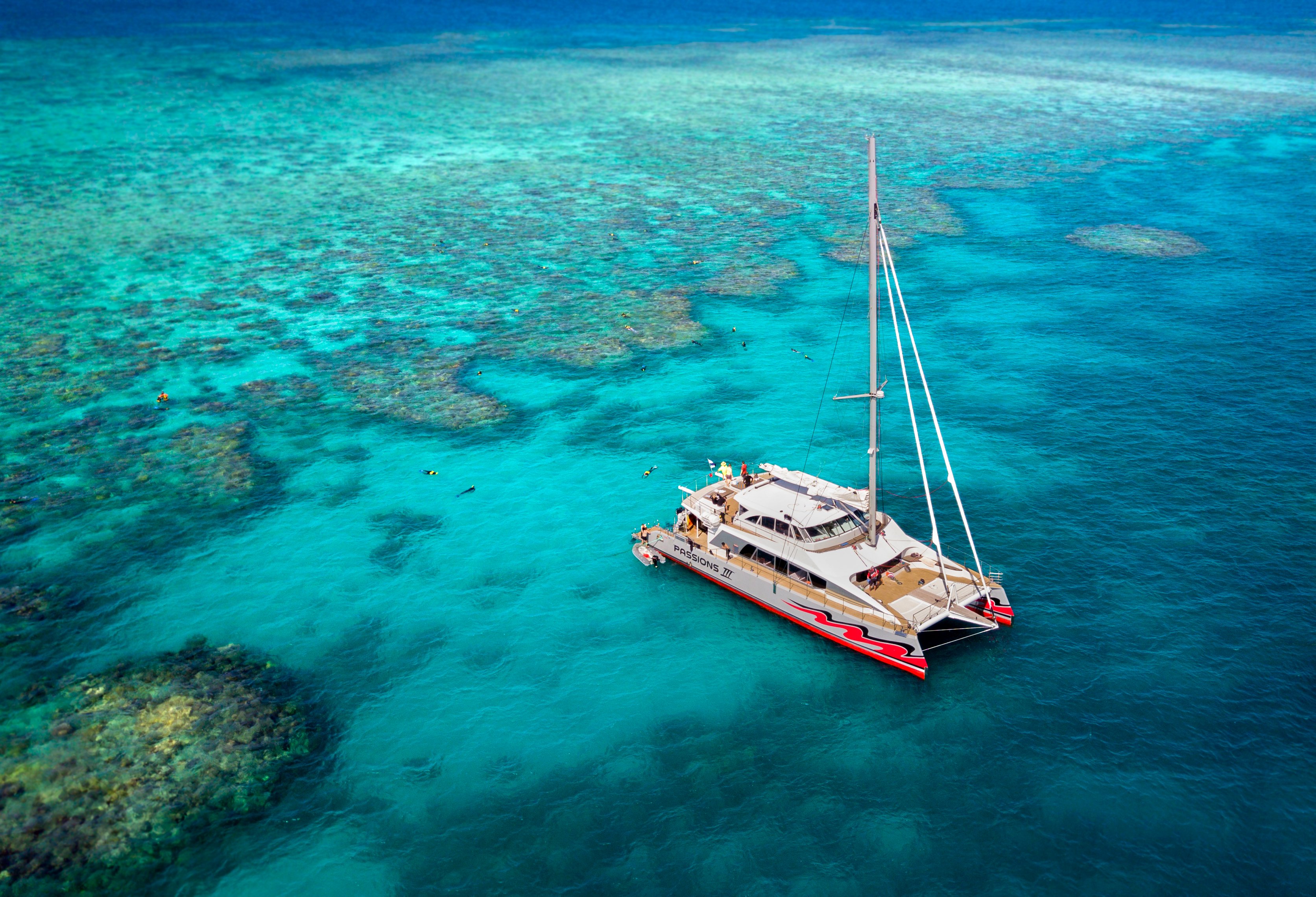
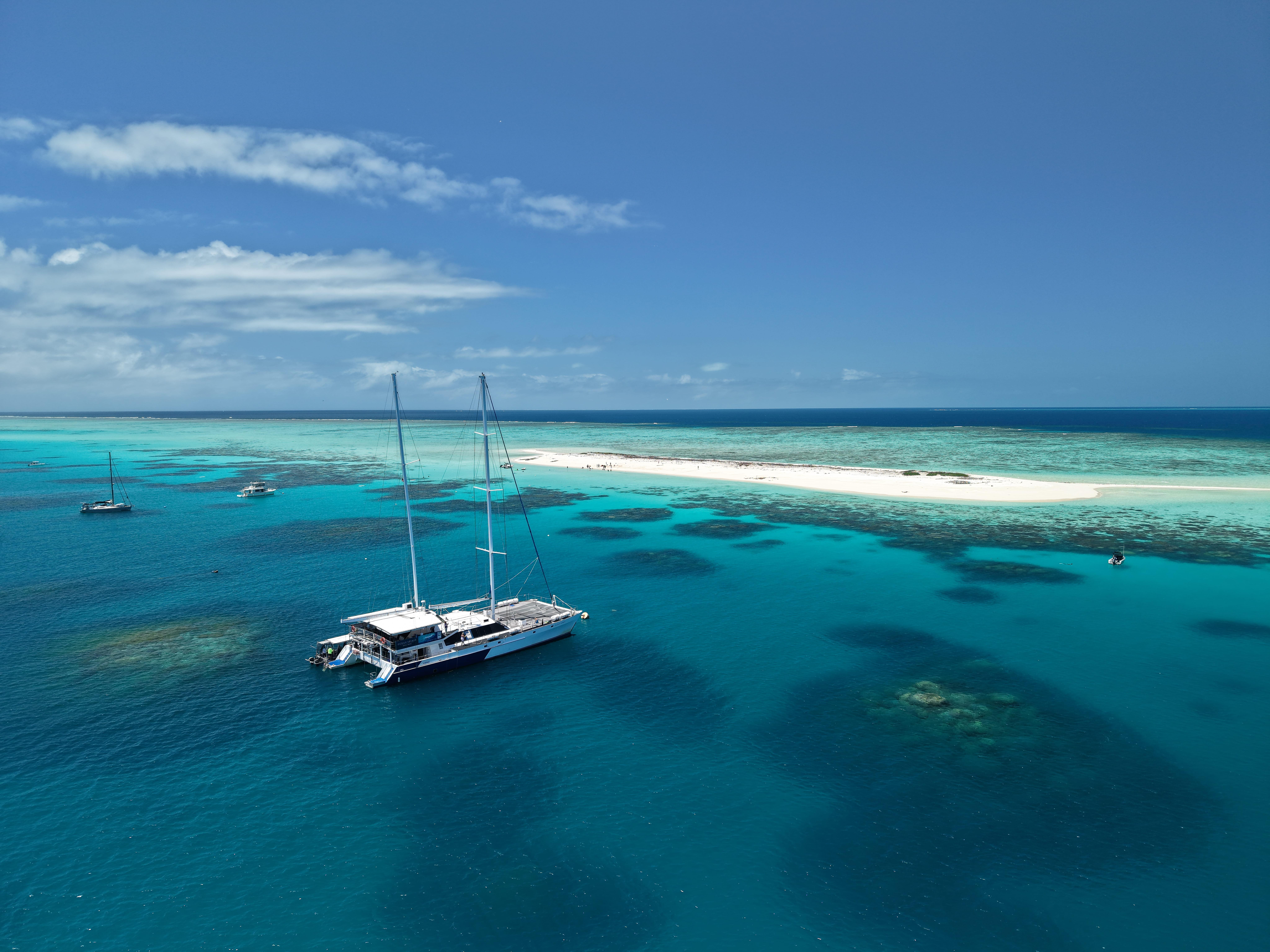
Great Barrier Reef Sailing Catamaran Adventure
- Expert local guide
- Small group
- Skip-the-line access
- Free cancellation
Snorkeling Cairns Pontoon — Outer Reef Platforms & Guided Marine Encounters
Stable platforms anchored beyond the continental shelf, where visibility meets abundance
Compare fares, pick the fit — all bookings are mobile-voucher and eligible for free cancellation where shown.
9 hr
4 hr
8 hr 30 min
Selecting the right snorkeling cairns pontoon ticket depends on whether you prefer a standard reef day or an all-inclusive adventure with added highlights. These snorkeling cairns pontoon tours provide direct access to the outer Great Barrier Reef, featuring a high-tech platform, marine biology presentations, and vibrant coral lagoons.
|
Top pick Standard Access Essential reef discovery |
Adventure Plus With guided safari or heli | |
|---|---|---|
| Duration at Reef | 5 hours | 5 hours |
| Snorkeling Gear | Included | Included |
| Boat Tours | Glass bottom & semi-sub | Glass bottom & semi-sub |
| Marine Education | Included | Included |
| Lunch & Tea | Buffet & refreshments | Buffet & refreshments |
| Optional Extras | Available for purchase | Pre-selected upgrade |
| See tickets & prices |
Verdict: First-time visitors should choose the Standard Access snorkeling cairns pontoon tickets to enjoy the core marine world experience with flexibility to add activities on the day.
Worth it for comfort seekers and nervous swimmers
Snorkeling cairns pontoon tours deliver stable platforms anchored at outer reef sites, typically four to five hours from shore, with change rooms, sun decks, and underwater observatories. Tours like the Premium Great Barrier Reef Snorkelling & Diving Adventure and Full-Day Outer Great Barrier Reef Superyacht Experience include equipment, wetsuit hire, marine biologist talks, and buffet lunch—removing the guesswork from reef access. The 8.50 AUD environmental management charge applies per person, usually bundled into tour prices. Pontoon setups suit families with young children, older travelers, and anyone who prefers a controlled entry point over boat-side ladders. Visibility and coral health at outer reef sites consistently outperform inshore alternatives. Trade-offs include longer travel time, fixed schedules departing Reef Fleet Terminal by 08:45, and less freedom to explore multiple sites compared to smaller vessel day trips. If you prioritize amenities and beginner-friendly conditions over nimble site-hopping, snorkeling cairns pontoon tours justify the premium. Budget-conscious solo travelers may find better value in half-day options that skip the pontoon infrastructure but still reach quality reef zones.
Bottom line: Pontoon tours trade mobility for comfort, making them the smart choice when stability and amenities matter more than exploring multiple reef sites in one day.
The pontoon offers a stable, stationary base for extended relaxation, whereas the high-speed catamaran provides faster transit for travelers seeking to explore multiple coral reef sites in a single day. Snorkeling cairns pontoon tours provide a reliable, amenity-rich environment ideal for families, while speed-boat alternatives favor mobility and expedition-style aquatic adventures.
|
Top pick Cairns Pontoon |
High-Speed Catamaran | |
|---|---|---|
| Stability | High - stationary platform | |
| Activity variety | Wide - semi-submersibles and observatory | |
| Travel time to reef | 90–120 minutes | |
| Space to move around | Large deck areas | |
| Suitability for non-swimmers | High - dedicated platforms and life vests | |
| In-water time | Extended - flexible access all day | |
| See tickets & prices |
Verdict: Choose a snorkeling cairns pontoon tour if you prioritize comfort and accessibility, or select the high-speed catamaran when booking your snorkeling cairns pontoon tickets if you prefer rapid transit and multiple reef locations.
Hand-picked experiences loved by thousands of travelers
8 hours
Free Cancellation
Eight-hour outer reef expedition with guided snorkelling, marine encounters, and tropical buffet aboard AquaQuest
8 hours
Free Cancellation
Speed to the Outer Great Barrier Reef aboard a luxury catamaran for snorkeling and diving at three pristine locations
5 hours
Free Cancellation
Intimate small-group snorkel tour to exclusive reef sites with marine biologist guides and eco-certified practices
7 hours 30 minutes
Free Cancellation
Full-day catamaran journey to Moore Reef featuring snorkeling, glass-bottom boats, and underwater viewing
7 hours
Free Cancellation
High-speed boat journey to two pristine reef sites with guided snorkeling and onboard lunch
8 hours
Free Cancellation
Five hours at a dedicated reef platform with snorkelling, underwater viewing, hot lunch and marine insights
8.5 hours
Free Cancellation
Full-day catamaran voyage to a protected reef sanctuary with snorkeling, birdwatching, and marine encounters
8 hours 30 minutes
Free Cancellation
Sail to two pristine outer reef sites aboard a luxury vessel, snorkel vibrant coral, then soar above on a scenic flight
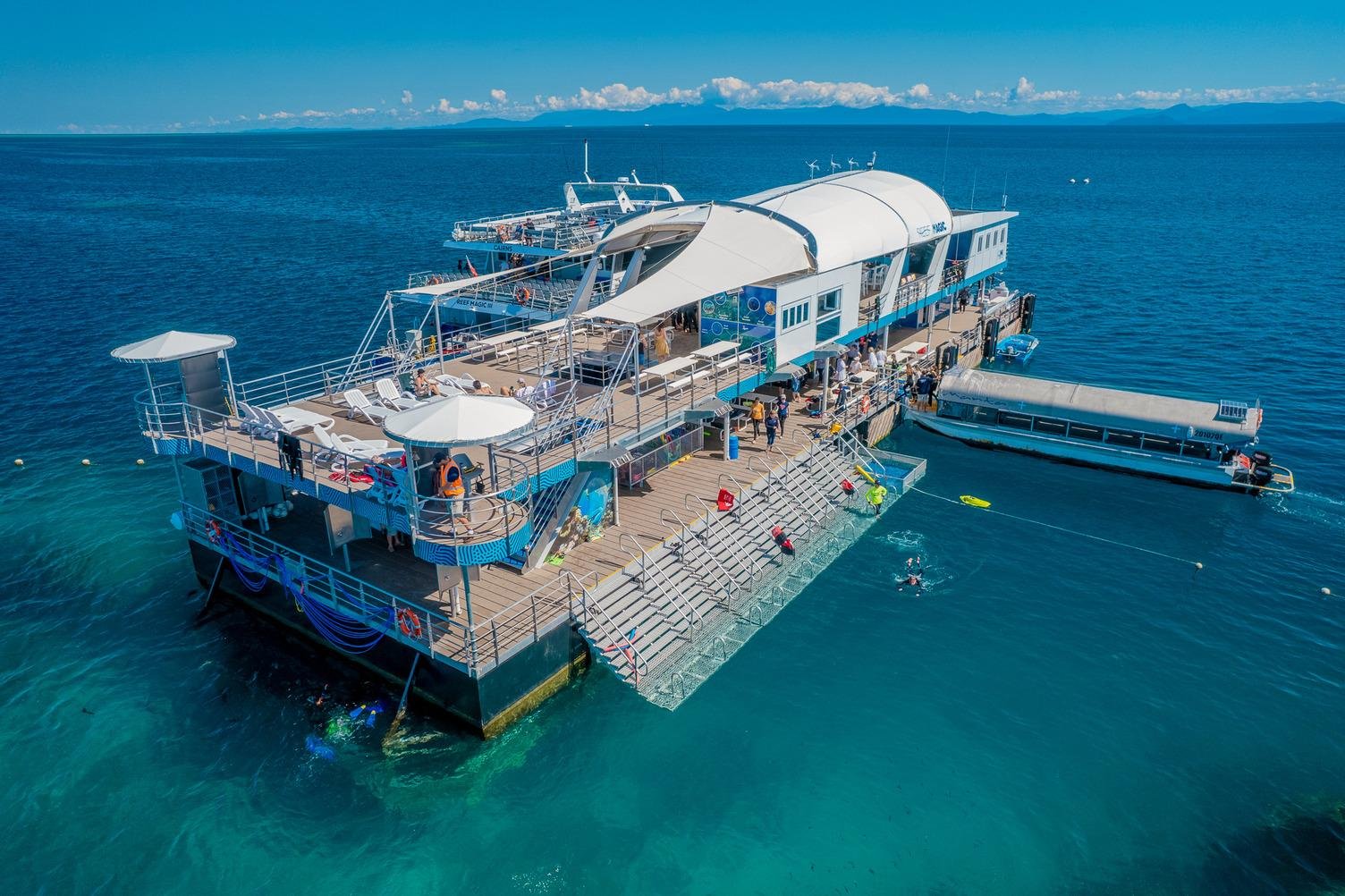
A sheltered area perfect for beginners to practice with their snorkeling cairns pontoon gear
Located on the lower level, this offers panoramic views of the reef ecosystem
Provides a dry way to view coral formations with full commentary
A spacious top deck with lounge chairs for relaxing between snorkeling sessions
The main activity hub featuring gear hire, showers, and lunch facilities
You board at Reef Fleet Terminal by 8:30 AM, clearing the breakwater as the sun clears the Bellenden Ker Range to the south.
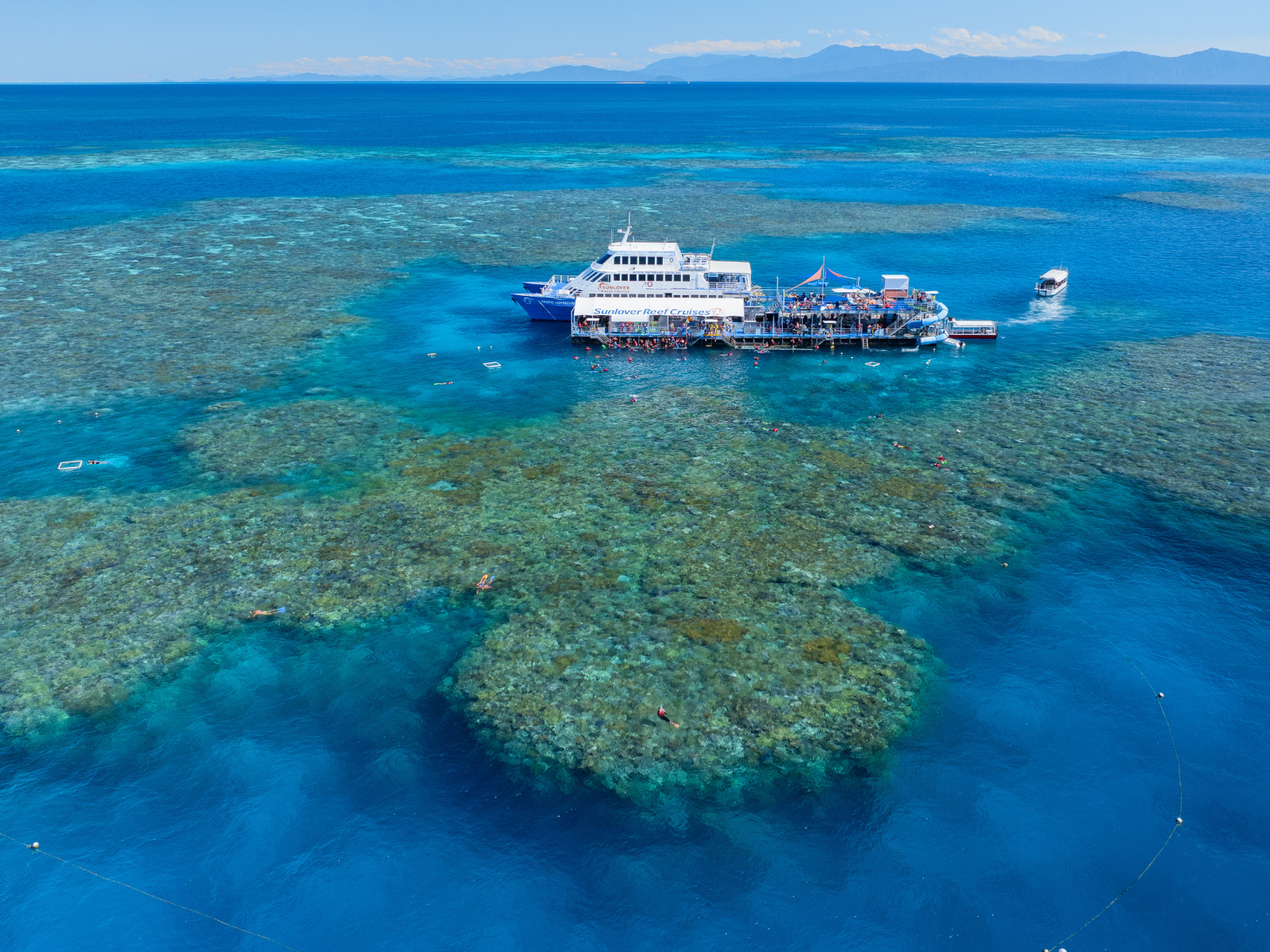
The catamaran slices through jade water for 90 minutes, passing Low Isles and the inner fringing reefs before the colour shifts to indigo and the outer ribbon formations appear on the depth sounder. The pontoon emerges ahead — a white two-tiered platform tethered to the seabed by four steel mooring lines.
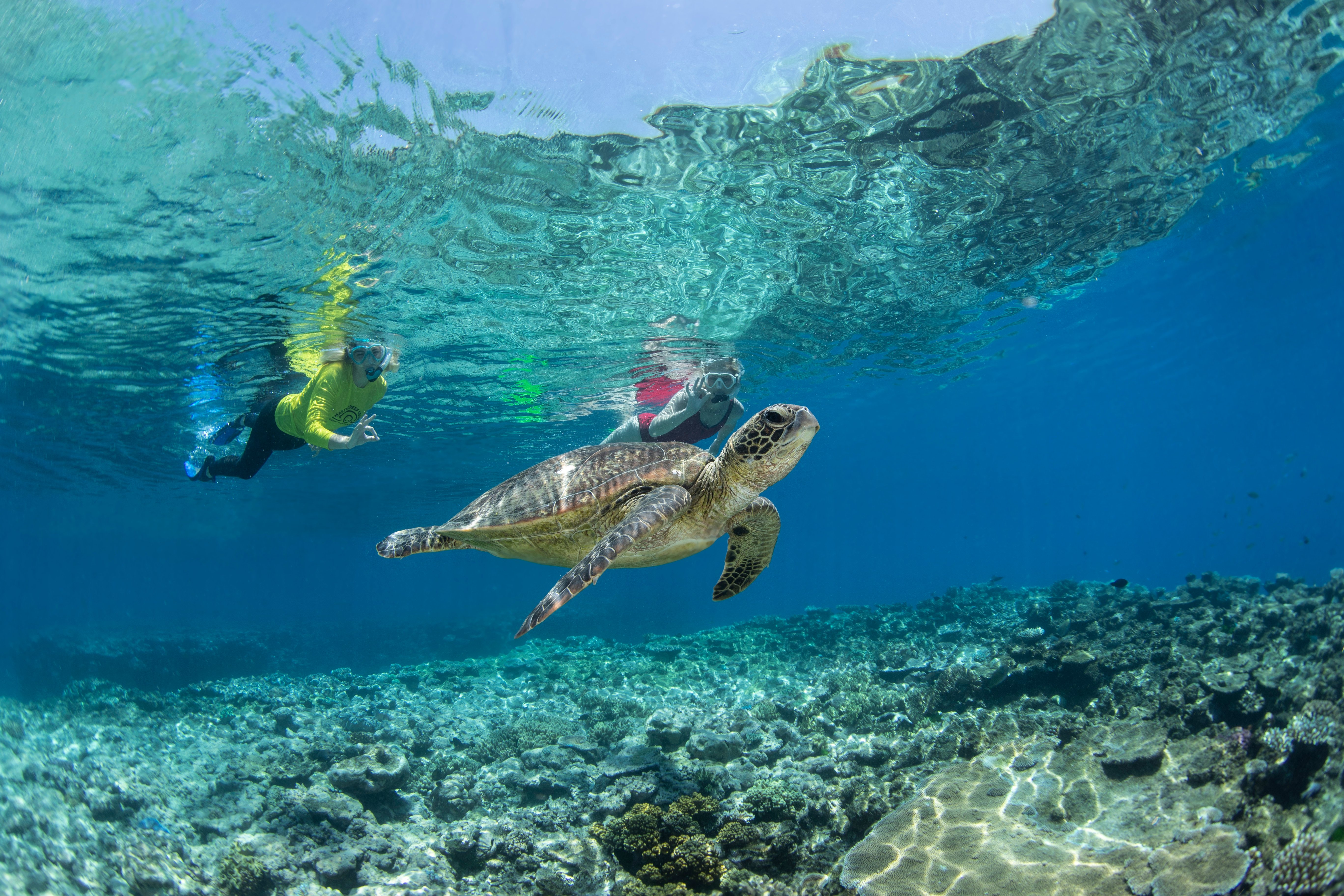
You collect a mask, fins, and stinger suit from the equipment bay, listening to the safety briefing on current direction and the location of the three marked snorkel trails. The entry ladder descends into water so clear you can see the anchor chain angling into the blue below. You push off and drift toward the bommie 20 metres north, where sergeant majors swirl in formation and a green turtle surfaces for air before diving back to graze on algae. A marine biologist floats nearby, pointing out a mantis shrimp retreating into a crevice and the feather stars clinging to the coral overhang.
You return to the ladder after 40 minutes, rinse under the freshwater shower, and descend into the semi-submersible chamber for a dry view of the same reef from below the surface. Lunch is served on the upper deck — sandwiches, fruit, and tea — while theSuperyacht guests prepare for their second snorkel session at a different mooring 500 metres east, where the current sweeps over a saddle thick with soft corals.
All the details about your upcoming adventure in one place
The permanent moored pontoons anchored in the Agincourt Ribbon Reefs and Moore Reef systems sit 40 to 70 kilometres offshore, where the outer continental shelf drops into the Coral Sea and visibility routinely exceeds 30 metres.
These steel-and-fibreglass platforms — each roughly the size of two tennis courts — solve a problem that plagued reef tourism for decades: how to give non-divers stable, protected access to the healthiest coral gardens without anchoring directly onto living substrate. The first generation of pontoons arrived in the mid-1980s, replacing day vessels that drifted on moorings and left snorkelers scrambling in open swell.
Today's platforms host between 80 and 400 visitors per day, depending on configuration. Most feature shaded observation decks, freshwater showers, change rooms, and semi-submersible coral viewing chambers for those who prefer dry observation. The underwater topography around each mooring site is catalogued and monitored: bommies rising from sand channels, staghorn thickets in the shallows, plate corals on the deeper slopes. Marine biology staff stationed on the larger platforms conduct reef talks twice daily, explaining symbiotic relationships between clownfish and anemones, the calcium carbonate architecture of hard corals, and the nocturnal hunting patterns of moray eels.
Snorkeling cairns pontoon operators depart Reef Fleet Terminal between 8:00 and 8:45 AM, with catamarans and superyachts taking 90 minutes to two hours to reach the outer anchorages. The Environmental Management Charge — 8.50 AUD per person — funds reef monitoring programmes and is typically embedded in tour pricing rather than collected separately at embarkation. Equipment standards are regulated: silicone masks, dry-top snorkels, stinger suits during October–May jellyfish season. Guided snorkel trails are marked with underwater buoys, and staff-to-guest ratios are capped at one instructor per 15 swimmers for safety.
The outer reef platforms anchor in designated zones where current patterns and nutrient upwelling sustain coral biodiversity. Visibility is highest during the dry season — May through October — when river runoff subsides and sediment settles. Water temperature holds steady at 24–29°C year-round, warm enough to eliminate the need for thermal protection beyond the mandated stinger suit. The pontoons themselves are engineered to withstand cyclone-force winds and are removed or reinforced during the November–April wet season when tropical low-pressure systems track across the Coral Sea.
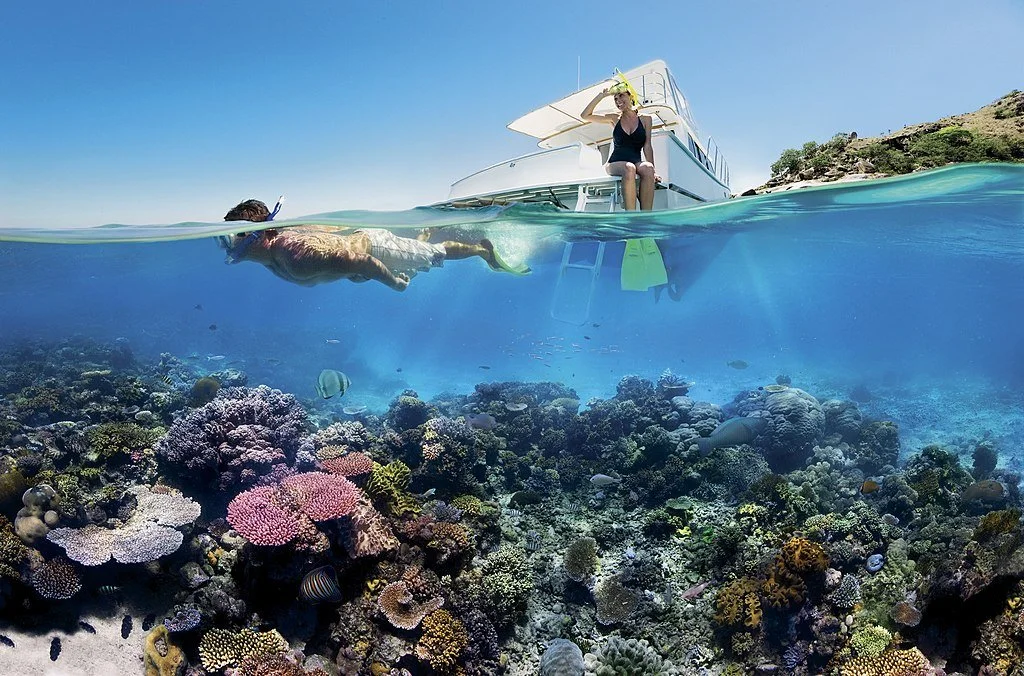
The outer continental shelf drops into the Coral Sea, where visibility routinely exceeds 30 metres.
Wear comfortable beachwear and bring a dry change of clothes. Sun-protective clothing like a hat and sunglasses is recommended.
Small, soft-sided bags are recommended for easier storage. Present your booking confirmation and photo ID at the Reef Fleet Terminal check-in.
Personal cameras are allowed, and underwater digital cameras are available for hire. Professional onboard photos are also available for purchase.
The snorkeling cairns pontoon features a kids' safety swimming enclosure and caters to all swimming abilities. Families can enjoy semi-submersible tours and glass-bottom boat experiences together.
The pontoon is designed with accessibility in mind, offering features that accommodate guests with various physical needs. Please inform staff of specific requirements when booking.
A buffet lunch is provided on the pontoon, with filtered drinking water available. Guests are encouraged to bring their own reusable water bottles.
Opening hours
08:00–17:00
Address
Reef Fleet Terminal, 1 Spence St, Cairns City QLD 4870, Australia
Accessibility
Wheelchair accessible pontoon
Best arrival
08:00–08:30
Storage
Lockers available for purchase
Location
Outer Great Barrier Reef (Moore Reef)
Cancellations made 24 hours or more prior to departure are eligible for a refund or date change. A 100% cancellation fee applies if notification is given within 24 hours of travel.
Recommended time
Full day
A snorkeling cairns pontoon trip runs as a full-day outing once you count transit from Reef Fleet Terminal, boarding, and time moored at the pontoon itself. Boats depart soon after the 08:00–08:30 arrival window, since boarding for outer reef vessels concludes by 08:45, and the return leg lands back at the terminal in the late afternoon within the 08:00–17:00 window. Add extra time if you're combining snorkeling with an introductory dive or scenic helicopter add-on at the pontoon, and subtract little, since the vessel schedule rather than queueing sets the pace. Queues are minimal once aboard, as pontoon access is staggered by the crew rather than first-come lines.
The modern snorkeling cairns pontoon industry emerged in the late 1970s when Quicksilver Connections deployed the first permanent reef platform at Agincourt Reef in 1979, transforming day access to the outer Great Barrier Reef. Before this innovation, visitors endured hours of open-water snorkeling from anchored vessels with minimal infrastructure. The pontoon concept—a stable floating platform moored year-round—offered changing rooms, underwater observatories, and sheltered swim zones, making reef tourism viable for non-divers. By 1983 three operators had established competing platforms, but cyclone damage and hull maintenance costs forced two to abandon fixed installations within five years. The industry nearly collapsed in 1991 when new federal environmental legislation imposed strict mooring limits and required operators to fund reef monitoring programs. The 8.50 AUD Environmental Management Charge, instituted in 1993, initially sparked resistance but became the funding backbone for reef conservation. Quicksilver's partnership with marine biologists in 1995 established the first visitor-funded coral restoration trials at snorkeling cairns pontoon sites, a model later adopted across the reef. The introduction of semi-submersible viewing chambers in 1998 expanded access beyond confident swimmers, though purists argued it diluted the authentic snorkeling experience. Tourism infrastructure standardized after 2003 when the Great Barrier Reef Marine Park Authority mandated vessel capacity limits and daily site rotation to prevent reef degradation. Modern pontoons now serve dual roles as visitor platforms and research stations, with real-time water quality sensors feeding data to reef management systems. The Reef Fleet Terminal on Spence Street, completed in 2014, centralized mainland departures and reduced harbor congestion. Today's snorkeling cairns pontoon tours operate under the most regulated reef-access framework in the world, balancing commercial viability with conservation imperatives that were barely contemplated when the first platforms were installed four decades ago.
Quicksilver deploys the first permanent floating platform at Agincourt Reef, establishing the outer reef pontoon model.
Three competing pontoon operators enter the market, expanding day-trip capacity for Cairns visitors.
Federal environmental legislation imposes strict mooring limits and mandatory reef monitoring obligations.
The Environmental Management Charge is introduced at 8.50 AUD per visitor to fund conservation programs.
First coral restoration trials launch at pontoon sites through operator-funded marine biology partnerships.
Marine Park Authority mandates vessel capacity limits and daily site rotation protocols to reduce reef impact.
Reef Fleet Terminal opens on Spence Street, centralizing mainland departures and streamlining visitor logistics.
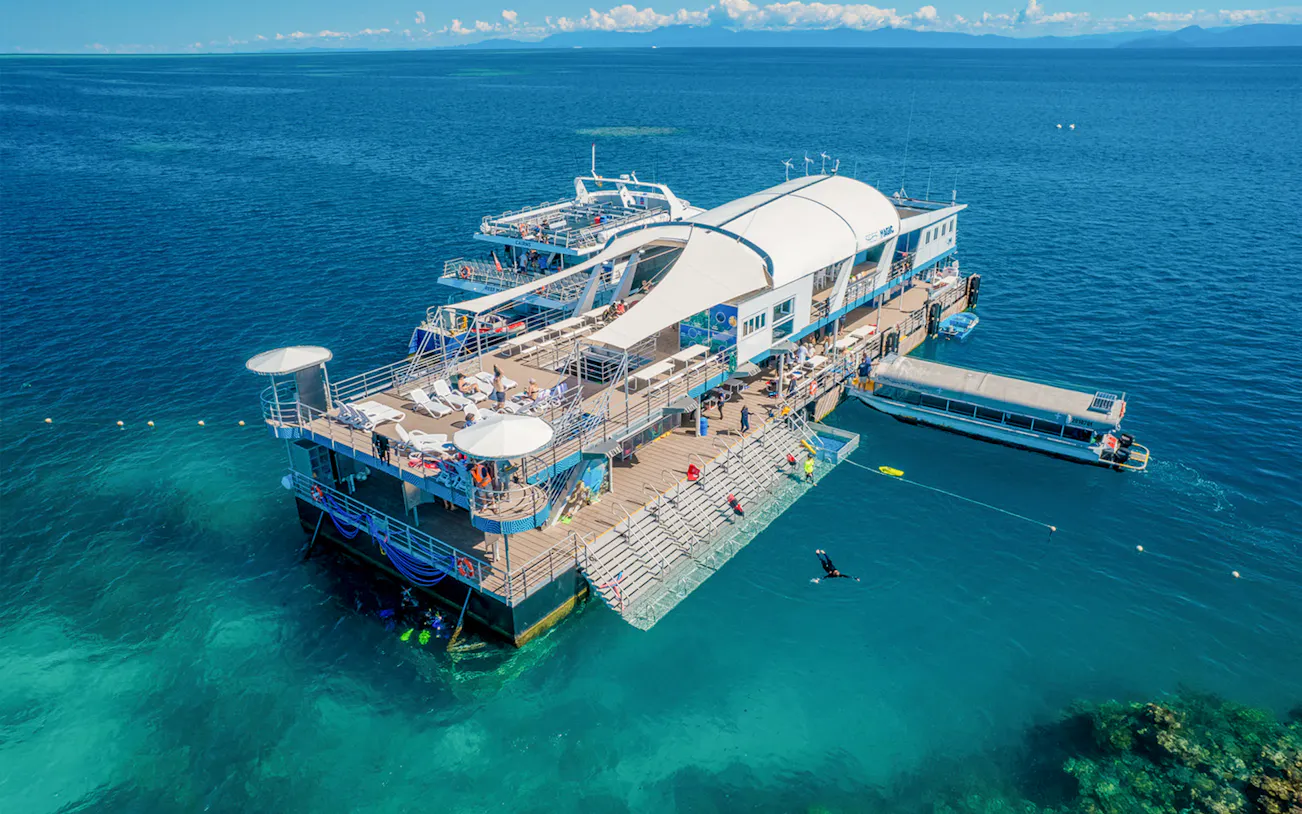
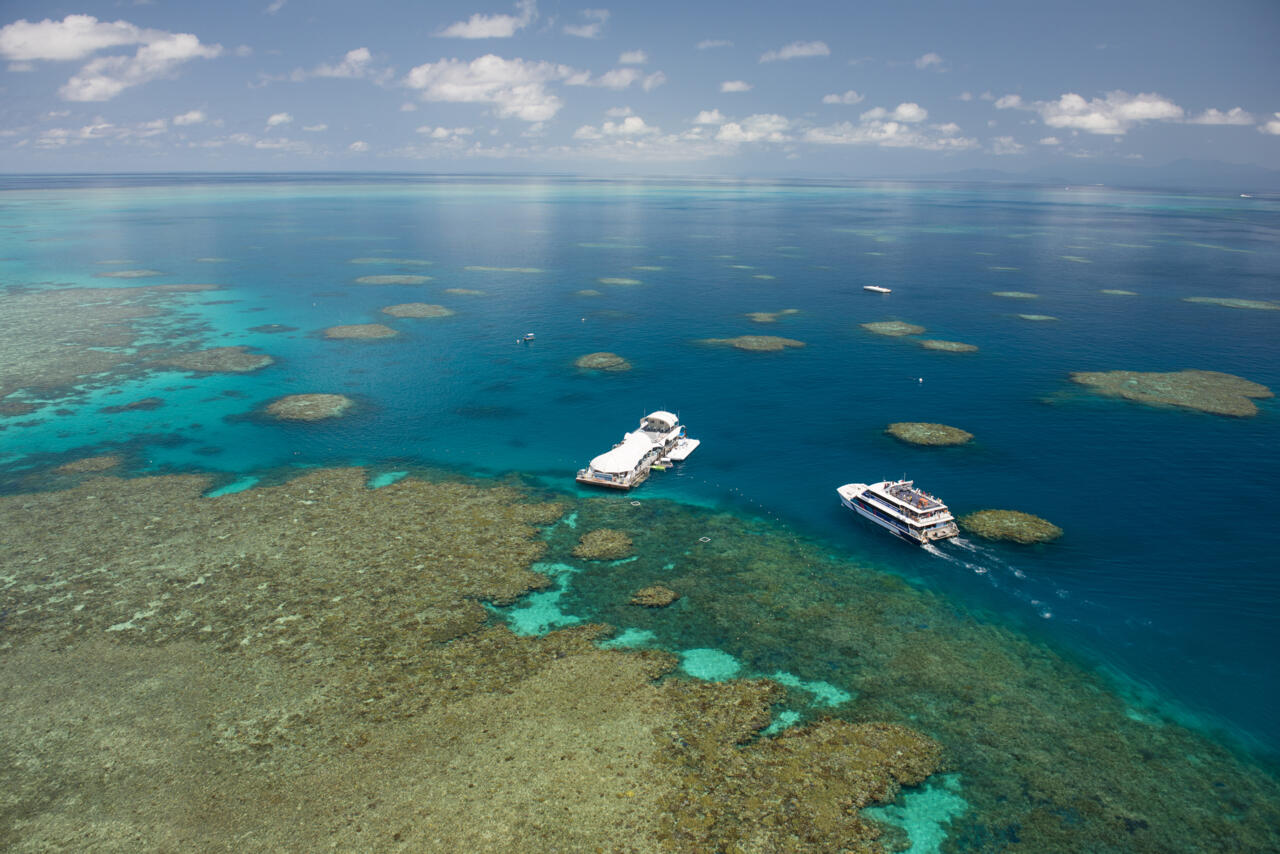
Wide shot of the twin-level pontoon floating on the turquoise lagoon at Moore Reef, best captured from the upper sundeck rail looking toward the water steps where snorkelers enter. Crowds thin out once the first snorkeling cairns pontoon groups head underwater. Access is open to all ticket holders throughout the day.
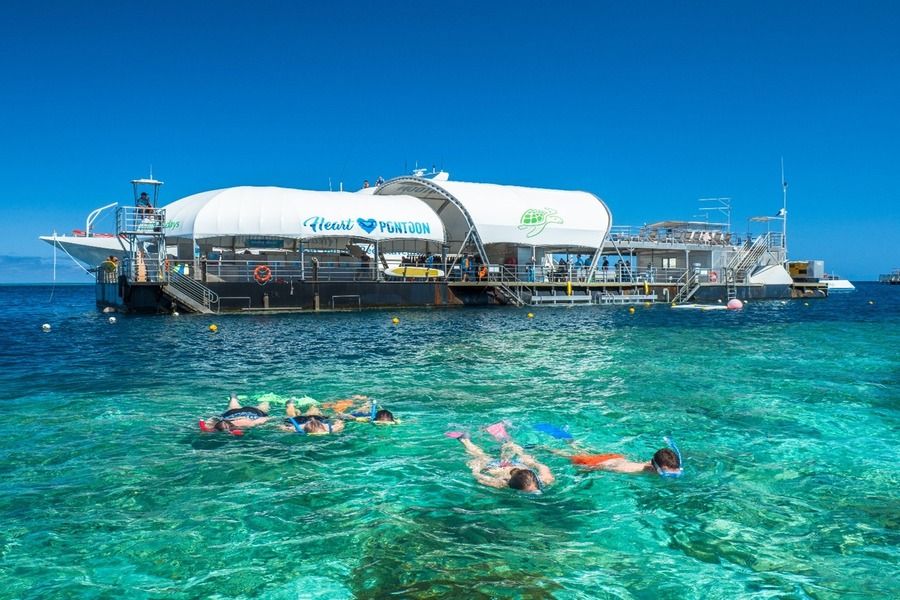
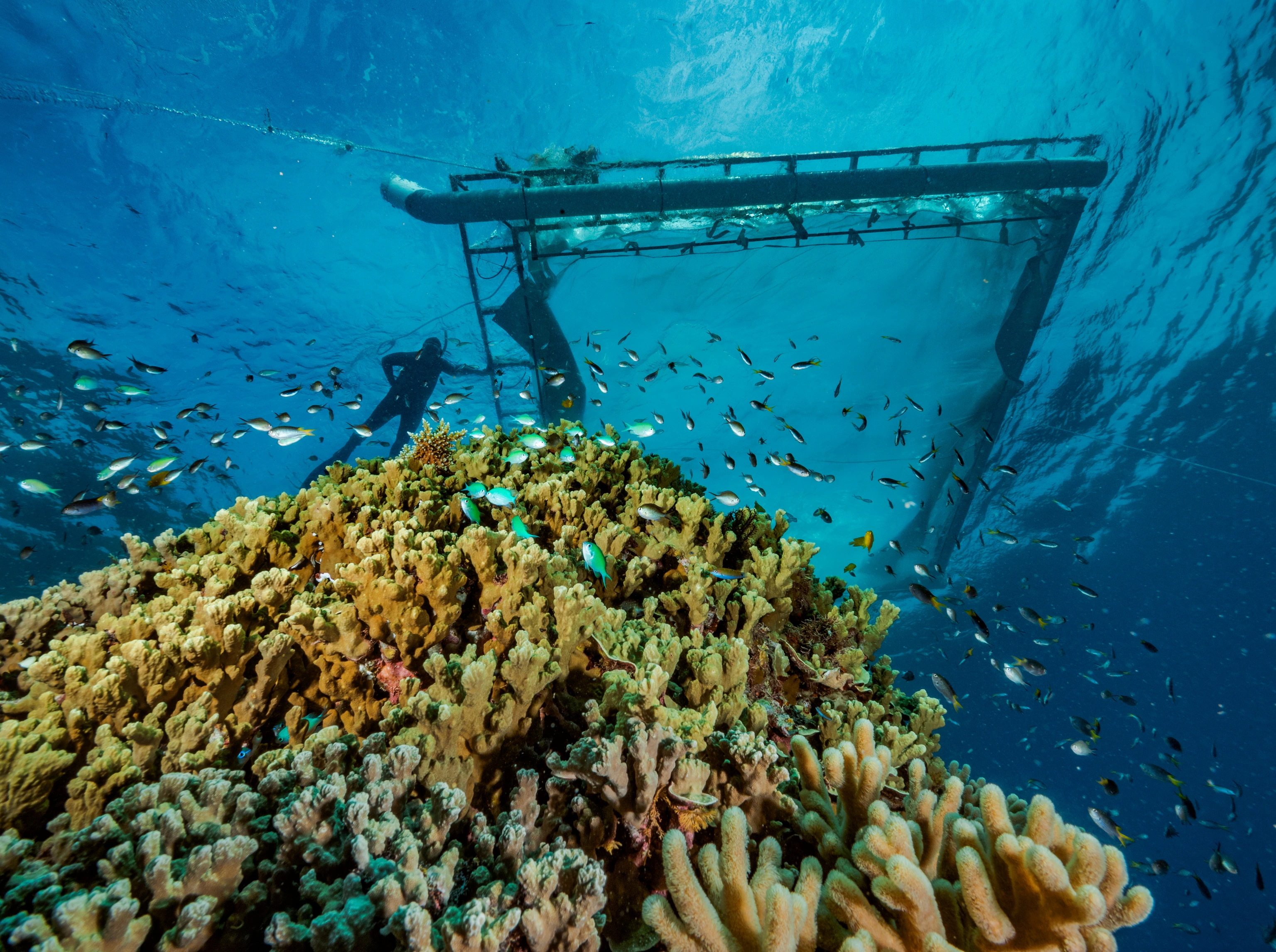
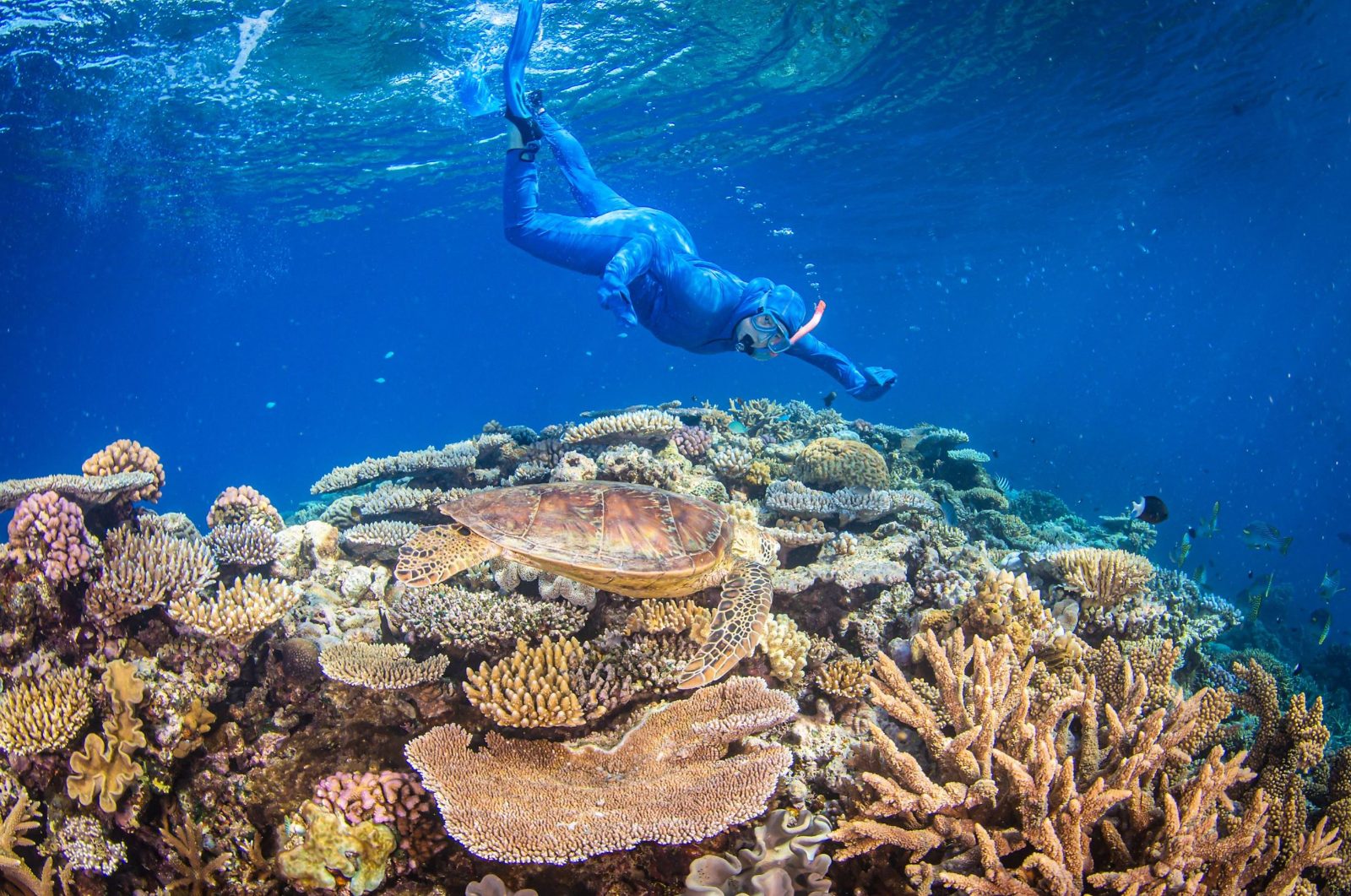
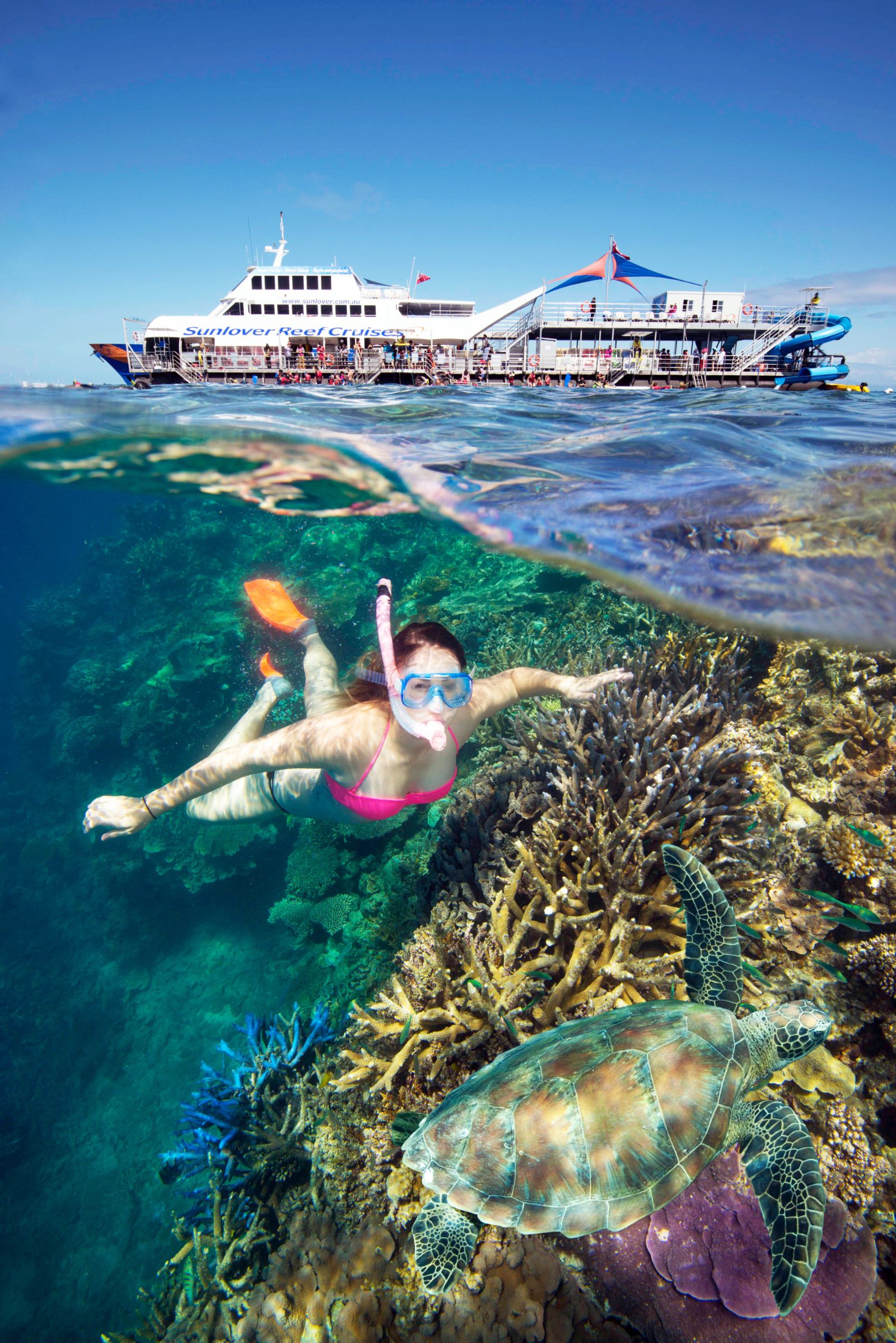
Shallow coral bommies visible right off the pontoon's snorkel entry platform, with clear water showing staghorn and plate coral from the surface. Stand at the lower boarding platform steps for the best downward angle into the lagoon.
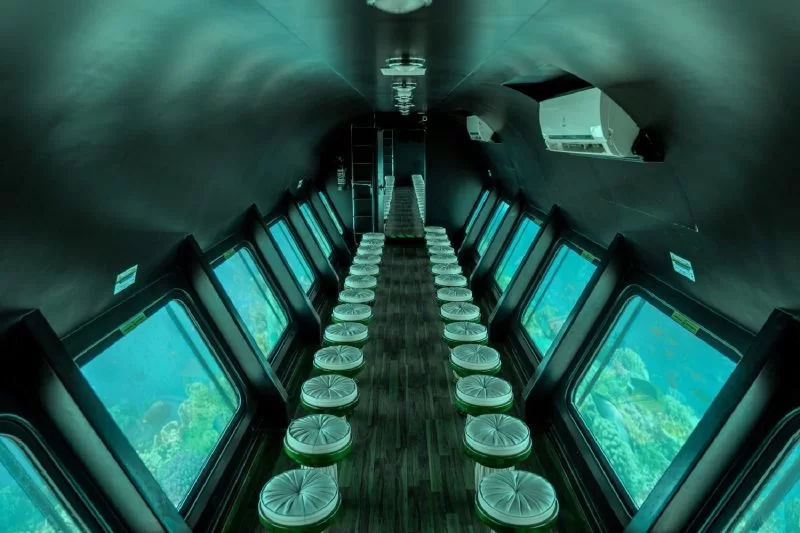
Framed shot through the semi-submersible's glass viewing windows showing fish and coral at eye level without getting wet, a fixed feature of the Marine World pontoon experience. Best photographed from inside seated near the window rather than standing in the aisle.
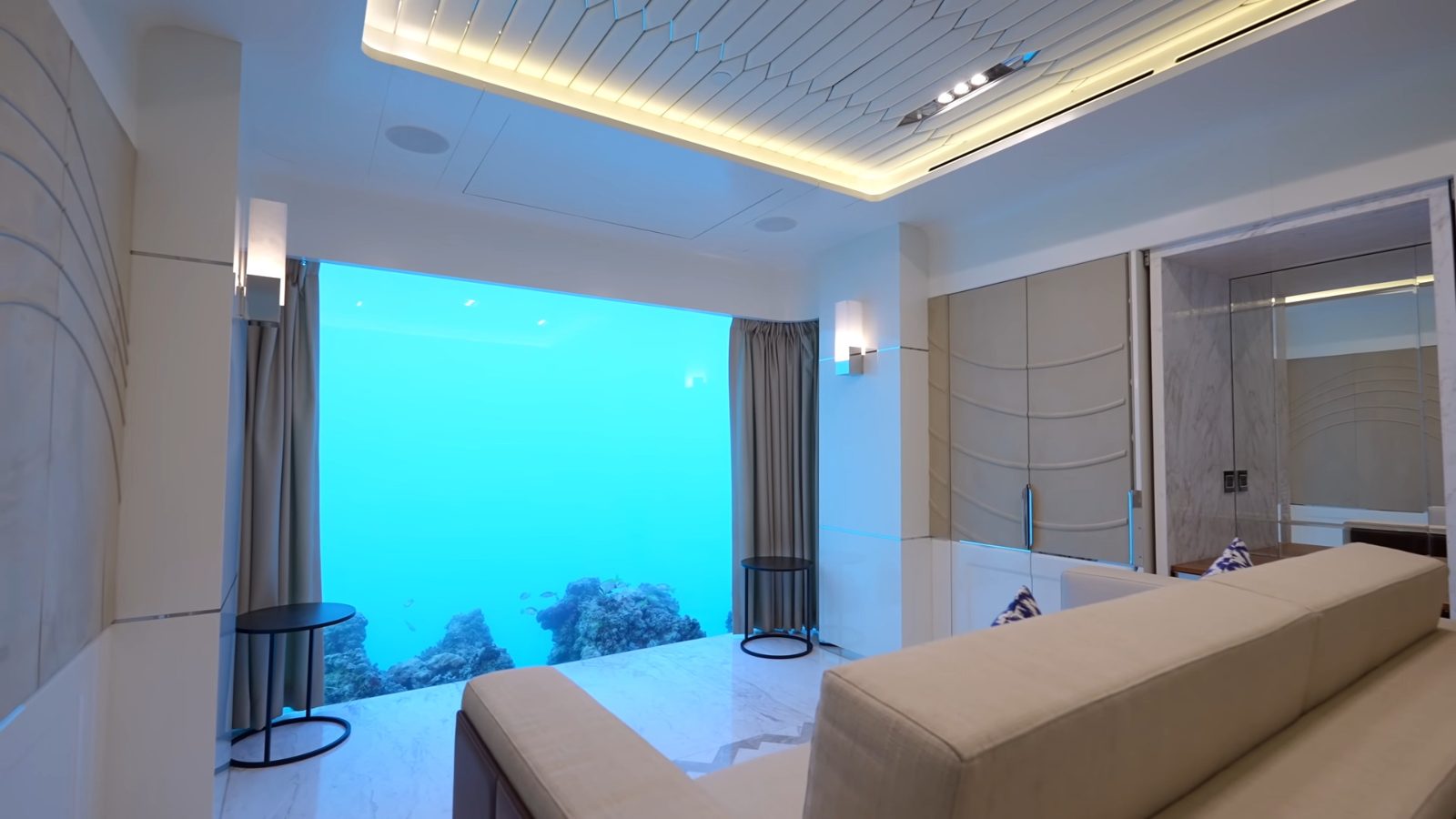
View down through the pontoon's glass-bottom observatory panels, capturing swimmers and reef fish beneath the structure. Position directly over the panel at the pontoon's lower deck for a clean vertical shot.
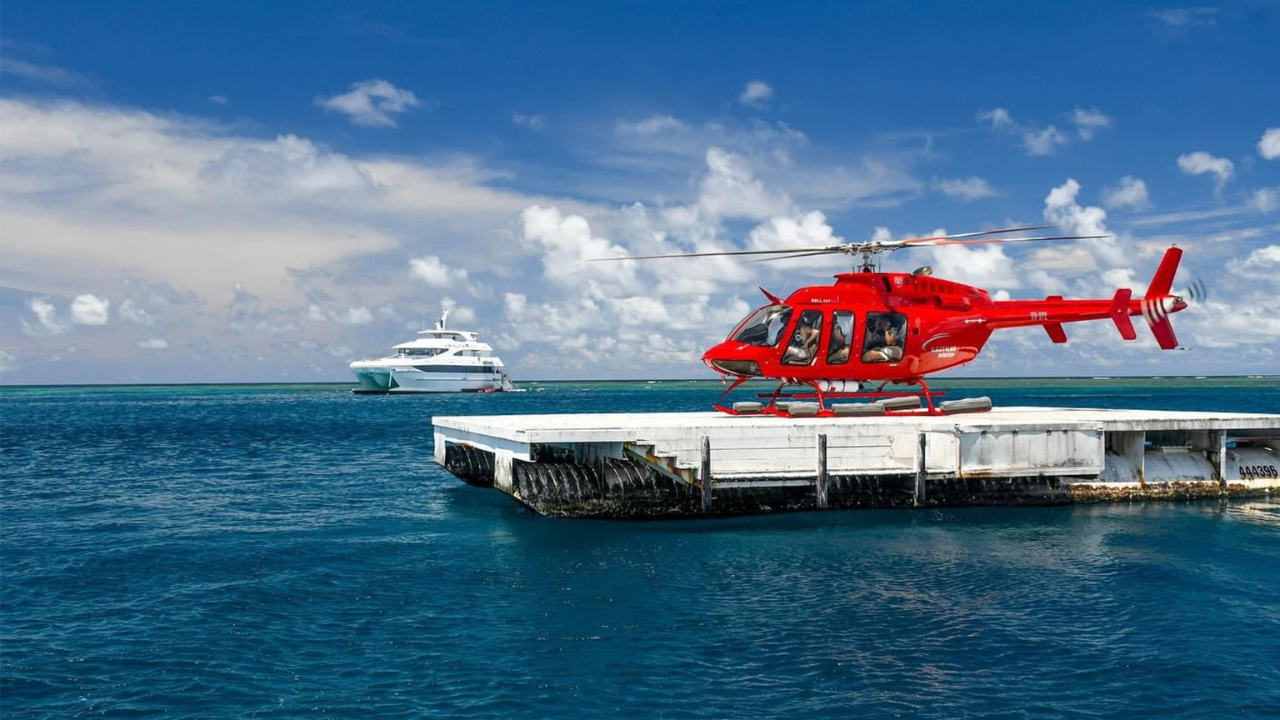
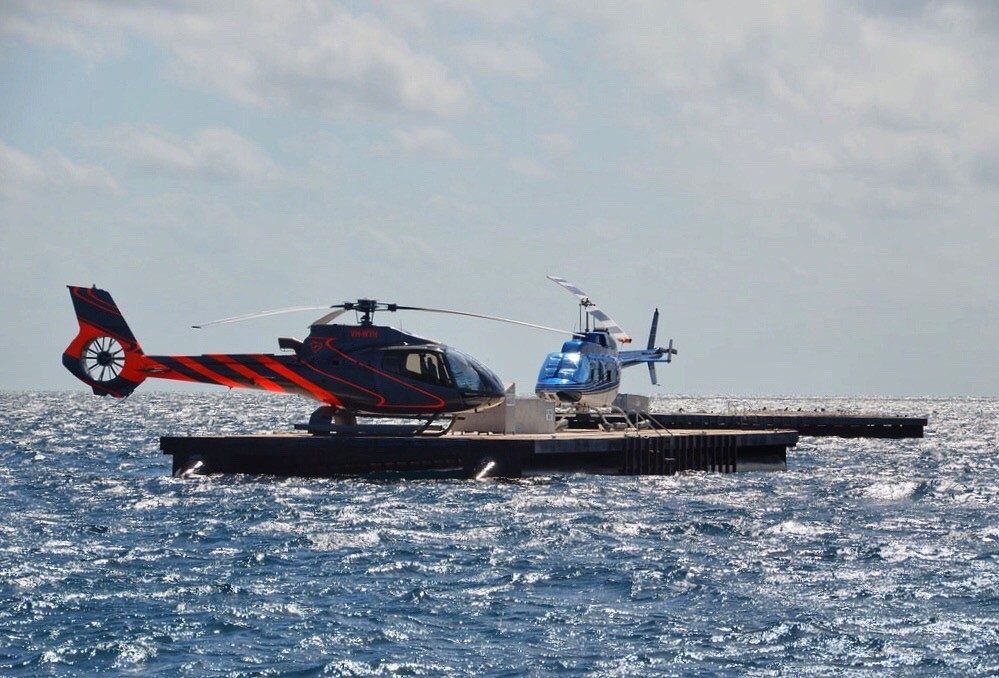
Elevated vantage from the pontoon's helipad platform looking out over the outer reef horizon and anchored dive tender boats. This spot offers the widest reef-to-horizon composition on the whole structure and works well for anyone comparing a snorkeling cairns pontoon tour to reef photos seen online.
Visiting the outer reef with children on a snorkeling cairns pontoon trip feels far calmer than a rocking day boat, since kids spend most of the day on a large, stable platform rather than a moving vessel. Little ones can watch fish from the underwater observatory before working up to their first swim.
Children who are comfortable in open water and can wear a mask do best, though non-swimmers and toddlers can still enjoy the semi-submersible and underwater viewing deck without ever getting in the water. Staff generally recommend at least basic water confidence before snorkeling off the pontoon.
All snorkelers, including children, are fitted with a flotation vest before entering the water, which makes it far easier for nervous first-timers to relax and float face-down safely. Crew stay in the water near the pontoon ladder to help kids in and out.
Because the pontoon is anchored and far larger than a standard dive boat, kids get a steady deck to change, rest and eat on, without the seasickness risk that smaller reef boats can bring on choppier days. This matters most for families with younger children who tire quickly in open water.
The pontoon has shaded seating, freshwater rinse showers and toilets on board, though baby-change facilities are limited, so pack a compact changing mat if traveling with an infant. There is no dedicated nursery or childcare area on the platform.
Plan for kids to alternate short snorkel sessions with breaks on the pontoon, since the sun and swimming tire children faster than adults expect. Building in rest time between water sessions keeps the day enjoyable rather than exhausting.
On overcast or choppy days, the underwater observatory and semi-submersible ride still run from the pontoon, giving kids a dry way to see the reef if conditions or confidence keep them out of the water.
Most snorkeling cairns pontoon operators include a buffet lunch on the vessel as part of your snorkeling cairns pontoon tours. For those needing a meal before departure, the Reef Fleet Terminal hosts several convenient options near your snorkeling cairns pontoon tour boarding gate.
Located right at the Reef Fleet Terminal, this spot offers quick coffee, sandwiches, and pastries. It is ideal for a light breakfast before your snorkeling cairns pontoon tickets are scanned for boarding.
Everything you need to know for your journey
The facility is open daily from 08:00–17:00.
The Environmental Management Charge is 8.5 AUD per person, which is typically included in your snorkeling cairns pontoon tour price.
You should aim to arrive between 08:00–08:30, as boarding for the snorkeling cairns pontoon concludes by 08:45.
There is no formal dress code, but you should dress for a day at the beach and bring sun protection for your snorkeling cairns pontoon visit.
Yes, children are welcome on a snorkeling cairns pontoon tour, and there are specific activity areas for families.
While a buffet lunch is included, you are welcome to bring snacks and a reusable water bottle to the snorkeling cairns pontoon.
Please avoid bringing large hard-shell suitcases or glass items on your snorkeling cairns pontoon excursion.
Yes, the snorkeling cairns pontoon is designed to be wheelchair accessible for all guests.
You can reach the snorkeling cairns pontoon by checking in at the Reef Fleet Terminal, 1 Spence St, Cairns City.
Join thousands of happy travelers who have discovered this incredible experience
Book Your Experience Now